
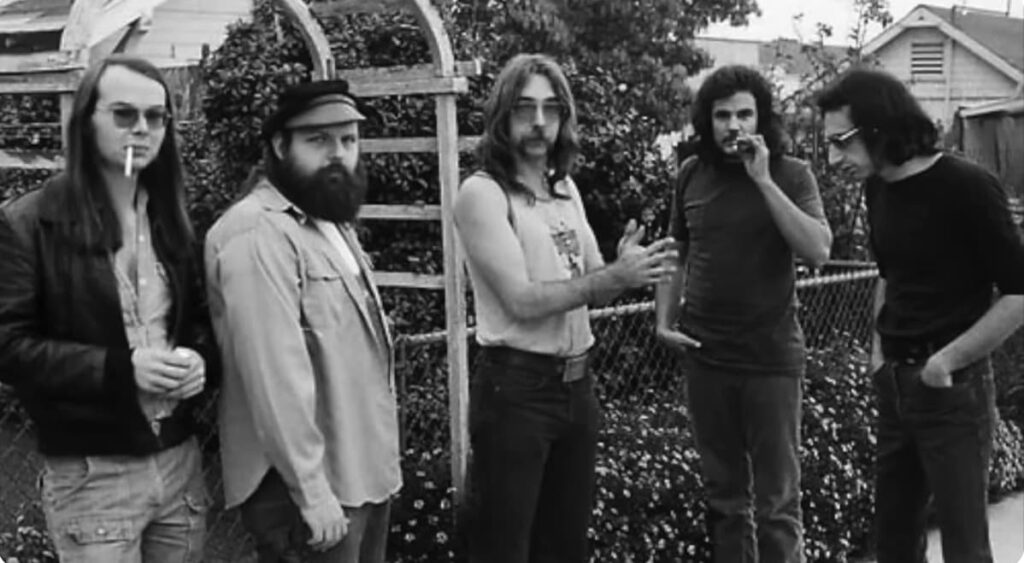
Six Defining Guitar Moments That Highlight Denny Dias at His Most Intense
A recent video titled Six Times Denny Dias Went Beast Mode has drawn renewed attention to one of the most understated yet essential guitarists in the Steely Dan story. Best known as a founding member of the band, Denny Dias played a crucial role in shaping the group’s early sound before Steely Dan became synonymous with rotating studio virtuosos and meticulous production.
The video is a corrected version of an earlier compilation that originally circulated under the title Seven Times Denny Dias Went Beast Mode. That first edit included two guitar solos that were later identified as performances by Walter Becker and notably left out the solo from King of the World, one of Dias’s most respected contributions. The revised version removes those inaccuracies and focuses strictly on confirmed performances by Dias, offering a more faithful representation of his work.
Denny Dias joined Steely Dan with a background that differed from many rock guitarists of his era. Deeply influenced by jazz and modern harmony, he brought a sharper and more exploratory approach to the band’s earliest recordings. While Donald Fagen and Walter Becker were already steering Steely Dan toward a sophisticated musical identity, Dias provided a guitar voice that could navigate complex chord structures without losing edge or urgency.
The performances highlighted in the video emphasize that intensity was always part of Dias’s playing, even if it was often delivered with control rather than flash. His solo on King of the World is a prime example. It combines tension, melodic development, and rhythmic bite in a way that serves the song’s bleak atmosphere while still standing out as a bold statement. This balance between aggression and precision is what many fans describe as his beast mode.
Other moments in the compilation show Dias pushing his tone and phrasing beyond what casual listeners might expect from Steely Dan’s early catalog. These solos are not long or indulgent, but they are decisive. Each one enters with purpose, builds quickly, and exits cleanly, reflecting both his jazz discipline and his understanding of song structure.
Historically, Dias’s role diminished as Steely Dan transitioned into a studio centered project that relied heavily on hired session musicians. By the mid nineteen seventies, his presence was largely absent from the band’s recordings. Even so, his early contributions helped establish the musical foundation that later albums refined.
The Six Times Denny Dias Went Beast Mode video does not attempt to rewrite Steely Dan history. Instead, it clarifies it. By correcting attribution errors and restoring overlooked performances, it offers a more accurate appreciation of a guitarist whose impact was significant, if often under acknowledged. For listeners willing to look beyond the most famous names, the video serves as a timely reminder of Denny Dias’s sharp, fearless, and highly musical guitar work.