
A Sharp Critique of Privilege and Detachment Wrapped in Catchy Pop Hooks
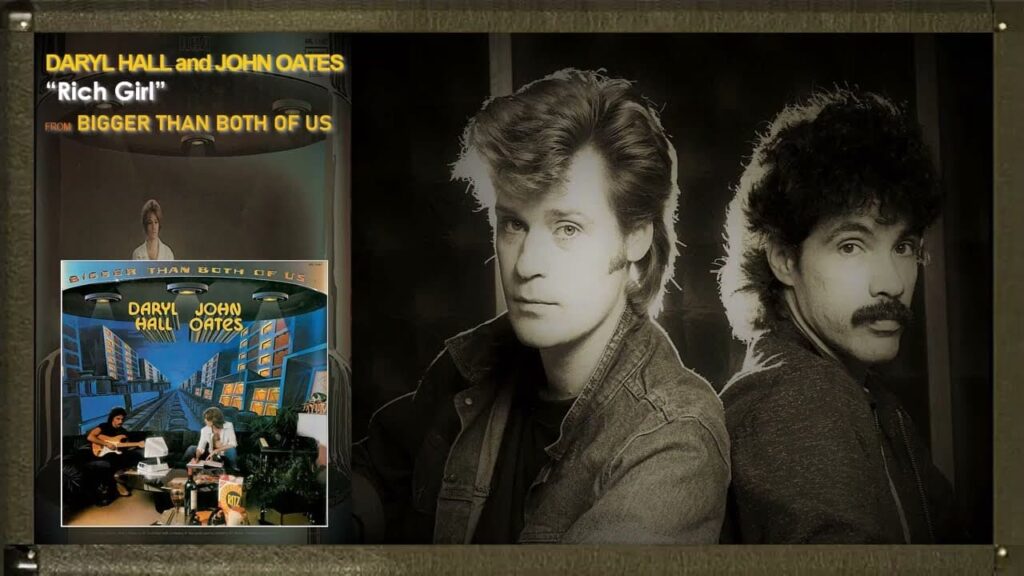
“Rich Girl”, the chart-topping hit from the iconic duo Daryl Hall & John Oates, released in 1976 from their album “Bigger Than Both of Us”, soared to the pinnacle of the Billboard Hot 100, becoming their first number one single in the United States. More than just a catchy pop tune, the song serves as a pointed, albeit subtly delivered, commentary on the insulated world of wealth and the potential for detachment it breeds.
The inspiration for “Rich Girl” stemmed from Daryl Hall’s observations about a young woman he encountered. While the popular narrative once linked the song to Arianna Huffington, Hall himself has clarified that the muse was actually a college-aged girlfriend of his then-manager. This young woman, hailing from a prosperous background, exhibited a certain nonchalance and perhaps a degree of obliviousness to the realities faced by those outside her privileged sphere. It was this very dynamic, the potential for a disconnect from the consequences of one’s actions due to financial insulation, that sparked Hall’s songwriting. Despite the title, Hall has even mentioned that he initially considered calling the song “Rich Guy,” finding the female perspective more intriguing for the narrative.
The lyrics of “Rich Girl” paint a vivid, if somewhat cautionary, portrait of someone accustomed to getting their way, shielded from the everyday struggles of earning and budgeting. Lines like “You can rely on the old man’s money” and “It’s so easy to laugh, it’s so easy to hate” hint at a life where financial security can inadvertently lead to a lack of empathy or a skewed perception of the world. The “rich girl” of the song isn’t necessarily portrayed as malicious, but rather as someone whose reality is fundamentally different, shaped by the absence of financial constraints. This creates a sense of distance, a barrier that separates her experiences from those of the majority.
Musically, “Rich Girl” is a masterclass in crafting a commercially successful pop song with an underlying layer of social observation. The infectious piano riff, the driving beat, and the smooth harmonies that are hallmarks of the Hall & Oates sound create an undeniably catchy and radio-friendly track. However, beneath the polished surface lies a subtle tension, a hint of critique in Hall’s delivery and the somewhat detached tone of the lyrics. The song manages to be both appealing and thought-provoking, a testament to the duo’s ability to weave complex themes into accessible pop structures.
The success of “Rich Girl” marked a significant turning point in Daryl Hall & John Oates’ career, propelling them into the mainstream and solidifying their status as hitmakers. Yet, beyond its commercial triumph, the song endures because it taps into a timeless theme: the complexities of wealth and its potential impact on character and perspective. For those of us who remember the cultural landscape of the 1970s, the song serves as a snapshot of a time when social dynamics were being closely examined through various artistic lenses. “Rich Girl” offered a nuanced look at one facet of that landscape, delivered with the melodic sophistication and lyrical insight that would become the duo’s signature. It reminds us that even the most upbeat pop songs can carry a deeper message, prompting reflection on the societal forces that shape our lives and relationships.