
“Easy To Be Hard”: A Profound Questioning of Human Compassion and Hypocrisy.
There are songs that, through their lyrical depth and passionate delivery, force us to look inward, challenging our preconceptions and the very nature of human kindness. Three Dog Night’s powerful rendition of “Easy To Be Hard” is precisely such a song. Released in August 1969 as a single from their second album, Suitable for Framing, this track wasn’t just another pop hit; it was a resonant cry for genuine empathy, a poignant critique of selective compassion that spoke volumes to a generation grappling with social and political upheaval. For older readers, it immediately conjures images of a tumultuous era, inviting deep reflection on personal responsibility and the often-unseen struggles of those closest to us.
Upon its release, “Easy To Be Hard” quickly climbed the charts, showcasing Three Dog Night’s remarkable ability to take thought-provoking material and infuse it with their signature blend of rock, pop, and soul. It reached an impressive number 4 on the Billboard Hot 100 chart in the United States in September 1969, and also peaked at number 2 on the RPM Top Singles chart in Canada. This significant chart success ensured its widespread airplay, bringing its powerful message into countless homes and minds. Coming just a year after their debut, this hit solidified Three Dog Night’s standing as one of the most consistent and compelling groups of the era, capable of delivering both catchy tunes and profound statements.
The story behind “Easy To Be Hard” is fascinating, as it originated not from the pens of Three Dog Night themselves, but from the groundbreaking 1967 rock musical Hair. The song was written by the musical’s creators, Galt MacDermot (music), James Rado, and Gerome Ragni (lyrics). In the context of the musical, “Easy To Be Hard” is sung by the character Sheila and serves as a powerful commentary on the perceived hypocrisy of those who champion grand social causes while neglecting the personal relationships and immediate needs around them. It questions the sincerity of “love, peace, and understanding” when applied only to abstract ideals, not to the messy realities of individual human connection.
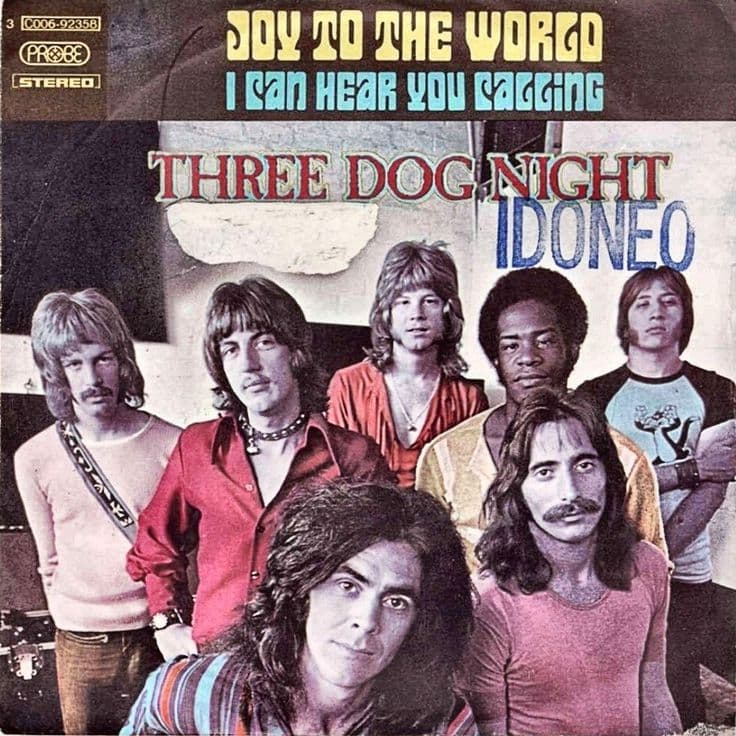
Three Dog Night, with their unique vocal power trio of Chuck Negron, Danny Hutton, and Cory Wells, had a particular genius for selecting and interpreting songs written by other talented artists. Their version of “Easy To Be Hard” features Chuck Negron on lead vocals, his passionate and soulful delivery perfectly capturing the song’s emotional weight and underlying frustration. They took the raw, theatrical power of the Broadway version and translated it into a compelling rock ballad that resonated with a broader audience, stripping away some of the musical’s specific context to highlight its universal message. The band’s tight musicianship, particularly Jimmy Greenspoon’s evocative keyboard work, further enhanced the song’s melancholic yet impactful atmosphere.
The meaning of “Easy To Be Hard” is a direct and poignant critique of human nature’s often contradictory impulses. The lyrics challenge listeners with rhetorical questions: “How can people be so heartless? How can people be so cruel?” It points out the irony that it can be “easy to be hard, easy to be cold” when dealing with close friends or personal situations, even as one passionately advocates for abstract concepts like “evil and social injustice” or cares deeply about “strangers.” The core message is a plea for personal, immediate compassion, urging that true empathy must extend beyond grand gestures to the everyday interactions and responsibilities we have towards those we know and love. It asks us to examine whether our outward expressions of concern align with our private actions.
For older readers, this song carries a particular resonance, reminding them of the idealism and disillusionment of the late 1960s. It might evoke memories of debates about societal change versus individual responsibility, or perhaps moments when they, or someone they knew, wrestled with these very questions. It’s a timeless reminder that while it may be “easy to be hard,” true warmth and humanity lie in extending kindness to those closest to us, acknowledging that genuine compassion begins at home. Three Dog Night’s “Easy To Be Hard” remains a powerful, introspective anthem, urging us to bridge the gap between our ideals and our actions, and to always choose empathy, even when it’s the harder path.