
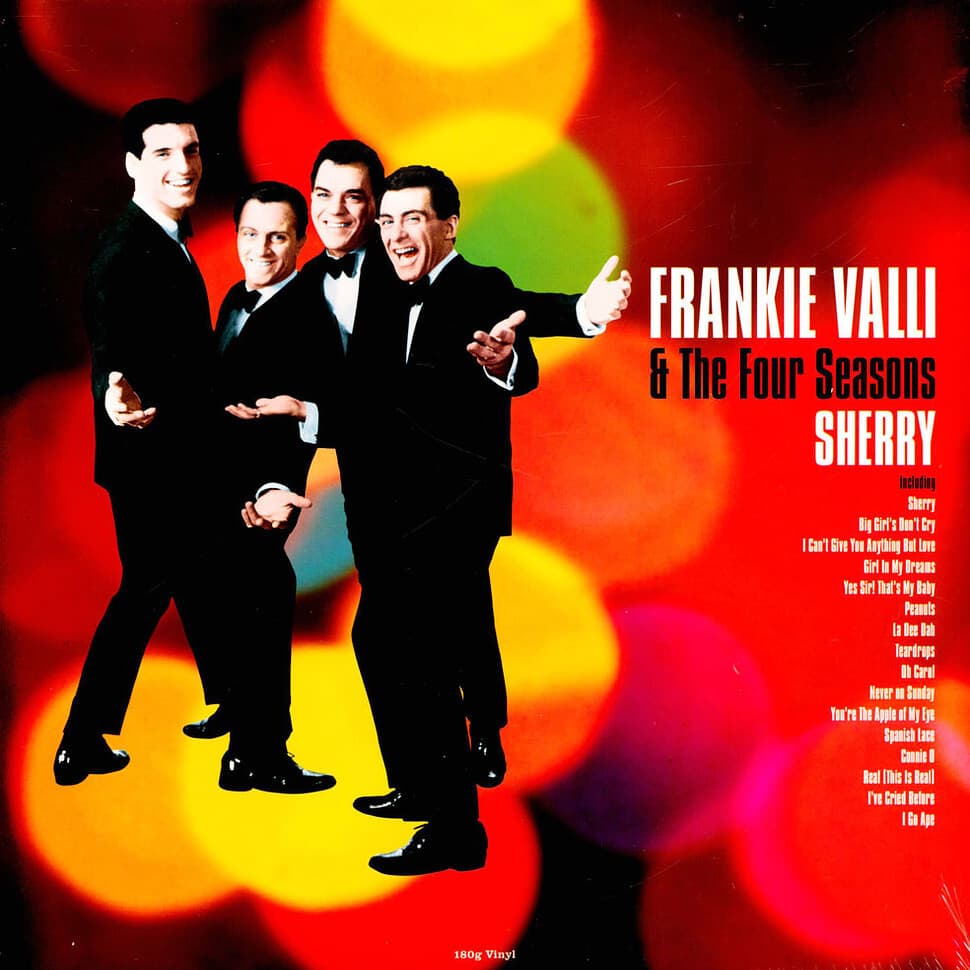
“Sherry”: The Euphoric Dawn of a New Pop Sound and the Sweet Call of Young Love.
For those of us who came of age in the early 1960s, a time when American pop music was brimming with innocence, optimism, and the exhilarating promise of rock and roll, certain sounds arrived like a fresh, electrifying breeze. Among these, the instantly recognizable falsetto of Frankie Valli, soaring above the tight, infectious harmonies of The Four Seasons, was nothing short of revolutionary. Their 1962 smash hit, “Sherry,” wasn’t just a song; it was a phenomenon, a vibrant explosion of youthful exuberance that instantly captivated a nation. It marked the thrilling arrival of a distinctive sound, marrying doo-wop foundations with sophisticated pop arrangements, and for countless listeners, it became the very soundtrack to nascent crushes, soda shop dances, and the boundless energy of teenage life.
Upon its release as a single in July 1962, “Sherry” didn’t just climb the charts; it rocketed straight to the top, becoming an undeniable sensation. It hit number 1 on the Billboard Hot 100 chart in the United States in September 1962, holding that coveted position for five consecutive weeks. This unprecedented success instantly catapulted Frankie Valli & The Four Seasons from relative obscurity to national stardom. It was their very first chart-topper and became the fastest-selling single in the band’s history, moving over a million copies in a matter of weeks. The song also achieved significant international success, reaching the top 10 in various countries, cementing their status as a major force in global pop music. For many of us, turning on the radio meant eagerly awaiting those thrilling opening notes, knowing that pure, unadulterated joy was about to fill the air.
The story behind “Sherry” is as fascinating as its meteoric rise, rooted in the creative genius of Bob Gaudio, the band’s keyboardist and primary songwriter. The legend goes that Gaudio wrote the song in about 15 minutes, inspired by a girl he knew named Sherry. He initially titled it “Jackie” (after Jackie Kennedy) and later “Terri” before settling on “Sherry.” What made the song truly groundbreaking, however, was its innovative use of Frankie Valli’s extraordinary three-octave vocal range, particularly his distinctive falsetto. Valli’s ability to effortlessly hit those stratospheric notes became the band’s signature, a sound that was both thrillingly unique and instantly endearing.
Producer Bob Crewe, a vital collaborator, recognized the singular magic of Gaudio’s songwriting and Valli’s voice. Together with the impeccable backing vocals of Tommy DeVito and Nick Massi, they crafted a sound that was meticulously layered yet felt utterly spontaneous and fresh. The band, hailing from Newark, New Jersey, had been trying to break through for years under various names, perfecting their harmonies and stage presence. “Sherry” was the culmination of that perseverance, the moment all their hard work coalesced into an undeniable smash.
The meaning of “Sherry” is uncomplicated yet deeply resonant: it’s a direct, almost breathless, expression of infatuation and an eager invitation to dance and embrace the pure joy of young love. The lyrics are straightforward, calling out to the girl “Sherry, Sherry baby” and urging her to “come to me, let me love you.” It captures the exhilarating simplicity of a crush, the eagerness to connect, and the sheer elation that accompanies new affection. There’s no complex metaphor or hidden meaning; it’s a celebratory burst of emotion. For older readers, this song isn’t just a memory; it’s a vivid sensation. It evokes the vivid colors and innocent energy of the early 1960s, the excitement of school dances, the nervous thrill of a first date, and the feeling that anything was possible when that perfect song came on the radio. “Sherry” remains a timeless testament to the power of a perfectly crafted pop song to bottle an era’s spirit, reminding us of a time when love felt as simple and as soaring as Frankie Valli’s unforgettable falsetto.
 Great Songs