
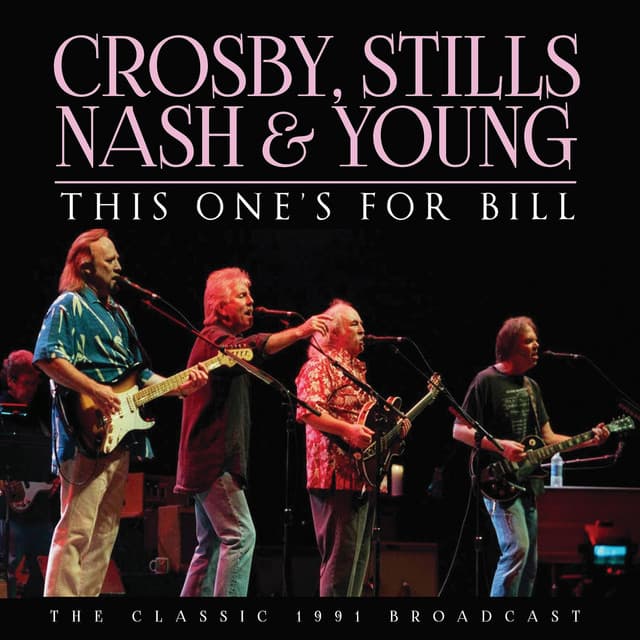
A Profound and Heartfelt Plea for Intergenerational Empathy, a Gentle Guide to Healing the Wounds of a Turbulent Era.
In 1970, America was a nation on the brink. The wounds of the Vietnam War were bleeding, the counterculture was in full revolt, and a great chasm had opened between parents and their children. In the midst of this turbulent chaos, four of the most brilliant, and most volatile, musicians of their generation came together to create an album that would not only define the era but also offer a moment of profound, quiet wisdom. That band was Crosby, Stills, Nash & Young, and their album was Déjà Vu. This record was a phenomenon, a commercial and critical triumph that reached number one on the Billboard 200, but its true power lay in its ability to capture the complex emotions of the time. Within its tracklist was a song that transcended the political and social drama, offering a timeless message of hope and understanding. That song was “Teach Your Children.” Released as a single, it became a massive hit, climbing to a peak of number 16 on the Billboard Hot 100, its gentle message of reconciliation resonating with a nation in desperate need of healing.
The story behind “Teach Your Children” is a deeply personal and dramatic one. The song was penned by Graham Nash, a British artist who had recently arrived in America and was grappling with the intense social and generational conflict he saw all around him. The drama was not abstract; it was personal. He watched as the children of his generation became estranged from their parents, and he reflected on the sorrow of a world where one generation could not understand the other. He wrote the song as a direct plea, a heartfelt monologue addressed to both sides of the divide. Its simple, poignant lyrics were a brave attempt to bridge the emotional and political gap, to offer a message of empathy in a world full of anger. This song was born out of a profound sense of sadness and an unwavering belief that communication was the only way forward.
The lyrical drama of the song is a powerful two-way conversation. The first verse is a plea to the parents: “You who are on the road must have a code that you can live by.” It urges the older generation to be models of kindness and understanding. The next verse is a message to the younger generation: “And so, become yourself, because the past is just a good-bye.” It’s a call for forgiveness and a forward-looking perspective. The music, a gentle acoustic strum and a rich, signature harmony, is the perfect vehicle for this message. The voices of Crosby, Stills, Nash & Young, each so different but weaving together to form a single, transcendent sound, are a dramatic embodiment of the song’s message. The addition of Neil Young’s mournful pedal steel guitar adds a layer of country-tinged melancholy that deepens the song’s emotional resonance, reminding the listener that the path to reconciliation is a long and often painful one.
For those of us who remember this era, “Teach Your Children” is more than just a song; it’s a piece of our history, a nostalgic reminder of the hopes and struggles of a tumultuous time. It’s a testament to the fact that even amid intense conflict, a simple, honest song can cut through the noise and speak to a universal truth. The song remains a timeless and profoundly emotional anthem, a quiet masterpiece that reminds us that the best lessons we can learn—and teach—are those of love, empathy, and understanding. It stands as a powerful piece of art, a beautiful and poignant echo of a time that, in some ways, never truly left us.