
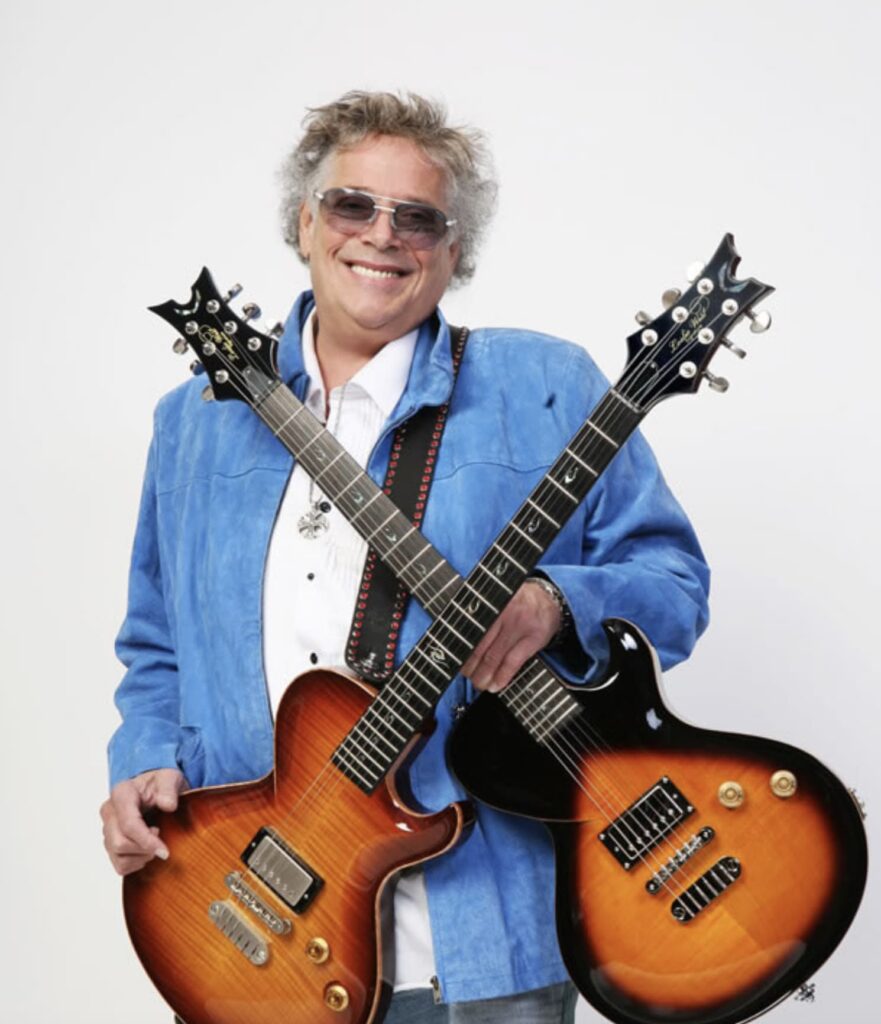
Leslie West Explores the Roots of His Sound in Part Two of Living Legends Music
Following the raw self-reflection of Part One, the second installment of the Living Legends Music interview series deepens the portrait of Leslie West by shifting focus from personal awakening to artistic formation. Recorded on October 31, 2008, at the House of Blues in Lake Buena Vista, Florida, Part Two captures West in reflective, animated form as he explains how soul, blues, and British rock converged to shape his unmistakable sound.
Picking up naturally from the discipline and self-awareness described in the opening chapter, West now turns to the music that truly moved him. He speaks passionately about classic R&B and soul records, naming songs like “In the Midnight Hour” as personal touchstones. What fascinates him most is not technical flash, but feeling. West describes how the sound of an organ, its tone and presence, could function like a guitar voice, a revelation that later influenced his own sonic experiments.
In one of the interview’s most engaging passages, West explains how he learned to recreate those textures, detailing unconventional methods of routing a Hammond organ through a Marshall amplifier. These insights reveal a musician driven by curiosity rather than convention, constantly searching for tone and emotion rather than polish. His recollections also connect directly to his work with Mountain, offering context for the thick, vocal-like guitar sound that became his signature.
West then addresses his relationship with the blues, dismantling romanticized myths along the way. He speaks candidly about imitation, acknowledging that he did not grow up immersed in traditional American blues records. Instead, his gateway came through Cream and other British bands, who themselves had been influenced by Black American musicians. The result, as West humorously notes, was a layered cycle of influence: American artists inspiring British bands, who in turn inspired American rock musicians like himself.
Rather than apologizing for this distance, West embraces it. He likens musical influence to cooking, where copying a recipe inevitably leads to something new once personal taste is added. That philosophy, he suggests, is how authenticity is formed, not by replication, but by transformation.
Together with Part One, this second chapter reinforces the central theme of the series: Leslie West as a musician shaped not by mythology, but by honesty, listening, and relentless curiosity. It is a thoughtful continuation that moves the story from realization to refinement, offering viewers a deeper understanding of how influence, experimentation, and instinct combined to create one of rock’s most recognizable voices.