
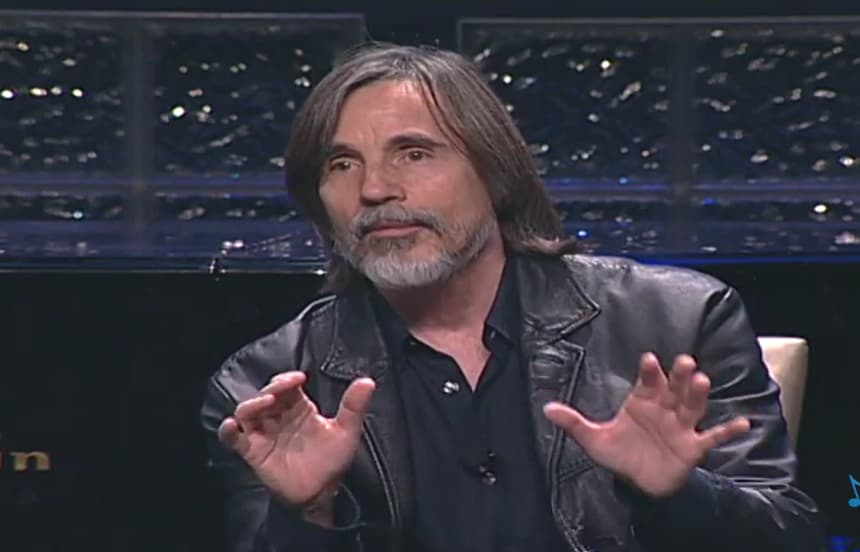
Jackson Browne at the 2008 ASCAP “I Create Music” Expo: Reflections on Sound, Songwriting, and the Art of Becoming
At the 2008 ASCAP “I Create Music” Expo, Jackson Browne offered a rare and thoughtful look into the inner mechanics of his songwriting life. Speaking candidly about changing band lineups, evolving studio technology, and the unpredictable chemistry of musicians, Browne framed his career not as a carefully engineered master plan, but as a long conversation with time, people, and sound itself.
Rather than writing for a fixed sonic vision, Browne explained that many of his most celebrated recordings were shaped by the musicians who happened to be available at a given moment. His albums, particularly throughout the 1970s and into the early 1980s, became documents of collaboration. Looking back while assembling a greatest hits collection, he described the deep satisfaction of revisiting liner notes and realizing just how many remarkable players had passed through his musical life. Some performed with him only once or twice, yet each left an imprint. For a young songwriter in early 1970s Hollywood, that process of discovery, figuring out who to call and when, was both thrilling and intimidating, especially in an era when studio time required approval, budgets, and trust.
Browne emphasized that the sound of his records was inseparable from the prevailing styles and recording technologies of their time. As studios began close miking drums and embracing multitrack recording, rhythm sections gained a new sense of power and separation. He recalled hearing drummer Russ Kunkel recorded in these evolving ways and recognizing how dramatically technology could reshape feel and impact. Music, he suggested, was rarely about innovation for its own sake. It was about making something that sounded right in the moment, using the tools and instincts available.
One of the most revealing moments in Browne’s talk came when he discussed the recording of “Doctor My Eyes.” The track began with an unconventional foundation. Kunkel played congas rather than a full drum kit, while Browne himself handled a piano part he described with self deprecation and humor. The groove, anchored by bassist Lee Sklar, felt deeply musical despite its simplicity. To Browne, it carried an echo of the Beatles, not in style but in spirit, a sense of swing and instinct overriding technical perfection.
He also contrasted two approaches to recording sessions. Early in his career, he encountered tightly arranged sessions designed to produce multiple songs within strict time limits. That method never suited him. Browne gravitated instead toward what were known as “head sessions,” where musicians arrived without charts and played what they felt in the moment. While this approach could yield magic, it also carried risks. He cited projects where extraordinary players failed to capture the true identity of the artists involved, proving that great musicianship alone does not guarantee emotional truth.
Ultimately, Browne positioned himself as someone shaped by both freedom and patience. His solo records often sound spontaneous, but he admitted they are carefully refined through editing and reflection. Perfection, he noted, is never fully attainable, but the pursuit itself gives the music its lasting resonance.
At the ASCAP Expo, Jackson Browne did more than recount stories. He articulated a philosophy of making records as living documents, shaped by people, technology, and time. It was a reminder that enduring songs are rarely planned. They are discovered, piece by piece, through trust in the process and respect for the moment.