
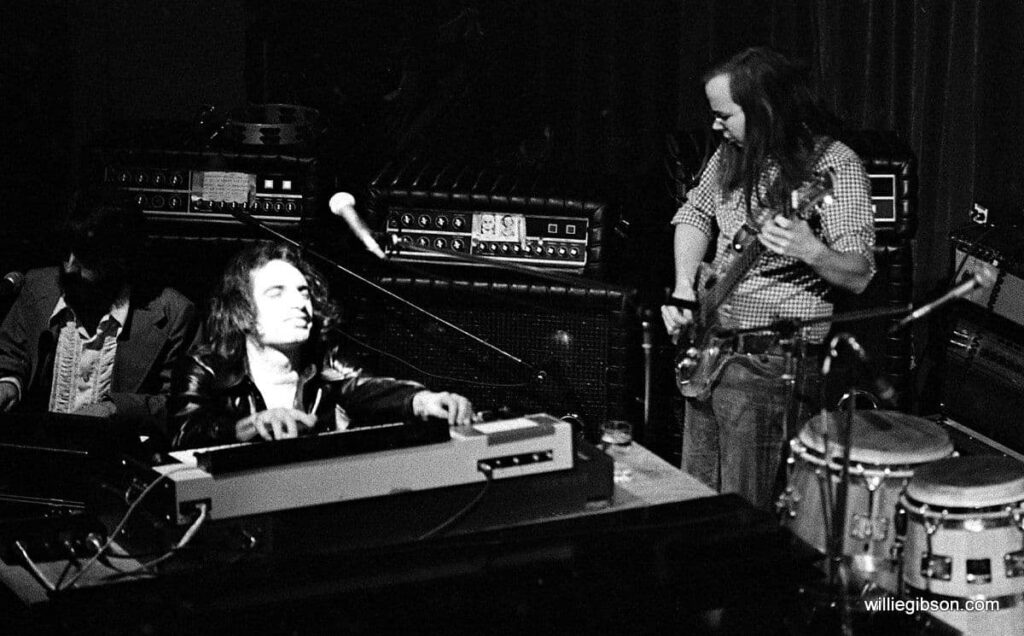
A Quiet Triumph of Sophistication: Steely Dan Live on September 21, 1993
On September 21, 1993, Steely Dan delivered a performance that captured the band at a fascinating point in their long and unconventional journey. Featuring guitarist Drew Zingg, the live renditions of “Countermoon” and “Teahouse on the Tracks” revealed a group deeply committed to musical refinement, emotional subtlety, and artistic integrity. This was Steely Dan not as hitmakers, but as master craftsmen performing for listeners who understood nuance.
By the early 1990s, Donald Fagen and Walter Becker had long since stepped away from the pressures of mainstream success. Their music during this period reflected a quieter confidence, shaped by jazz harmony, literate storytelling, and an unshakable devotion to detail. The September 21 performance embodied that philosophy. Nothing was rushed. Nothing was overstated. Every sound existed for a reason.
“Countermoon,” taken from Donald Fagen’s 1993 solo album Kamakiriad, unfolded with a sleek, almost futuristic elegance. The song’s rhythmic precision and layered textures translated beautifully to the live setting. Drew Zingg’s guitar work was central to this transformation. His tone was clean, controlled, and deeply musical, enhancing the song’s sense of motion without ever pulling focus away from its atmosphere. It was a performance built on balance, where restraint became a form of expression.
“Teahouse on the Tracks,” also from Kamakiriad, carried a very different emotional weight. Dreamlike and introspective, the song felt suspended between memory and imagination. In a live context, its subtle melancholy became even more pronounced. The arrangement allowed space for the music to breathe, inviting the audience into a reflective world shaped by late night imagery and quiet contemplation. This was Donald Fagen at his most cinematic, and Steely Dan proved they could honor that vision on stage with remarkable sensitivity.
What made this performance especially compelling was its sense of unity. Steely Dan, often associated with studio perfection and emotional distance, sounded relaxed and deeply connected. There was a shared understanding among the musicians, a trust that allowed complexity to feel effortless. Drew Zingg fit seamlessly into this environment, demonstrating a rare ability to support the band’s intricate language while adding warmth and clarity of his own.
There were no grand gestures, no attempts to dazzle through volume or speed. Instead, the power of the night came from its sophistication. This was music that rewarded careful listening, appealing to those who valued texture over spectacle and meaning over momentum.
Looking back, the September 21, 1993 performance stands as a quiet but significant moment in Steely Dan’s live history. It showed a band unafraid to move forward, unburdened by nostalgia, and fully committed to artistic evolution. For fans, it remains a rare glimpse of Steely Dan in their mature phase, proving that longevity in music is not about repeating the past, but about refining the truth one performance at a time.