
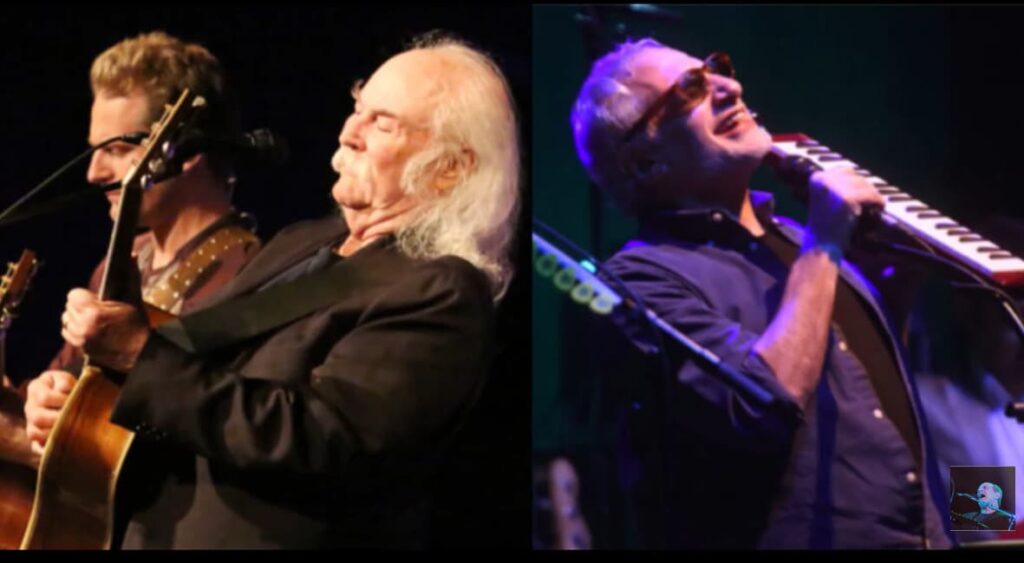
Steely Dan and David Crosby Forge a Rare Musical Bridge with Wooden Ships at the Beacon
In an unexpected yet meaningful musical moment on October 15, 2019, Steely Dan welcomed legendary singer-songwriter David Crosby to the stage of New York’s Beacon Theatre, creating a cross-generational collaboration that became one of the standout highlights of the band’s 2019 residency. What made this performance remarkable was not just the talent involved, but the rich historical lineage of the song they chose to play together: “Wooden Ships.”
Steely Dan’s Beacon run that October was already special. As part of a multi-night engagement, the band opened the evening by performing their acclaimed album Aja in full, followed by a set predominantly drawn from their classic catalog. Toward the end of the main set, the atmosphere shifted when Crosby appeared onstage, taking the lead with Wooden Ships, a song he co-wrote with Paul Kantner and Stephen Stills and which first gained fame on Crosby, Stills & Nash’s self-titled 1969 debut.
The choice of Wooden Ships was deeply symbolic. Originally a folk-rock meditation on survival and transcendence in the face of societal collapse, the song’s themes resonate with a spirit of resilience and shared humanity. It may seem a world away from the smooth jazz rock that Steely Dan perfected on Aja, but Crosby’s presence and vocal leadership made the transition feel organic, almost inevitable. Through his vocal lines and onstage rapport with Donald Fagen and the Steely Dan band members, the performance distilled the song’s emotional core while honoring both artists’ legacies.
Fans at the Beacon Theatre understood the moment’s significance. Hearing Crosby launch into lines he had championed decades earlier, backed by one of rock’s most meticulous and musically sophisticated bands, was both a surprise and a reminder of music’s capacity to transcend stylistic boundaries. The crowd’s reaction, captured in multiple fan recordings, reflected the collective thrill of witnessing a rare convergence of iconic voices and histories.
Following Wooden Ships, Crosby remained onstage for encore performances, further extending the sense of collaboration that defined the evening. In contrast to what many fans expect from high-profile rock concerts, this was not a mere cameo or promotional stunt. It was an exchange between artists with deep respect for one another’s work, and for the songs themselves, ranging from the introspective to the celebratory.
More than just a standout moment from a residency, this performance of Wooden Ships stands as a testament to the enduring vitality of classic rock’s most thoughtful voices. When artists with distinct musical identities meet on common ground, the result can be both unexpected and timeless, a reminder that some songs truly belong to the collective memory of music lovers everywhere.