
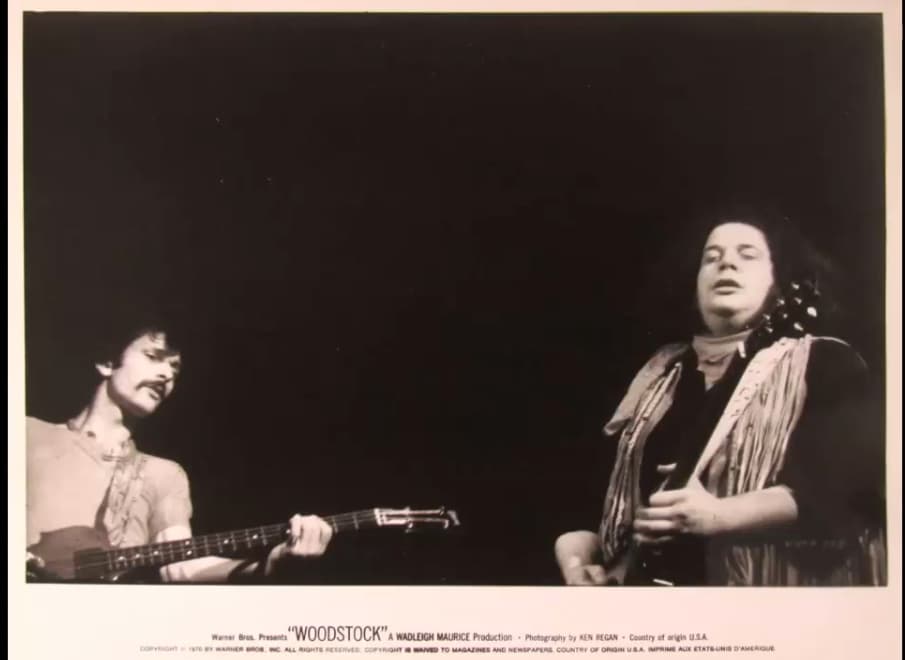
When Mountain Took the Stage: Leslie West’s Commanding Guitar in “Get Out My Life Woman” at the Capitol Theater, 1973
In 1973, the American hard rock band Mountain delivered a powerful live performance of the song “Get Out My Life Woman” at the Capitol Theater, a venue well known among rock fans for hosting memorable concerts during the early seventies. The performance captures the group during a period when their sound was already firmly established. Built on heavy blues roots, strong rhythmic drive, and the unmistakable guitar tone of Leslie West, Mountain created a style that would influence generations of rock musicians.
The song “Get Out My Life Woman” itself was originally written by Allen Toussaint in 1965 and had been recorded by several artists before Mountain interpreted it in their own heavier style. When Mountain performed the song live, they transformed the rhythm and groove into something far more intense, emphasizing thick guitar distortion and muscular dynamics. By the early seventies, the band had already become known for turning blues based material into massive hard rock statements.
At the center of this performance stands guitarist and vocalist Leslie West, whose playing remains one of the defining elements of Mountain’s sound. West was widely respected for his powerful tone, often achieved through his Gibson Les Paul Junior guitar combined with large amplification. Unlike many guitarists who relied on speed or technical flash, West built his reputation on tone, phrasing, and expressive vibrato. His playing style was direct and emotionally charged, allowing every note to carry weight and presence.
During the 1973 Capitol Theater performance, West demonstrates precisely why his guitar sound became so influential. The opening riffs immediately establish a thick wall of sound, driven by his distinctive vibrato technique. Each sustained note seems to breathe with intensity, giving the performance a raw and almost physical quality. Fans and critics alike have often pointed out that West’s tone could be recognized within seconds, a testament to the individuality of his approach.
The rest of Mountain supports the performance with a tight and energetic backing. The rhythm section drives the groove forward while leaving ample space for West’s guitar to dominate the sonic landscape. This balance between heavy instrumentation and controlled musical space became one of the trademarks of the band during their peak years.
By 1973, Mountain had already secured their place in rock history through albums such as “Climbing!” and through iconic songs like “Mississippi Queen.” Their live performances were an essential part of that reputation. The Capitol Theater recording of “Get Out My Life Woman” demonstrates how the band could take a well known composition and reshape it into something unmistakably their own.
More than fifty years later, this performance continues to circulate among rock enthusiasts and guitar fans, largely because it showcases Leslie West at a moment when his tone, phrasing, and stage presence were at full strength. For listeners who want to understand why West is often described as one of the most distinctive guitar voices in American rock, this live recording remains an excellent example.