
No One Plays Like This Anymore: A Defining Live Moment of Seventies Rock
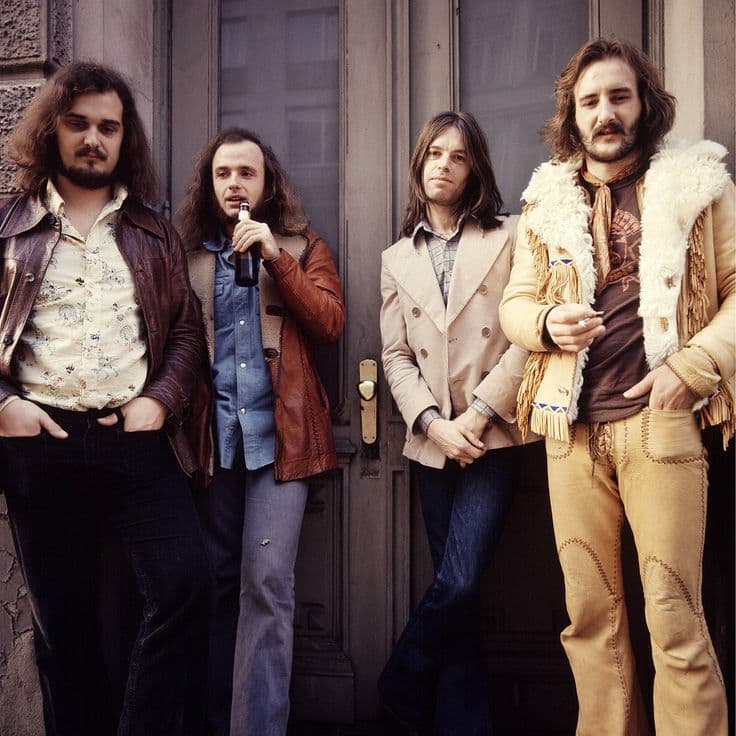
On October 5, 1973, the Dutch band Focus appeared on The Midnight Special, delivering a performance of “Hocus Pocus” that remains one of the most distinctive moments in live rock television. At a time when many bands relied on conventional structures and presentation, Focus brought something far less predictable, combining technical precision with theatrical elements that set them apart immediately.
Originally released in 1971 on the album Moving Waves, “Hocus Pocus” was already known for its unusual composition. Built around rapid guitar lines, shifting dynamics, and unexpected vocal techniques including yodeling by frontman Thijs van Leer, the track challenged typical expectations of what a rock performance could be. In the studio version, these elements are tightly arranged and controlled, giving the piece a polished yet eccentric identity.
The live television performance, however, reveals a different dimension. Guitarist Jan Akkerman takes a central role, delivering fast, articulate passages with a clarity that underscores his reputation as one of the era’s most technically accomplished players. There is a rawness to the live setting that contrasts with the studio recording. The tempo feels more urgent, the transitions slightly less contained, and the overall energy more immediate.
This difference between studio and live interpretation is where the performance gains much of its lasting value. The studio version presents “Hocus Pocus” as a carefully constructed piece. On stage, it becomes something closer to a controlled risk. The band moves through complex sections with precision, yet there is always a sense that the performance could shift at any moment. That tension is part of what keeps it engaging even decades later.
Behind the scenes, this appearance came during a period when European progressive rock was gaining wider exposure in the United States. Television programs like The Midnight Special provided a platform for bands such as Focus to reach audiences who may not have encountered this style before. In that context, the performance is not only a display of musicianship but also an introduction to a different approach to rock composition.
Viewed today, the clip carries a strong sense of contrast with modern production. There are no elaborate visual effects or digital enhancements. The focus remains entirely on the musicians and their ability to execute a demanding piece in real time. For many listeners returning to this performance with more experienced ears, the impact is clearer. The complexity that once seemed playful now reveals a deeper level of discipline and coordination.
Moments within the performance stand out in particular. Brief passages of rapid guitar work, lasting only seconds, demonstrate a level of control and expression that would define an entire career. These are the fragments that often lead viewers to pause and replay, not out of nostalgia alone, but out of recognition.
In the end, this performance is more than a novelty or a curiosity. It is a document of a time when experimentation and technical skill were central to mainstream rock exposure. It reminds us that innovation does not always arrive quietly, and that sometimes, a few unforgettable seconds are enough to explain why a band endures.