
A Song Outran Its Film: David Essex on Television at the Turn of an Era
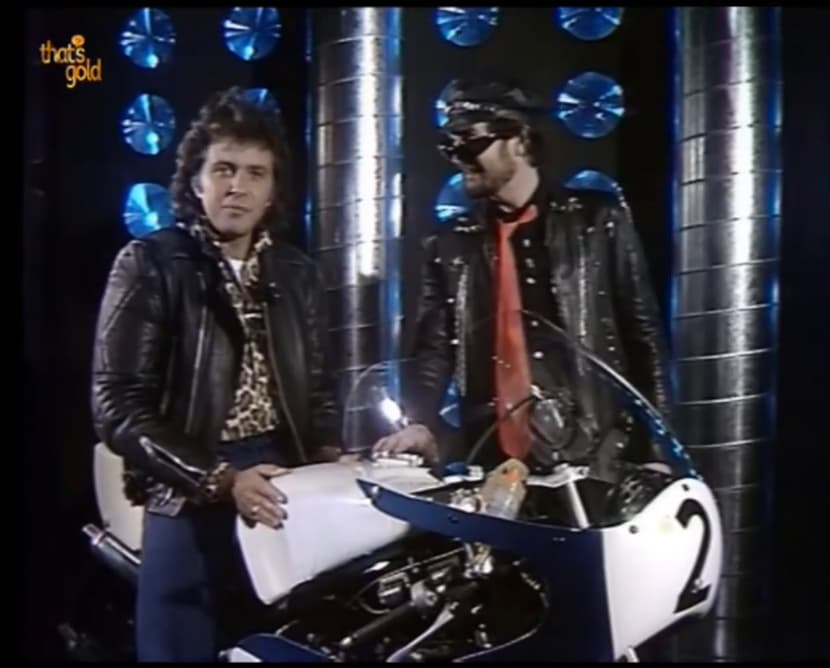
On March 17, 1980, David Essex appeared on The Kenny Everett Video Show to perform “Silver Dream Machine,” and the setting mattered as much as the song itself. This was not a conventional music program. Everett’s show thrived on rapid shifts between comedy, visual gags, and stylized performances, demanding that any artist stepping onto its stage adapt to a format where image and timing were as important as sound.
Essex was uniquely positioned to meet that demand. By 1980, he was no longer just a chart topping pop figure. He was also an actor, and “Silver Dream Machine” came directly from the film Silver Dream Racer, in which he played the lead role. That connection created an unusual dynamic. He was not simply promoting a single. He was carrying a piece of a film narrative into a television environment that operated by entirely different rules.
What followed made the performance notable in ways that go beyond the surface.
The film itself struggled to make a lasting impact commercially. The song did not. It climbed into the UK Top 5, quickly separating its identity from the project that introduced it. By the time Essex performed it on television, “Silver Dream Machine” had already begun to stand on its own. This reversal is central to understanding the moment. The performance is not tied to the success of the film. It exists because the song had proven resilient enough to survive independently.
The structure of the show also shaped how the song was delivered. There is no extended buildup, no attempt to recreate a cinematic arc. The performance is concise, controlled, and visually aware. Essex leans into presence rather than vocal excess, aligning with a program where spectacle is compressed into short segments. It feels closer to a character stepping briefly into view than a traditional live set.
At a broader level, the timing places the performance at a cultural intersection. The late 1970s glam influenced pop that had defined Essex’s earlier success was beginning to уступ ground to emerging new wave aesthetics. “Silver Dream Machine,” with its themes of speed, ambition, and escape, carries traces of that earlier era while existing on the edge of transition. The television format amplifies this effect. It captures an artist between phases, adapting without fully abandoning what came before.
When the performance ends, it does so without dramatic resolution, consistent with the constraints of the format. Yet that brevity reinforces its character. Like the title suggests, it passes quickly, almost like a vision.
In retrospect, this appearance stands as more than a promotional slot. It documents a moment when music, film, and television intersected, and when a single song proved strong enough to move beyond its origins and define its own trajectory.