
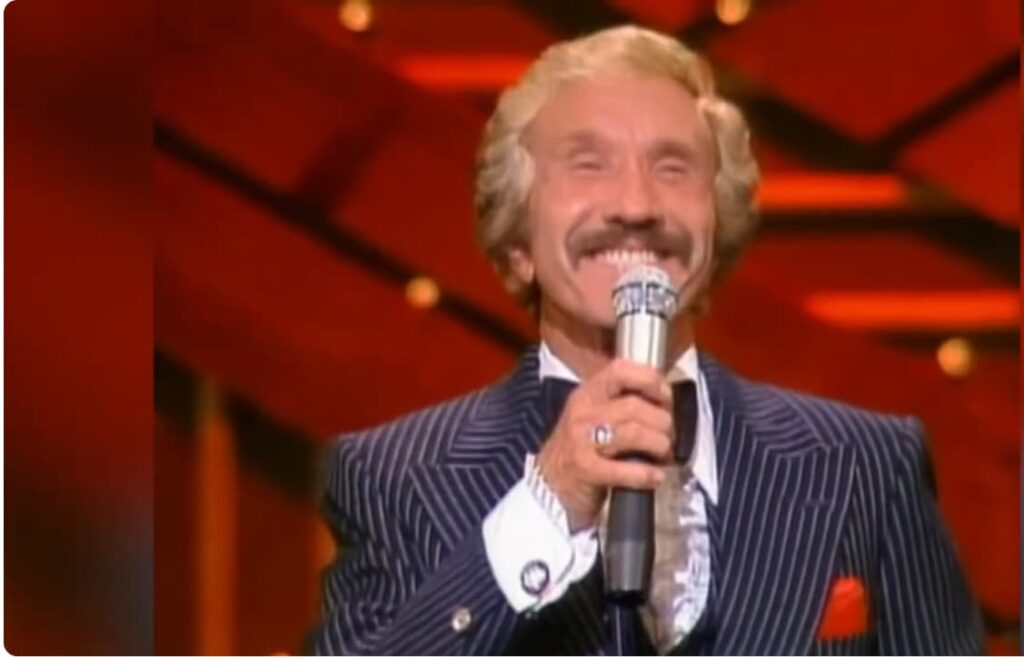
When Memories Outlive the Man: Revisiting “Some Memories Just Won’t Die”
Few performances capture the fragile boundary between life and legacy as powerfully as Marty Robbins singing “Some Memories Just Won’t Die.” Though not his final recording before his passing in 1982, the song has come to feel like an unintentional farewell, one shaped more by emotion than chronology.
At its core, the performance revolves around a haunting paradox: memories endure, even when the person who created them is gone. This theme resonates deeply in the context of Robbins’ later years. Battling serious heart issues, he no longer performed with the same technical precision that defined his earlier career. Yet, in this very vulnerability, something more compelling emerged, an honesty that transcended perfection.
The opening of the performance is striking in its restraint. There is no dramatic entrance, no attempt to command the stage. Instead, Robbins begins almost as if confiding in a single listener. This intimacy sets the tone for what follows: not a show, but a confession. As the song progresses toward its chorus, the emotional weight builds. The repeated line, “memories just won’t die,” lands with increasing intensity, not because of vocal power, but because of its quiet insistence. Listeners are drawn in, recognizing their own unforgotten pasts within his words.
Perhaps the most compelling aspect comes at the end. There is no resolution, no sense of closure,only a lingering stillness. It feels unfinished, as though the story continues beyond the final note. In hindsi ght, this lack of conclusion mirrors the incompleteness of life itself, especially for an artist whose career was cut short.
What makes this performance particularly fascinating is the unintended connection between song and legacy. Robbins sings about memories of lost love, yet the song itself has become a vessel for remembering him. It transforms from a personal lament into a broader reflection on how artists live on through their work.
For audiences, this creates a powerful emotional bridge. Older listeners may find themselves revisiting their own past, while younger audiences encounter a timeless expression of longing. In an era often driven by technical brilliance, this performance stands out for a different reason: it is not perfect, but it is profoundly real.
In the end, “Some Memories Just Won’t Die” reminds us that while voices may fade, the emotions they carry rarely do.