
The Shot Heard in a Heartbeat Why Big Iron Still Captivates Audiences
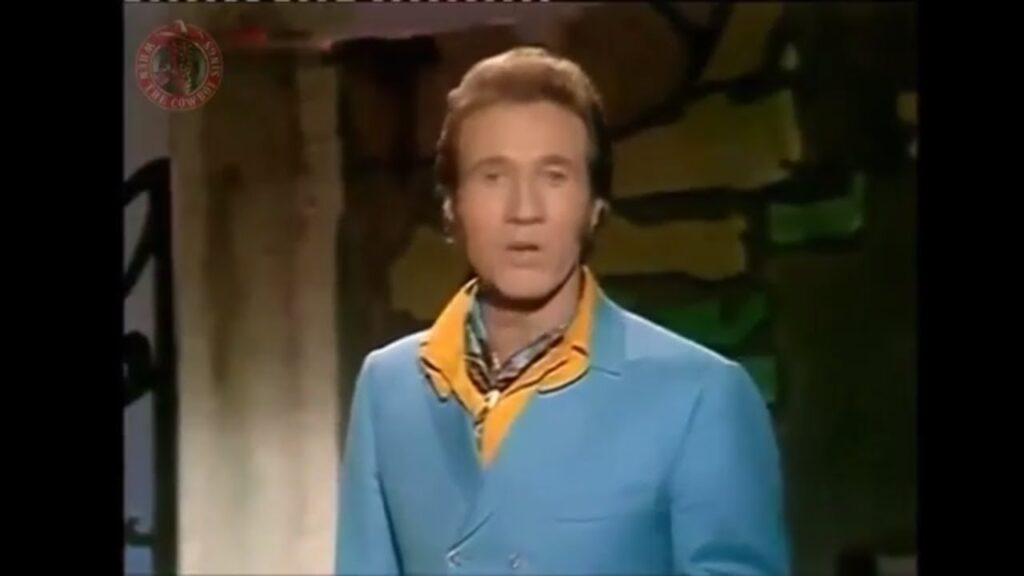
When Marty Robbins performs Big Iron, the experience feels less like a concert and more like witnessing a story unfold in real time. First released in 1959 as part of the album Gunfighter Ballads and Trail Songs, the song remains one of the most powerful examples of narrative songwriting in country music.
From the opening line, the audience is immediately drawn into the town of Agua Fria. There is no gradual introduction. The story begins at once, placing listeners in the middle of a tense situation. The steady rhythm of the music mirrors the sound of a horse moving across dry land, creating a sense of motion and anticipation. This simple yet effective opening is one of the reasons the performance captures attention so quickly.
What makes the live delivery especially compelling is Robbins’ calm and controlled voice. Instead of dramatizing the story with exaggerated emotion, he tells it with restraint. This approach creates a striking contrast between the quiet delivery and the intense events described in the lyrics. The audience knows a confrontation is coming, but the tension builds slowly through expectation rather than volume or speed.
The most remarkable moment arrives during the final confrontation between the ranger and Texas Red. After all the buildup, the gunfight happens in a single brief instant. There is no extended battle or dramatic pause. Texas Red, who has been described as unbeatable, is defeated almost immediately. This unexpected brevity is what gives the moment its power. It reflects the reality of sudden violence while also subverting the audience’s expectations.
The figure of the ranger adds another layer of intrigue. He is never fully identified, which gives him a mythical presence. The big iron he carries becomes a symbol of justice and precision rather than just a weapon. This symbolism deepens the meaning of the performance and leaves a lasting impression on listeners.
Over time, the song has also become a source of nostalgia, recalling the golden era of Western storytelling. Its revival through Fallout: New Vegas has introduced it to a younger audience, bridging generations through a shared appreciation of its storytelling.
In the end, Big Iron endures because it delivers a complete and compelling narrative with remarkable efficiency. Every performance feels like a retelling of a legend, where the most important moment happens in the blink of an eye.