
A Comeback Written in Rhythm: Slade Reclaims America on a Defining 1984 Broadcast
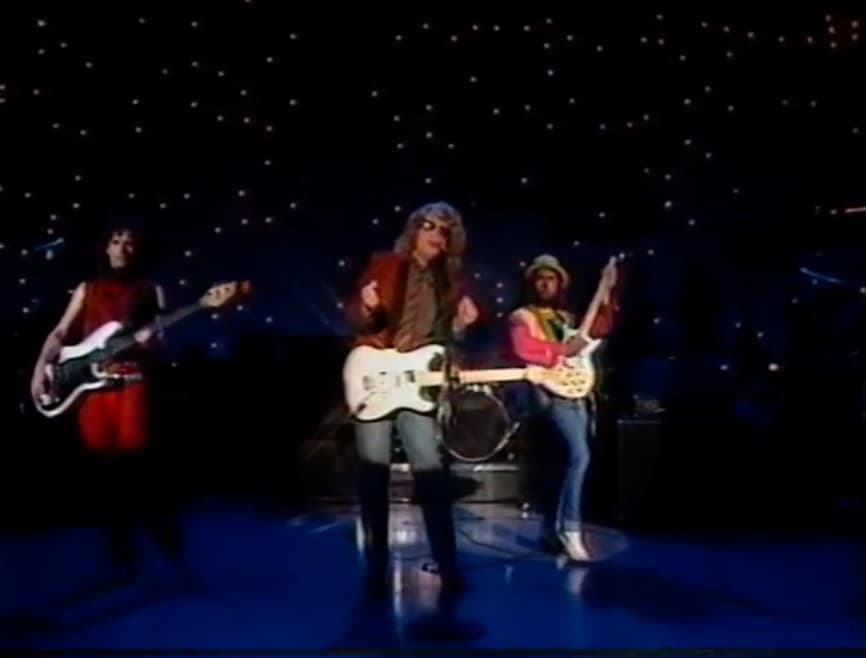
In June 1984, a vibrant appearance on American Bandstand placed Slade back into the American spotlight with renewed purpose. Performing “Run Runaway” and “My Oh My,” and joining Dick Clark for a brief interview, the band delivered more than a promotional segment. They presented a compelling narrative of resilience, identity, and unexpected revival.
By the mid nineteen eighties, Slade’s earlier dominance in the United Kingdom had already become part of rock history. Their initial attempt to break into the United States during the mid seventies had not produced lasting results. Yet the success of other artists interpreting their work helped reintroduce their sound to a new audience. This renewed interest created the conditions for a second chance, and Slade approached it with clarity and confidence.
The performance of “Run Runaway” establishes momentum immediately. Its rhythmic pulse and distinctive melodic structure create an atmosphere that is both energetic and accessible. The response from the studio audience is instant and visible, reflecting a connection that does not require explanation. This moment signals that Slade is no longer an unfamiliar presence. They are being actively received.
In contrast, “My Oh My” shifts the emotional tone. The song unfolds with a sense of collective spirit, inviting participation rather than demanding attention. This transition highlights the band’s ability to move between intensity and reflection, demonstrating a broader musical range than their earlier image might suggest. Together, the two performances create a balanced portrait of a group that understands both impact and restraint.
The interview segment adds another layer of significance. In conversation with Dick Clark, the band members present themselves with a grounded and direct manner. There is no attempt to reshape their identity to fit expectations. Instead, they articulate their experience with honesty, acknowledging both their past achievements and the challenges of reintroducing themselves to a different market.
The closing images of the audience dancing reinforce the success of this moment. Participation becomes the ultimate measure of acceptance. The distance between performer and listener disappears, replaced by shared energy and recognition.
Viewed in retrospect, this broadcast captures a rare intersection of timing and persistence. It documents a band that refused to fade and instead found a way to return on its own terms. For contemporary audiences, it serves as a reminder that in music, reinvention is not always about change. Sometimes, it is about being heard at the right moment.