
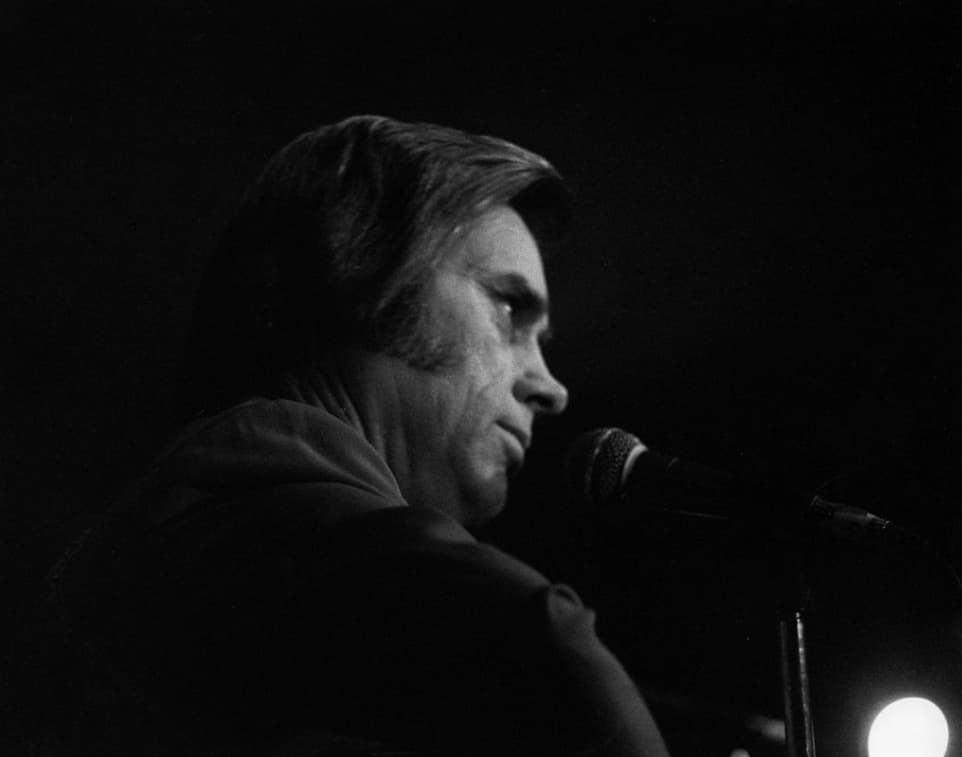
The Song That Sparked a Legend — and Carried a Ghost
When George Jones stepped onto the stage to perform “White Lightning,” it never felt like just another song. It felt like a moment suspended between celebration and memory a performance bursting with energy, yet quietly shadowed by a story few in the crowd fully grasped.
Released in 1959, “White Lightning” became the first No. 1 hit of Jones’ career, marking the exact point where a struggling artist transformed into a country music legend. Its infectious rhythm, playful lyrics about moonshine, and raw Southern attitude made it an instant crowd favorite. In live performances, the effect was electric. The moment the opening notes hit, audiences often reacted before Jones even sang a word a testament to how deeply the song had embedded itself into American musical culture.
But behind the upbeat tempo lies a haunting truth. The song was written by J. P. Richardson, who tragically died in the infamous The Day the Music Died just weeks before the track climbed to the top of the charts. Richardson never lived to see the success of the song he created. This contrast between the song’s lively spirit and its tragic backstory gives every live performance an unspoken emotional depth.
On stage, Jones didn’t merely perform “White Lightning”; he embodied it. His delivery was loose, charismatic, and unmistakably authentic, reflecting not only the rebellious tone of the song but also his own turbulent lifestyle. Known for his struggles with alcohol and a life often as chaotic as the stories in his music, Jones blurred the line between artist and subject. In many ways, he wasn’t just singing about that world he was living it.
This duality is what makes live performances of “White Lightning” so compelling. The audience experiences pure, unfiltered joy clapping along, feeding off the song’s relentless momentum while the deeper narrative lingers just beneath the surface. It is a rare kind of tension: a song that makes you feel alive, built on a story of loss.
Decades later, the performance still resonates. Not just as a piece of music history, but as a reminder that some songs do more than entertain. They carry beginnings. They carry endings. And sometimes, they carry the echoes of those who never got to hear the applause.