
Rising Through Contrast: Chicago’s “Feeling Stronger Every Day” and a Performance That Leaves You Wanting More
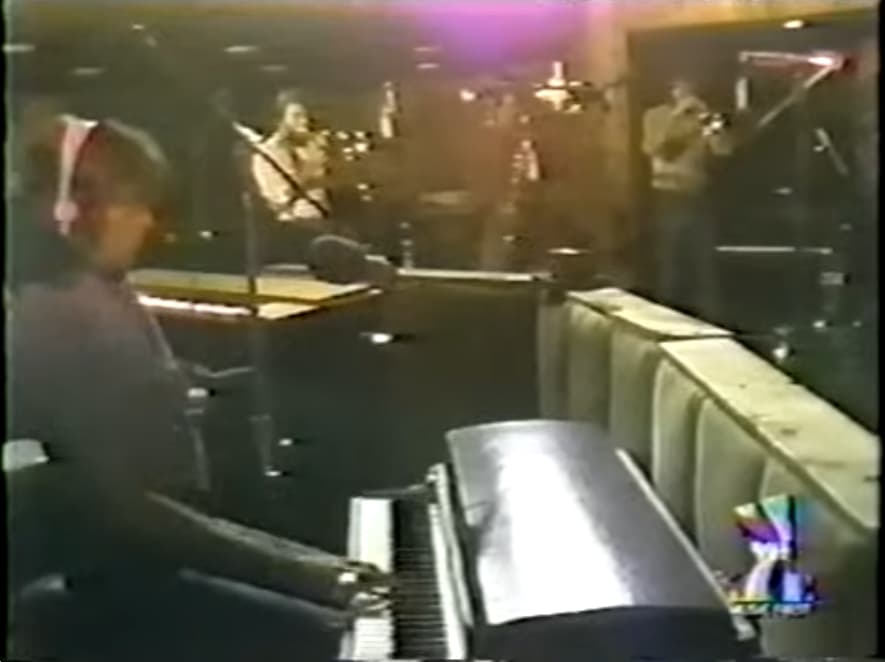
An excerpt from “Chicago In The Rockies” captures Chicago performing “Feeling Stronger Every Day” in a way that highlights both the band’s musical range and the unique circumstances of television production. Though the clip ends prematurely due to a commercial interruption, what remains is a revealing snapshot of a group operating at a creative peak.
Originally released in 1973, the song reflects a balance that defined Chicago during this period. It combines melodic sensitivity with a powerful rock foundation, supported by the band’s signature brass arrangements. In this performance, that balance is clearly evident. The opening unfolds with a controlled and measured tone, led by the vocal of Peter Cetera, whose delivery emphasizes clarity and emotional restraint. This initial section draws the listener in gradually, establishing a reflective atmosphere.
As the performance progresses, a transformation begins to take shape. The structure of the song allows for a shift from introspection to intensity, a transition that becomes one of its most defining features. This change is not abrupt but carefully built, creating anticipation for the climactic section that follows. It is within this rising momentum that Terry Kath emerges as a central force. His guitar work introduces a surge of energy that contrasts sharply with the earlier restraint, demonstrating both technical skill and expressive power.
The interplay between the band’s instrumental sections contributes significantly to the overall effect. The brass elements provide depth and color, while the rhythm section maintains a steady foundation that supports the evolving dynamics. This cohesion reflects a group that had fully developed its identity, capable of blending multiple influences into a unified sound.
What distinguishes this particular clip, however, is its incomplete conclusion. As the song approaches its final moments, the broadcast cuts away, removing the full impact of the ending. In its original form, the track concludes with one of the most energetic passages in Chicago’s catalog. The absence of this resolution creates a sense of interruption that is both frustrating and intriguing. It leaves the performance suspended, inviting the listener to imagine the missing climax.
Viewed in context, this recording represents more than a partial performance. It captures a band at a moment when their musical approach was both expansive and accessible. The combination of subtle beginnings and powerful development reflects the broader trajectory of Chicago during this era. Even in incomplete form, the performance communicates a clear sense of growth and momentum, reinforcing the enduring strength of the song itself.