
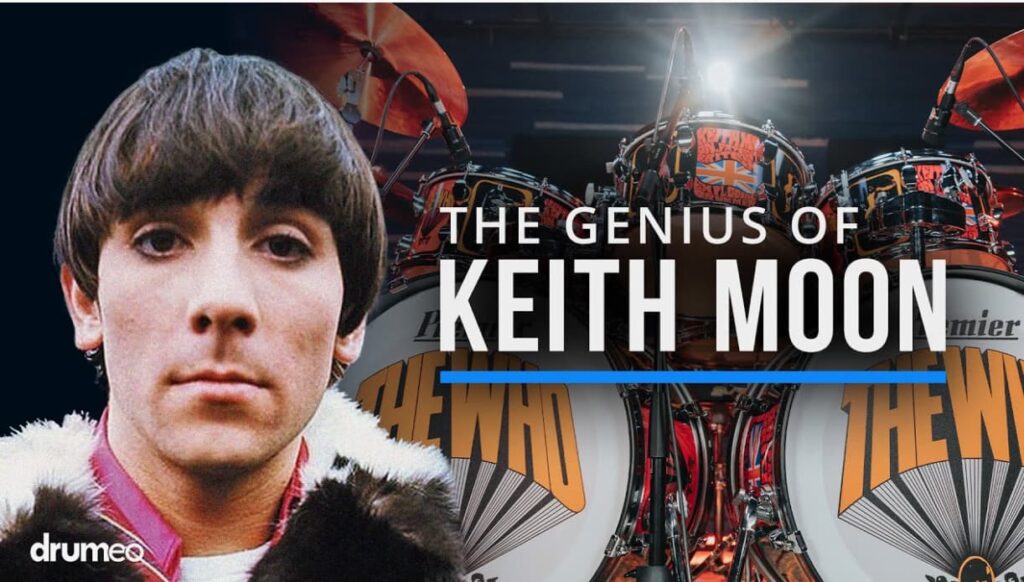
Why Keith Moon Remains One of the Most Revolutionary Musicians in Rock History
Few musicians in rock history have left an impact as lasting and distinctive as Keith Moon. Decades after his performances with The Who first stunned audiences, Moon continues to be celebrated not only for his unpredictable personality but also for his groundbreaking approach to drumming. Recent discussions surrounding documentary clips and musical analysis videos have once again highlighted the extraordinary creativity that made him one of the most original drummers ever to perform on a rock stage.
For many fans and musicians, Keith Moon transformed the role of the drummer within a rock band. During the 1960s and 1970s, drummers were often expected to provide structure and remain largely in the background. Moon challenged that idea completely. His playing style turned the drum kit into a leading voice within the music, adding constant movement, energy, and emotional intensity to nearly every performance.
What made Moon especially unique was his refusal to follow traditional drumming conventions. Rather than focusing heavily on standard hi hat rhythms, he often played with explosive crashes, rolling fills, and rapid transitions across the entire drum kit. His performances sounded chaotic to some listeners at first, yet musicians frequently point out that his timing and musical instinct were remarkably precise.
Music historians have also noted the influence of jazz drummer Gene Krupa on Moon’s theatrical stage presence and aggressive playing technique. Like Krupa, Moon approached drumming as both a musical and visual performance. His energy behind the kit became a major part of The Who’s identity during their rise to international fame.
Alongside guitarist Pete Townshend, vocalist Roger Daltrey, and bassist John Entwistle, Moon helped create one of the most powerful and innovative bands in rock music. His chemistry with Entwistle was especially admired because both musicians played with unusual freedom and intensity. Instead of following predictable patterns, they interacted almost like two lead instrumentalists performing simultaneously.
Many modern drummers continue to study Moon’s recordings because his style remains difficult to imitate. His fills were unpredictable, emotional, and instantly recognizable. More importantly, his playing served the emotion of the song rather than technical perfection alone.
In recent years, music analysis videos and restored concert footage have encouraged a new generation to look beyond Moon’s public image and focus on his actual musicianship. Fans often argue that discussions about his wild behavior have overshadowed the extraordinary level of innovation he brought to rock drumming.
Today, Keith Moon is widely remembered not simply as a famous drummer, but as a musician who permanently changed the sound and possibilities of rock music itself.