
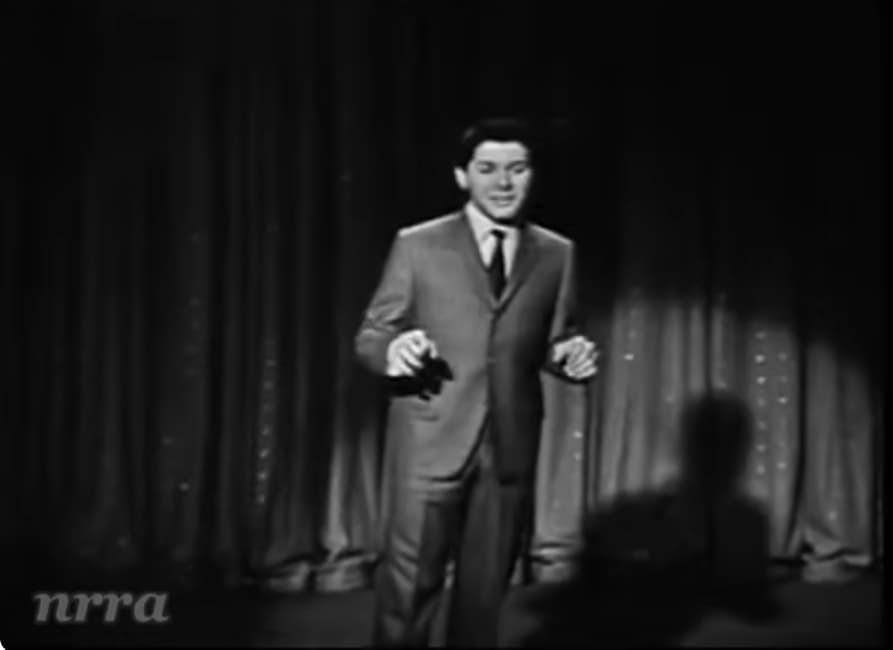
A Simple Song That Still Breaks Hearts Decades Later
More than sixty years later, watching Paul Anka perform “Puppy Love” still feels surprisingly emotional. The song carries a softness and sincerity that many listeners believe has become rare in modern music. In the black and white television performances that survive today, audiences can be seen smiling warmly, fully absorbed in the moment. There are no phones raised in the air, no distractions, no attempts to record every second. There is only music, admiration, and genuine human connection.
Released in 1960, “Puppy Love” became one of the defining songs of Paul Anka’s early career. At the time, Anka was still a teenager himself, yet he managed to write lyrics that captured the heartbreak and vulnerability of young love with remarkable honesty. The song was inspired by his real life relationship with Annette Funicello, one of America’s most beloved young television stars during that era. According to Anka, he wrote the song after the couple’s relationship ended when they were both very young, around seventeen years old.
What makes the performance so powerful today is not only the music itself, but also the atmosphere surrounding it. The orchestration is gentle and elegant, allowing Anka’s voice to remain the emotional center of the song. There is an innocence in both the lyrics and the performance style that reflects a very different period in popular culture. Many viewers who revisit the clip today describe it as comforting and even heartbreaking, not because the song is tragic, but because it reminds them of a slower and more sincere world.
The audience reactions visible in old recordings often become part of the emotional experience. Young fans watch Paul Anka with admiration and excitement, while adults in the crowd seem equally charmed by his calm presence and polished delivery. That authenticity is one reason the clip continues to resonate across generations.
Over time, “Puppy Love” has remained far more than a nostalgic hit from the early 1960s. It stands as a reminder of how deeply simple music can affect people when it comes from a real emotional place. Paul Anka was not trying to create a grand masterpiece. He was simply writing about young heartbreak as he understood it at the time. Decades later, listeners still feel every word.