
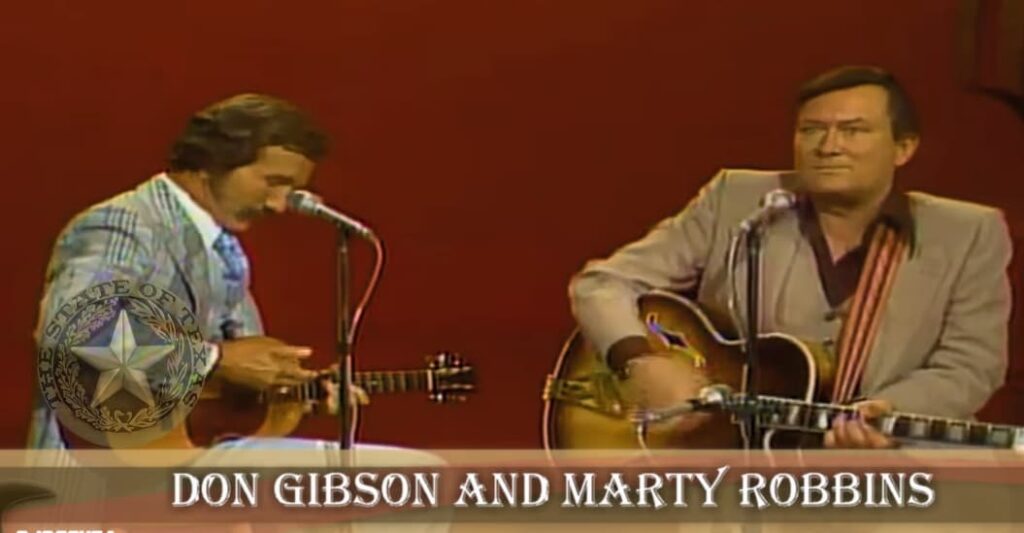
Timeless Masters on Stage Don Gibson and Marty Robbins Reunited in a Classic Television Moment
A resurfaced television clip featuring Don Gibson and Marty Robbins on The Marty Robbins Show is drawing renewed attention from classic country music fans. The performance highlights two of the most respected voices and writers in American country history sharing the same stage in a simple and heartfelt setting.
The clip captures a time when television variety shows regularly brought major music figures into American homes. Both artists are seen performing with a calm confidence that reflects decades of experience on stage and in recording studios. The arrangement is understated, allowing the vocals and musicianship to take center stage without heavy production.
Viewers responding to the clip have expressed strong emotional reactions. Many describe a sense of nostalgia, recalling how the songs of Don Gibson and Marty Robbins shaped their younger years. Some listeners say they spent much of their early life playing Gibson songs on jukeboxes and continue to regard pieces like I Can’t Stop Loving You as defining classics of the era.
Others highlight the musical quality of the performance itself, praising the band and especially the guitar work of Nashville musician Jack Pruitt. His lead playing is noted by fans as a key element that enhances the live arrangement and reflects the high level of studio talent common in that period.
Comments from viewers also reflect a broader comparison between musical eras. Several express admiration for the clarity and emotional honesty of older country recordings, describing them as deeply meaningful and enduring. While opinions on modern music vary, the overall tone of the discussion focuses more on appreciation for the past rather than criticism of the present.
Both Gibson and Robbins are frequently recognized for their ability to bridge country and popular music audiences. Their songs achieved success across multiple charts, helping country music reach a wider mainstream audience during the mid twentieth century.
This rediscovered clip serves as a reminder of their lasting influence. It preserves not only a performance but also a cultural moment when storytelling, melody, and simple stage presentation were enough to captivate millions of viewers.