
The Final Curtains of a Glam Rock Carousel: Remembering the Rare and Misunderstood Twilight of Wizzard on Supersonic
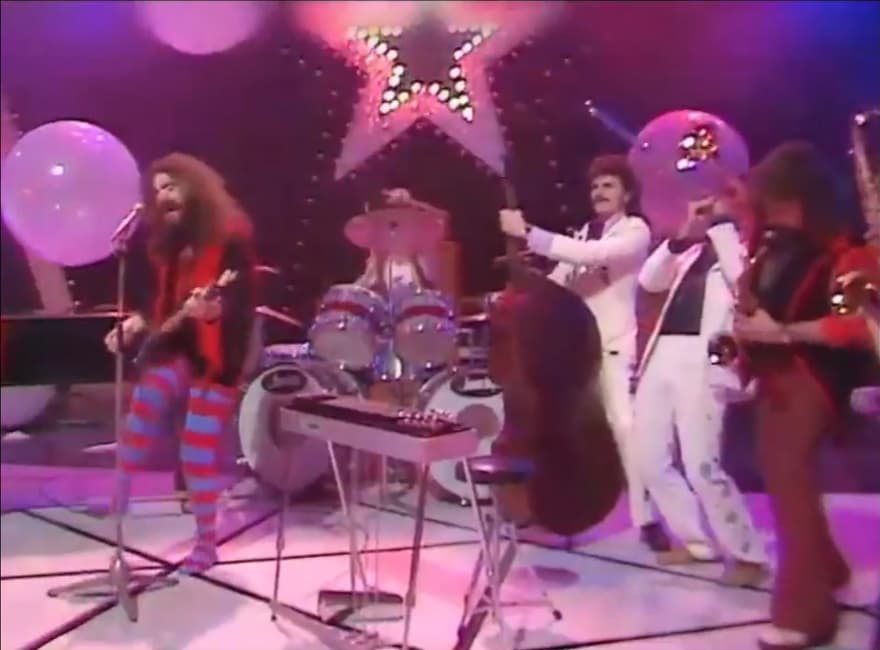
The erratic timeline of British pop music is occasionally haunted by a particular kind of beautiful tragedy, where a legendary band delivers their definitive creative farewell completely unnoticed by the mainstream charts. On Saturday, November 1st, 1975, the viewers of ITV’s popular music program Supersonic witnessed exactly such a momentous, bittersweet milestone. A professionally significant archival video preserves the eccentric English rock outfit Wizzard delivering their final televised appearance, performing an intensely energetic rendition of their single “Rattlesnake Roll.” Standing today as a breathtaking historical holy grail for music preservationists worldwide, this ultra rare footage captures the ultimate stand of a brilliant musical collective just before their historical fire faded into the shadows of the past.
To experience this specific nineteen seventy five broadcast in its enhanced clarity is a profoundly moving journey that triggers a powerful wave of pure nostalgia and deep emotional warmth. Wizzard was famously envisioned by the mythic multi instrumentalist Roy Wood following his groundbreaking tenures with the Move and the Electric Light Orchestra. Active primarily from nineteen seventy two through nineteen seventy five, the group is universally immortalized for their festive anthem “I Wish It Could Be Christmas Everyday.” Yet, their true artistic identity extended far beyond holiday cheer, utilizing a sophisticated, avant garde blending of glam rock, art rock, traditional rock and roll, and jazz rock structures that consistently pushed the boundaries of standard songwriting.
The profound value of this resurrected archive lies in its capacity to answer the burning curiosities of dedicated rock historians while evoking a gentle wave of sadness for the late, incredibly talented keyboardist Bob Brady. Watching the screen reveals a fascinating, shifting late era lineup where iconic mainstays like Roy Wood, Rick Price, and Mike de Albuquerque lock arms with Brady to navigate the intricate, brass heavy textures of the song. While academic sources frequently claim certain members did not depart until the following year, this unique visual record offers invaluable clues regarding the mystery musicians holding down the drums and baritone saxophone during their final chapter.
Despite the sheer brilliance of the arrangement, “Rattlesnake Roll” tragically failed to chart upon its release, perhaps because contemporary audiences in late nineteen seventy five were simply unable to relate to the band’s rapidly evolving, experimental sonic direction. Operating in a golden era completely free from modern digital tracking or artificial studio filters, these master musicians relied entirely on raw natural talent and an untamed, infectious stamina to execute what many purists champion as a lost masterpiece. Ultimately, this magnificent nineteen seventy five Supersonic broadcast remains an indispensable triumph, ensuring that the wonderful, chaotic legacy of Wizzard’s final bow will continue to provide deep historical inspiration for music lovers across the globe.