
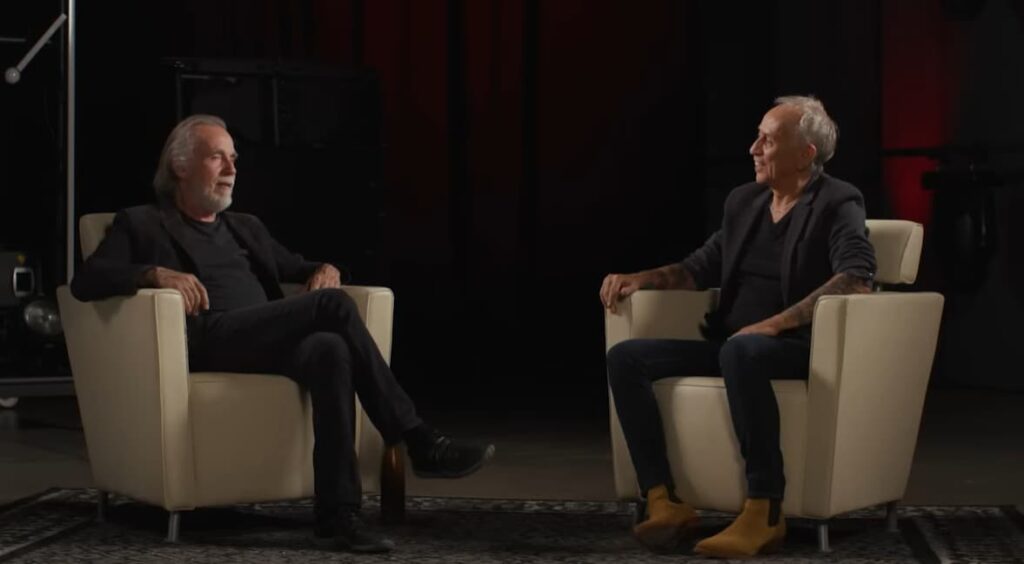
Jackson Browne Reflects on Songwriting and Studio Craft in AKG Stories Behind the Sessions
The first episode of season two of AKG Stories Behind the Sessions offers a focused and revealing conversation with singer songwriter Jackson Browne, guided by veteran broadcaster and journalist Nic Harcourt. Rather than centering on a single performance, the episode functions as a documented session of reflection, tracing Browne’s development as a writer and recording artist and examining how some of his most enduring songs came into being.
During the interview, Browne revisits his earliest creative years in Los Angeles, growing up in a musical household and first learning the trumpet under his father’s influence before turning to guitar. He speaks candidly about how folk and blues records shaped his ear, referencing artists such as Lead Belly, Lightnin Hopkins, Joan Baez, Bob Dylan, and Woody Guthrie. These early influences helped form his identity as a songwriter well before commercial success entered the picture.
A central part of the discussion focuses on Browne’s early compositions, particularly These Days, which he wrote at the age of sixteen and was first recorded by Nico in nineteen sixty seven. Browne explains how different interpretations of the song, including later versions by Greg Allman and himself, revealed the importance of tempo, arrangement, and emotional pacing. He emphasizes that songs often evolve through collaboration rather than remaining fixed from the moment they are written.
Browne also provides detailed insight into the recording of his self titled debut album and the song Doctor My Eyes. He recalls working with seasoned studio musicians such as Russ Kunkel and Lee Sklar, describing how their instincts and feel transformed simple chord structures into fully realized recordings. He highlights the contribution of guitarist Jesse Ed Davis, whose improvised solo on Doctor My Eyes was captured almost immediately and left largely untouched.
Throughout the episode, Browne reflects on the studio as a creative space rather than a place of execution. He explains how, beginning with later albums such as The Pretender, he increasingly finished songs during recording sessions, responding to what other musicians brought into the room. This approach, he notes, allowed the music to remain alive and flexible.
The conversation also touches on touring, collaboration, and longevity. Browne speaks openly about the challenges of paying musicians fairly and the value of live performance as an ever changing expression rather than a fixed reproduction of recorded work.
AKG Stories Behind the Sessions succeeds by allowing Browne to speak plainly and thoughtfully about his process. The episode serves as a valuable document for understanding how careful listening, collaboration, and restraint have shaped a body of work that continues to resonate across generations.