
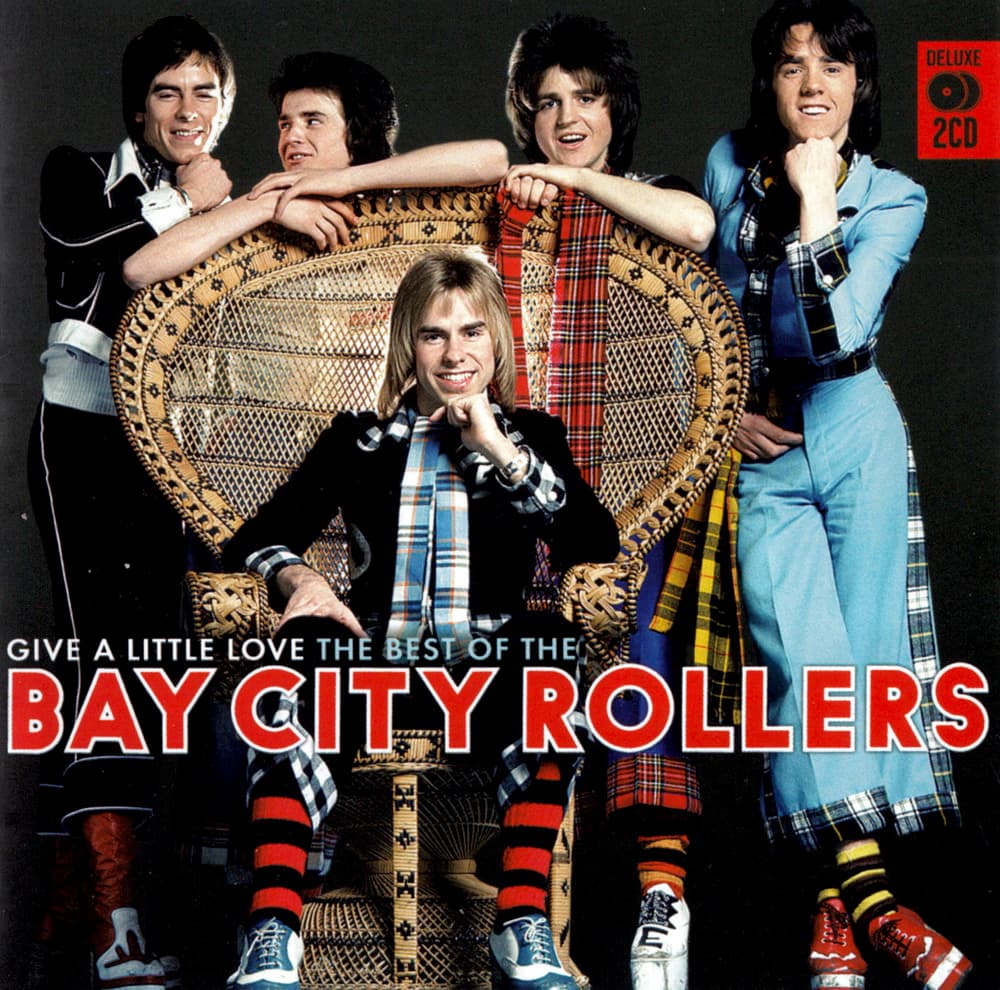
An Innocent Plea for Kindness and Affection, a Sweet Anthem That Became the Soundtrack to a Global Pop Storm.
In the mid-1970s, as the world moved on from the psychedelia of the past decade, a new phenomenon swept across the globe with the force of a tidal wave. It was a craze born in Scotland and fueled by youth, charm, and an iconic tartan uniform. This was “Rollermania,” and at the center of the storm were the Bay City Rollers. They were more than just a pop band; they were a cultural moment, a living, breathing fantasy for millions of screaming teenagers. In 1975, at the very peak of their power, they released a single that perfectly encapsulated their innocent charm while serving as an ironic, almost heartbreaking, counterpoint to the chaos that surrounded them. That song was “Give a Little Love.” It was a massive hit, soaring to the number one spot on the UK Singles Chart, a testament to their unshakeable hold on the youth. While its success was more modest in the United States, peaking at a respectable number 36 on the Billboard Hot 100, its impact was global. The song was featured on their album Wouldn’t You Like It?, and it remains a poignant symbol of a unique moment in pop history.
The drama of “Give a Little Love” lies in the profound contrast between its sweet, simple message and the frantic reality of the band’s existence. The song is a gentle, earnest plea for kindness, with lyrics that seem to come from a place of pure, unadulterated sincerity: “Give a little love and it all comes back to you.” Yet, this tender sentiment was the soundtrack to a fever pitch of a fame that was anything but gentle. The band members were suddenly trapped in a whirlwind of fan hysteria, stalked by crowds of adoring teenagers wherever they went. The simple act of giving and receiving a little love was drowned out by the deafening screams of thousands. In a way, the song was an unintentional cry from the heart, a yearning for a quieter, more personal kind of affection from a group of young men who were losing their privacy and, in some ways, their innocence in exchange for global superstardom.
The song’s musical simplicity is a crucial part of its emotional power. The bright, catchy melody, the shimmering harmonies, and the cheerful, upbeat rhythm are all hallmarks of a classic pop song. But for older listeners who now understand the tumultuous story of the band, the song takes on a new layer of meaning. It’s a beautiful, fragile reminder of a time before punk’s cynicism and disco’s hedonism took over. It is a time capsule of a moment when music could still be this genuinely, endearingly naive. The song’s legacy is not just its chart position, but its ability to transport us back to that very specific feeling of pure, unbridled youth—a feeling that was both joyous and, in its own way, terrifyingly overwhelming.
Ultimately, “Give a Little Love” is more than just a hit single; it’s a dramatic document of a cultural moment. It’s a testament to the raw, visceral power of pop music to create a frenzy and, at the same time, to express the most basic human need for love and connection. It reminds us that sometimes the most profound art is the one that says the most with the fewest words, a simple song that captured the heart of a generation and, in doing so, became an iconic, if bittersweet, part of our shared musical memory.