
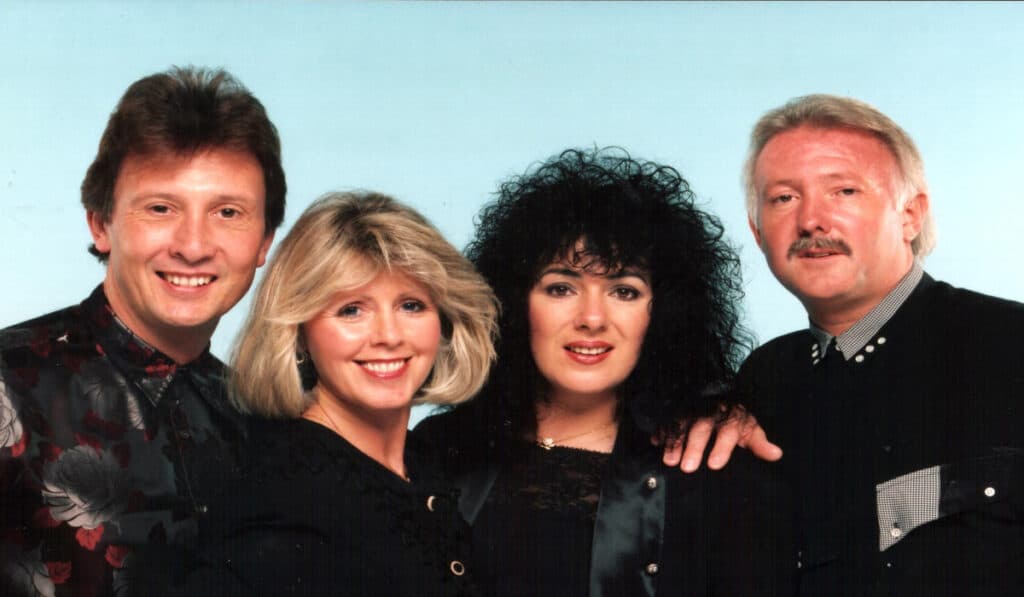
A Soaring Melodrama of Star-Crossed Lovers, a Nostalgic Echo of Grand, Theatrical Pop.
In the late 1970s, the pop charts were a vibrant mosaic of sounds, and few groups captured the hearts of a generation with such joyous, infectious harmonies as Brotherhood of Man. Following their colossal Eurovision Song Contest victory with “Save Your Kisses for Me,” the British quartet had cemented their place as purveyors of perfectly crafted, wholesome pop music. Yet, their follow-up single, the majestic and theatrical “Angelo,” proved that their success was no fleeting moment. Released in June 1977, this song became the group’s second UK number one hit, spending a glorious single week at the top of the chart in August of that year. More than just a hit, it became the 9th best-selling single of 1977 in the UK and was awarded a gold disc, solidifying the group’s reign. Its immense popularity wasn’t confined to Britain; “Angelo” also topped the charts in Ireland, Japan, and South Africa, reaching the top five in Belgium and the Netherlands.
The story behind “Angelo” is one of classic pop songwriting, a masterclass in crafting a narrative that is both epic in scope and deeply personal in its emotional core. Written by the group’s core creative team, Tony Hiller, Lee Sheriden, and Martin Lee, the song is a miniature melodrama in three and a half minutes. It tells the tragic tale of two star-crossed lovers: a poor shepherd boy named Angelo and a beautiful, wealthy girl from a powerful family. The lyrics paint a vivid picture, full of grand, romantic imagery—”High on a mountain lived a shepherd boy / Angelo, so poor in wealth, but rich in joy.” The narrative is simple but effective, leading to a tragic, theatrical climax where the lovers, forbidden to be together, take their own lives. “They took their lives that night,” the chorus swells, “on the mountain where they died for love.”
The meaning of the song, therefore, is a timeless lament on the pain of forbidden love and the ultimate sacrifice made for passion. It taps into the universal themes of class division and the unyielding forces that can tear two people apart. In an era when pop music often dealt with lighter, more superficial topics, “Angelo” offered a touch of gothic romance and a dose of tragic storytelling, reminiscent of folk ballads and grand opera. The song’s theatricality is its most defining feature, from the soaring, multi-layered harmonies that build to a crescendo, to the sweeping string arrangements and the dramatic pauses. It was this ABBA-esque approach to pop, full of rich production and emotional weight, that made Brotherhood of Man such a phenomenon.
For older readers who remember the summer of 1977, “Angelo” is an instant time machine back to a simpler, more melodic time in pop music. It evokes the feeling of a world where a four-piece group in matching outfits could dominate the airwaves with a song about doomed lovers. The song is a powerful reminder of how a well-told story, wrapped in a beautiful melody and delivered with impeccable harmony, could capture the imagination and stir the emotions of millions. It’s a testament to the art of pop songwriting and the enduring appeal of a good tragedy, a song that stands proudly as a perfect example of its genre, both emotionally resonant and endlessly memorable. “Angelo” isn’t just a hit song; it’s a nostalgic journey into the heart of a pop era that was unafraid to be bold, romantic, and gloriously dramatic.