
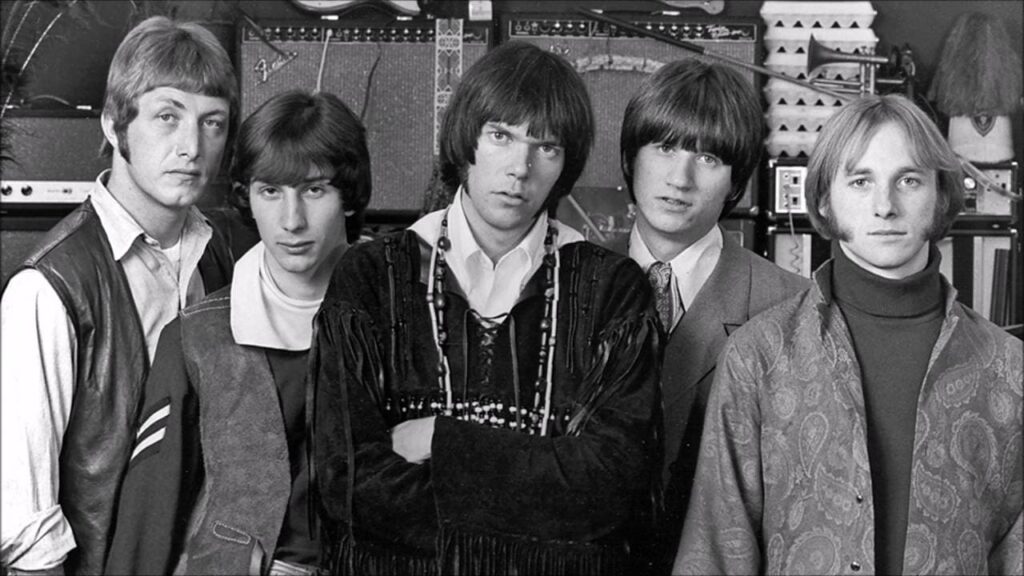
“For What It’s Worth”: A Timeless Anthem of Protest and the Quiet Urgency of a Generation in Turmoil.
There are moments in musical history when a song transcends its origins to become the voice of an entire generation, a resonant echo of the collective anxieties and fierce idealism of a specific time and place. Buffalo Springfield’s “For What It’s Worth” is one such indelible masterpiece. Released in late 1966, this track is not merely a folk-rock tune; it is a profound and haunting reflection on civil unrest, police brutality, and the simmering tension of a society on the brink of profound change. Its iconic opening riff and understated, yet potent, lyrics capture the palpable fear and disillusionment that defined the counterculture movement, a sentiment that sadly remains relevant even decades later. For older readers, the song is more than a memory; it’s a direct emotional portal back to the cultural crucible of the 1960s, a time when music served as both a mirror and a catalyst for social upheaval.
Upon its release as a single in December 1966, “For What It’s Worth” was an immediate and undeniable hit, solidifying Buffalo Springfield’s place in the rock pantheon. It soared to a peak position of number 7 on the Billboard Hot 100 chart in the United States in March 1967. This commercial success was particularly significant given the song’s subject matter, proving that audiences were not only receptive to social commentary but were actively seeking a musical outlet for their own growing concerns. The song was also a key track on their debut album, Buffalo Springfield, and became a staple of FM radio and the burgeoning protest movement. Its ubiquity on the airwaves and its constant presence at rallies and demonstrations cemented its status as a timeless anthem, a symbol of a generation’s awakening consciousness.
The story behind “For What It’s Worth” is a powerful testament to the direct link between art and lived experience. The song was written by the band’s co-founder, guitarist, and vocalist Stephen Stills in response to a specific, real-world event. In late 1966, a series of curfews and crackdowns were imposed on young people gathered on the Sunset Strip in Los Angeles. A protest against these curfews, which was essentially a clash between young revelers and local authorities, provided the direct inspiration. The event, often referred to as the “Sunset Strip riots,” was a microcosm of the broader cultural conflict brewing across America. Stills, witnessing the tensions firsthand, went home and wrote the song in about 15 minutes, his words flowing from a place of raw observation and disbelief. He perfectly captured the feeling of being an outsider looking in on a chaotic and unjust world.
The lyrical meaning of “For What It’s Worth” is a masterful study in nuance and restrained power. It doesn’t offer a specific political agenda or a fiery call to arms. Instead, it serves as a keen, observational report from the front lines of a cultural clash. The opening lines, “There’s something happening here / What it is ain’t exactly clear,” perfectly encapsulate the confusion and uncertainty of the era. The lyrics then move to a specific, almost cinematic, scene: “Paranoia strikes deep / Into your life it will creep / It starts when you’re always afraid / Step out of line, the man come and take you away.” This imagery, coupled with the song’s haunting, understated melody, speaks volumes about the feeling of being watched, controlled, and suppressed by authority. The line “I think it’s time we stop, hey, what’s that sound / Everybody look what’s going down” is both a warning and an invitation, urging listeners to wake up, pay attention, and question the world around them.
For older readers, “For What It’s Worth” is a powerful and emotional trigger, bringing back memories of a world on fire with change and a generation grappling with profound moral questions. It might recall the Vietnam War, the civil rights movement, or simply the feeling of youthful rebellion against an old and established order. The song’s enduring legacy lies in its ability to capture a universal truth about the tension between conformity and individuality, and the quiet courage it takes to stand up and be heard. Buffalo Springfield’s “For What It’s Worth” remains a timeless, evocative piece of art, a beautiful and somber reminder of a time when a simple song could illuminate a complex world and give a voice to the voiceless.