
“Parchman Farm”: A Roaring Blues-Rock Testament to Injustice and Raw Rebellion
For those of us who recall the gritty, unpolished edge of early 1970s hard rock, when the blues fused with nascent metal to create something truly incendiary, the name Cactus evokes a powerful sense of unbridled energy and raw, uncompromising musicianship. In an era brimming with guitar heroes and powerhouse vocalists, Cactus carved out their own distinct niche, delivering a sound that was both deeply rooted in American blues tradition and boldly pushing the boundaries of rock. Among their most iconic, albeit ferociously intense, tracks is their blistering rendition of “Parchman Farm,” a song that isn’t merely performed, but ignited with a visceral force. Released in 1970 on their self-titled debut album, Cactus, this track is a searing testament to the enduring power of the blues as a vehicle for protest and a conduit for pure, unadulterated rock fury. It’s a song that doesn’t just get under your skin; it rattles your very bones, stirring memories of a time when rock music was truly rebellious.
While “Parchman Farm” by Cactus was never released as a standalone single and therefore did not chart on the major Billboard Hot 100, its impact was undeniable within the nascent hard rock and blues-rock scene. It was a cornerstone track on their debut album, Cactus, which itself achieved significant recognition, peaking at number 54 on the Billboard 200 album chart in 1970. For a band just breaking out, this was a strong showing, firmly establishing their presence and attracting a dedicated following who craved their heavy, blues-drenched sound. On album-oriented rock (AOR) radio and among rock cognoscenti, “Parchman Farm” became a classic deep cut, a track that defined the band’s identity and served as a powerful declaration of their musical intent. It was the kind of song that cemented a band’s reputation as a force to be reckoned with in concert, an electrifying opening salvo that left audiences breathless.
The story behind “Parchman Farm” is as rich and unsettling as the track itself. The song’s origins lie deep within the fabric of American blues, penned by the legendary Mose Allison in 1957. Allison’s original was a jazz-inflected blues number, a poignant and somewhat understated lament about the brutal realities of the Mississippi State Penitentiary, commonly known as Parchman Farm. This infamous prison, with its history of forced labor, harsh conditions, and systemic injustice, became a potent symbol of oppression in the South. Allison’s lyrics captured the despair of incarceration, the longing for freedom, and the inherent unfairness of the system. Over the years, “Parchman Farm” has been covered by numerous artists, each bringing their own interpretation to its powerful message.
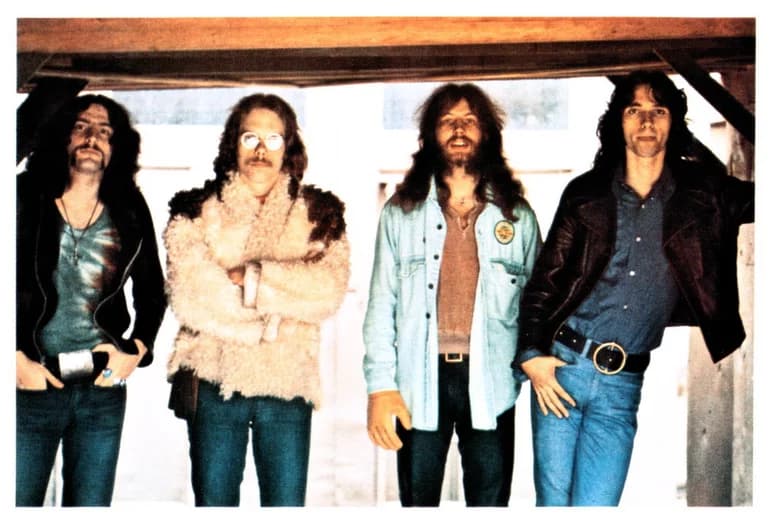
However, it was Cactus’s version that truly transformed the song into a blues-rock powerhouse. The band, a supergroup of sorts featuring the incendiary vocals of Rusty Day, the masterful guitar work of Jim McCarty, the thunderous bass of Tim Bogert, and the propulsive drumming of Carmine Appice, took Allison’s lament and injected it with a raw, almost violent energy. Their rendition isn’t about subtle protest; it’s a defiant roar. Rusty Day’s gravelly, impassioned vocals convey not just sorrow but palpable rage, while McCarty’s guitar wails and shrieks with a blues intensity rarely matched. The rhythm section of Bogert and Appice lays down a relentless, driving groove that feels like a prison chain gang hammering away. The meaning of their “Parchman Farm” shifts from a simple narrative of incarceration to a broader statement about societal injustice, oppression, and the universal human desire for liberation.
For older readers, particularly those who remember the socio-political turbulence of the late 60s and early 70s, Cactus’s “Parchman Farm” wasn’t just a track to headbang to; it was a visceral embodiment of protest, a primal scream against the perceived injustices of the world. It evokes memories of a time when rock music was truly dangerous, challenging the status quo and providing an outlet for collective frustration. It reminds us of the power of music to translate pain into art, and to transform a deeply personal blues lament into a thunderous anthem of rebellion that, even decades later, can stir the fires of defiance within us. It is a timeless, unyielding piece that remains as potent and relevant today as it was half a century ago.