
A Moment of Shared Vulnerability Where a Familiar Standard Becomes a Quiet Confession
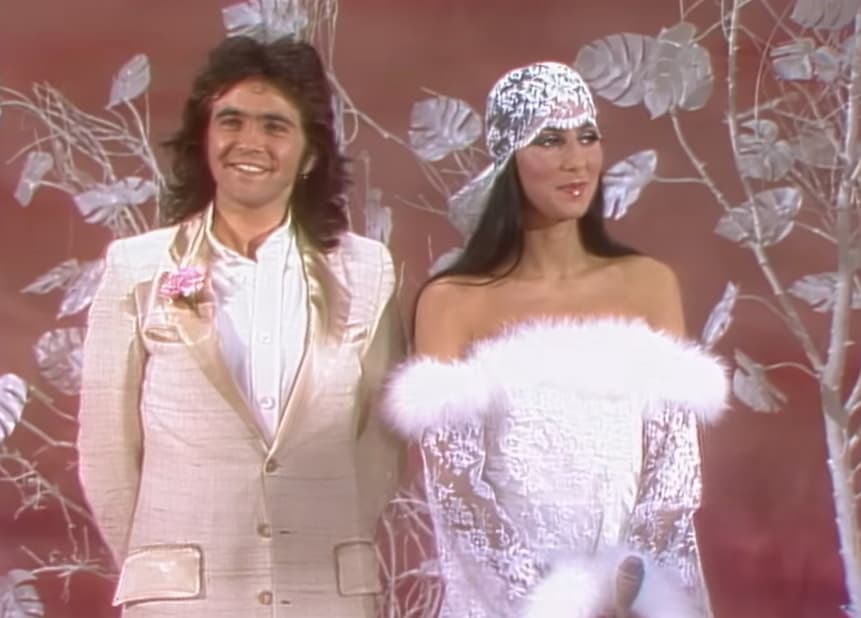
When Cher performed “The Long and Winding Road” alongside David Essex on The Cher Show on November 30, 1975, the song already carried immense cultural weight. Originally recorded by The Beatles, it had reached number one on the US Billboard Hot 100 in 1970 and stood as one of the group’s final chart-topping singles. By the time Cher revisited it on her television program, the song had long since moved beyond the charts and into the realm of modern standards. What this performance offered was not reinvention, but reinterpretation, a deeply human exchange between two artists meeting the song at different emotional crossroads.
On The Cher Show, Cher had perfected a rare balance of glamour and intimacy. She could command the stage with spectacle, yet just as easily strip everything back and allow a song to breathe. In this duet with David Essex, the setting is unforced and conversational, placing the focus squarely on the emotional core of the composition. The arrangement remains restrained, allowing the melody to unfold gently, with space for both voices to linger on its sense of longing and unresolved hope.
What makes this performance especially compelling is the contrast between the two singers. Cher brings a weathered assurance to the song, her voice rich with experience and emotional gravity. By 1975, she had already lived several public lives, as a pop star, a television icon, and a woman navigating personal reinvention in full view of the audience. Her delivery carries the weight of someone who understands the road described in the song, not as metaphor alone, but as lived experience.
David Essex, by contrast, approaches the song with a quieter, more searching tone. Known for his sensitivity and introspective style, he acts as a reflective counterpart to Cher’s grounded presence. Their voices do not compete but converse, meeting in the middle of the song’s emotional terrain. This interplay transforms “The Long and Winding Road” from a solitary lament into a shared reflection, as if two travelers pause briefly to acknowledge the distance already covered.
Lyrically, the song has always dealt with perseverance, return, and emotional exhaustion. In this televised moment, those themes feel particularly resonant. The performance avoids melodrama, instead embracing restraint. Each phrase feels considered, each pause intentional. There is a sense of acceptance woven through the delivery, a recognition that the road does not always offer resolution, only continuation.
Within the broader context of 1970s television, this performance stands out for its sincerity. Variety shows often leaned toward spectacle, but this duet chooses intimacy over excess. It reflects Cher’s instinct as a curator of emotion, someone who understood that the most powerful moments often arrive quietly.
Seen today, Cher with David Essex performing “The Long and Winding Road” feels timeless. It is not defined by fashion or format, but by emotional truth. The song becomes a vessel for shared vulnerability, reminding the listener that even the most familiar roads can reveal new meaning when walked together, if only for a few minutes under studio lights.