
When Chicago Let the Music Breathe: A Fierce, Free-Spirited Moment from 1974
In the landscape of 1970s American music, few bands navigated the space between structure and spontaneity as confidently as Chicago. Their live performance of Mongonucleosis in 1974 stands as a vivid document of that balance, capturing a band at the height of its creative elasticity, where jazz instincts and rock energy coexisted without compromise.
Originally featured on the ambitious double album Chicago VII, Mongonucleosis was never designed for radio appeal. Instead, it functioned as an open-ended musical framework, a piece that invited expansion, reinterpretation, and risk. On stage, that potential becomes fully realized. The 1974 performance transforms the track into something far more alive than its studio counterpart, stretching its rhythmic core into a fluid, almost hypnotic groove that allows each musician to explore their own space within the arrangement.
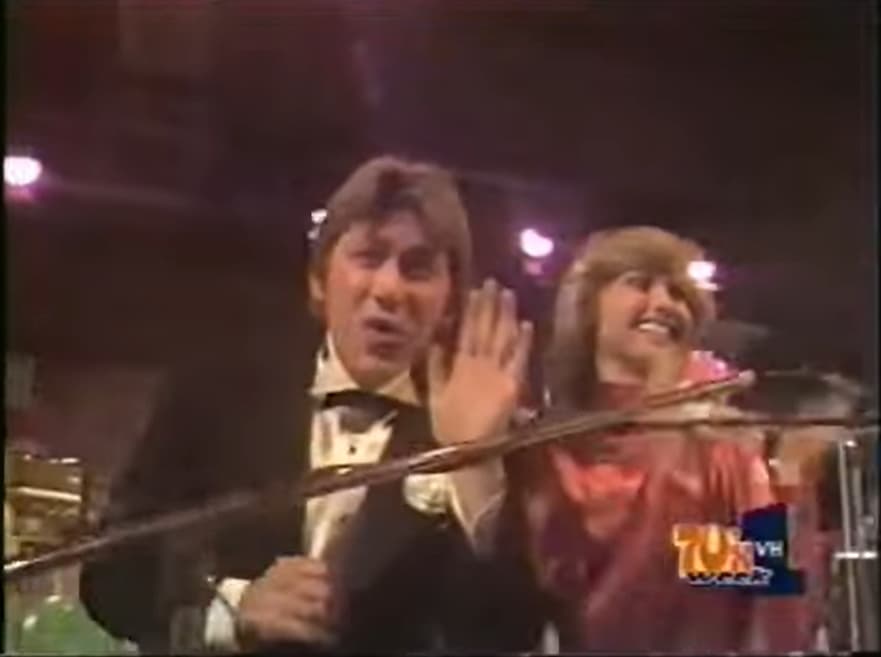
At the center of it all is Terry Kath, whose presence defines the performance in ways both subtle and striking. Around the 2:50 mark, Kath casually turns and waves toward the camera, a fleeting gesture that breaks the invisible barrier between performer and audience. It is not rehearsed, not theatrical, but instinctive. That small moment humanizes a musician often celebrated for his intensity, reminding viewers that behind the technical brilliance was a performer deeply connected to the moment.
Musically, the performance leans into Chicago’s jazz-rock identity with remarkable confidence. The interplay between rhythm section and brass is especially compelling, with Danny Seraphine anchoring the groove while the horns punctuate and elevate the arrangement. Bass lines move with a fluidity that suggests funk influences, while the overall structure remains deliberately loose, resisting any urge to resolve too quickly. This is not a song being performed. It is a conversation unfolding in real time.
What makes this footage particularly valuable today is its timing. By 1974, Chicago had not yet shifted toward the polished ballad-driven sound that would later define their commercial peak. This was still a band rooted in experimentation, willing to let instrumental passages take center stage, trusting the audience to follow them into less predictable territory.
Viewed now, the performance carries an added sense of nostalgia. It preserves a version of Chicago that feels raw, exploratory, and fearless. More than just a live rendition, Mongonucleosis becomes a snapshot of a band fully immersed in the act of creation, where the boundaries between composition and improvisation quietly dissolve.