
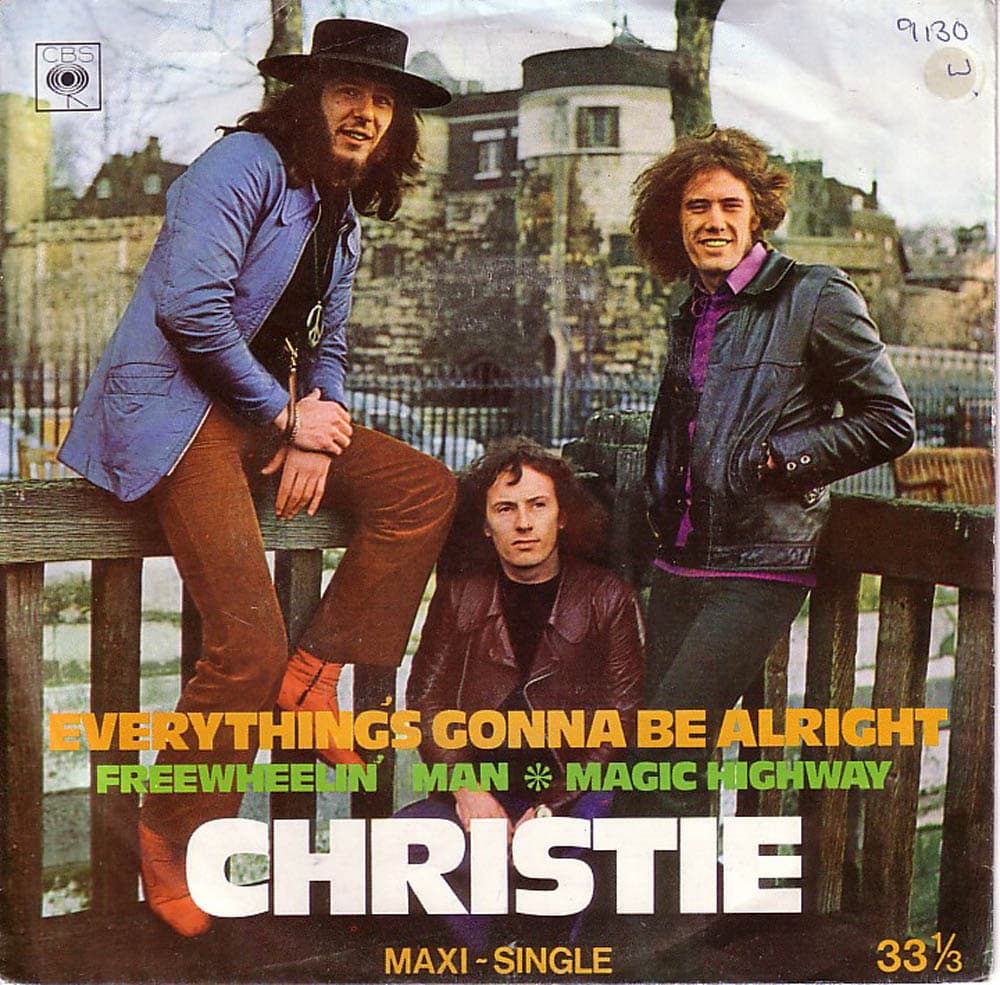
A Chugging Anthem of the Railroad Age: Iron Horse by Christie
Released in 1972, Christie‘s Iron Horse galloped onto the music scene as a distinctive track that, while perhaps not reaching the monumental success of their earlier hit Yellow River, nonetheless captured a unique spirit of the time. This compelling song, penned by Jeff Christie, the band’s frontman, offered a different sonic landscape, one that evoked the powerful imagery of the burgeoning railroad era. While it peaked at number 47 on the UK Singles Chart and reached number 13 in the Netherlands and number 10 in Norway, its impact resonated beyond mere chart statistics, embedding itself in the collective memory as a musical ode to a transformative period in history.
The story behind Iron Horse is rooted in a fascination with the American West and the iconic symbol of progress that the steam locomotive represented. The term “iron horse” itself was a moniker given to the railroad by Native American tribes, acknowledging its immense power and impact on their way of life. Jeff Christie masterfully weaves this imagery into the lyrics, creating a narrative that speaks of movement, expansion, and the relentless march of technology. Following the phenomenal success of Yellow River and the more moderate charting of San Bernadino, Iron Horse saw the introduction of Lem Lubin to the band, although he reportedly did not play on the recording itself but joined for live performances. This period marked a slight shift in Christie‘s sound, perhaps leaning towards a heavier feel, as noted by contemporary reviews, while still retaining the melodic hooks that were their trademark.
The meaning of Iron Horse is deeply intertwined with the historical context it evokes. It’s more than just a song about trains; it’s a reflection on a pivotal era of industrial advancement and its profound effect on the landscape and its people. The “chugging beat” that many reviewers noted musically mirrors the rhythmic sounds of a steam engine in motion, further immersing the listener in this historical tableau. The lyrics, though perhaps not as overtly narrative as some story-songs, paint a picture of the powerful locomotive as a force of nature, an “iron horse” conquering vast distances. For those who grew up in a world where the echoes of steam engines were still within living memory, or who learned about the romanticism and the harsh realities of the westward expansion, this song struck a particular chord. It wasn’t just a pop tune; it was a sonic representation of a significant chapter in human history.
Listening to Iron Horse today carries a strong sense of nostalgia, not just for the early 1970s, but for a bygone era of innovation and the romanticism associated with it. The distinctive twangy guitar intro, reminiscent of rolling wheels, immediately transports the listener to a time of pioneering spirit and the transformative power of the machine age. While Christie might be best remembered for the anthemic Yellow River, Iron Horse stands as a testament to their broader artistic vision, their ability to capture a specific mood and historical moment within a concise and memorable pop framework. It serves as a reminder of how music can not only entertain but also evoke powerful images and connect us to the stories of the past, even those carried on the back of an “iron horse.”