
A Melancholy, Mid-Career Reflection on the Inescapable Passage of Time and the Price of Freedom.
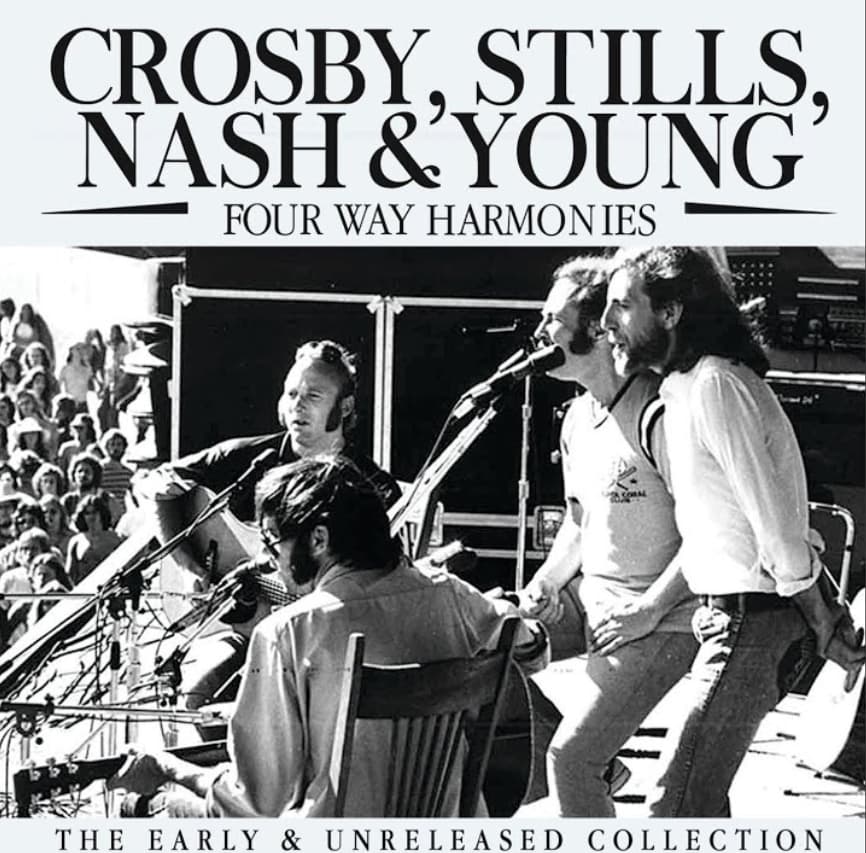
For those of us who came of age during the tumultuous, hope-fueled era of Laurel Canyon and Woodstock, the return of Crosby, Stills & Nash in 1977 felt less like a new album and more like a long-overdue reconciliation among estranged family. Their self-titled reunion album, universally known simply as CSN, arrived in the summer of disco and punk as a comforting acoustic anchor, proving that their impossible harmonies could still magically defy their volatile personal history. The album was an immediate success, soaring to No. 2 on the US Billboard Top Pop Albums chart, a powerful declaration that the idealism of the late sixties still resonated deeply.
While the album spawned the massive hit single, Graham Nash’s gentle “Just a Song Before I Go” (which peaked at No. 7 on the Billboard Hot 100), the true soul of the record—and a haunting summation of Stephen Stills’ mid-life introspection—is found in his stunningly poignant ballad, “See the Changes.” Like many album tracks penned by this legendary trio, “See the Changes” was never released as a single and therefore has no chart position of its own, but its quiet gravity has made it an enduring favourite for those who value lyrical honesty over pop polish.
The story of this song is intrinsically tied to the tumultuous, heartbreaking reality of the rock and roll lifestyle as the counterculture matured into the cynical seventies. Stephen Stills was the restless, brilliant engine of the group, a man perpetually in motion and often in conflict. By 1977, the initial flush of the CSNY supergroup had long faded under the weight of ego, addiction, and constant infighting. “See the Changes” is essentially a musical journal entry, a moment of stark self-assessment written by a man who had been chasing the wind—both literally on the road and metaphorically in his personal life.
In a dramatic, quiet moment of surrender, Stills stares into the abyss of his own mistakes and choices. The song is not about seeing the changes in the world—though that is certainly present—but about seeing the changes in himself and in the faces of those he’s left behind. The lyric paints a deeply resonant picture: “You came to me in wisdom / A young man, you held my hand / And told me of the mountains / That I was too young to understand.” This suggests a reflective dialogue, perhaps with a younger, wiser version of himself, or a spiritual guide who warned him about the sacrifices freedom demands. The repeated refrain, “I can tell you that it’s all true / I can tell you what I meant to do / I can see the changes,” carries the heavy weight of a confession. It is the acknowledgement of failure—not as an artist, but as a man struggling to balance his insatiable appetite for life with the human need for connection.
The meaning of “See the Changes” taps directly into the collective memory of our generation. It’s the sound of the high-flying adventurer finally grounded, gazing back on a life lived at a reckless velocity. The haunting acoustic guitar and the sublime, wistful harmonies of Crosby and Nash elevate the simple, honest poetry of Stills’ words, transforming a personal drama into a universal experience. The song gives voice to the nostalgic pang felt when we realise that the price of the youthful freedom we so fiercely guarded was often the stability, and sometimes the very people, we left behind. It’s a bittersweet, deeply felt reflection on mortality and maturation, reminding us that even the brightest stars must eventually reckon with the long, inevitable passage of time.