
The House That Never Forgot: George Jones and the Quiet Power of “The Grand Tour”
In an era long before heartbreak became content, George Jones stepped onto the stage and did something far more unsettling than perform he remembered. His 1974 hit “The Grand Tour” was never designed to overwhelm with volume or spectacle. Instead, it invited listeners into a space most artists avoid: the quiet aftermath of love.
On the surface, the song unfolds like a guided walkthrough of an empty home. A bedroom, a hallway, a glass left behind. But beneath that simplicity lies its most powerful device the house is not empty at all. It is a witness. Every object becomes evidence of a relationship that once lived and breathed within those walls. And when Jones performed it live, that concept took on an even deeper meaning.
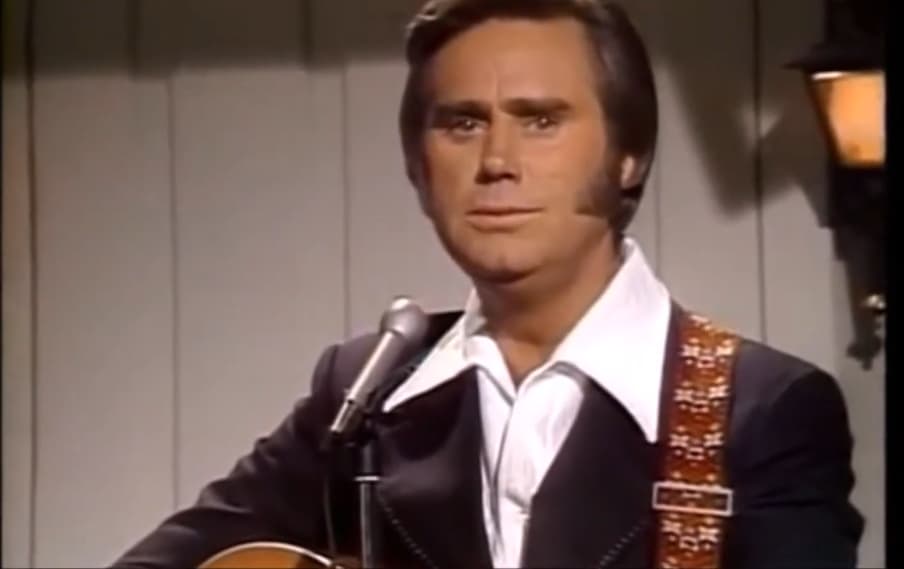
There was no dramatic crescendo, no vocal acrobatics. Jones didn’t need them. His voice carried a restrained, almost conversational tone, as if he were speaking not to the audience, but to himself. That subtle detachment created an eerie intimacy. The crowd wasn’t watching a performance; they were overhearing something private. In those moments, silence became the loudest element in the room.
What made these performances especially compelling was the blurred line between song and life. During this period, Jones himself was navigating personal turmoil failed relationships, addiction, and instability. When he sang about loss, it didn’t feel imagined. It felt lived. The “tour” he offered wasn’t just through a fictional house, but through emotional spaces he knew intimately.
For audiences in the 1970s a time when shifting social norms and rising divorce rates were reshaping the idea of home “The Grand Tour” struck a deeply personal chord. It reflected a reality many were quietly experiencing: that sometimes, the hardest part of losing someone isn’t the moment they leave, but everything that stays behind.
Today, the performance still resonates, perhaps even more so. In a digital world driven by noise and immediacy, Jones’s stillness feels almost radical. He didn’t cry. He didn’t break down. He simply showed you the rooms and trusted you to feel what he no longer could say out loud.
Because in the end, “The Grand Tour” is not just a song about absence. It is about presence the kind that lingers in places, in objects, and in memory. And as Jones proved time and time again, some of the most powerful stories aren’t shouted.
They’re quietly left behind.
Video: