
Grand Funk Railroad: A Documentary Reclaims the Legacy of America’s Most Unstoppable People’s Band
The documentary Grand Funk Railroad offers a comprehensive and unapologetic reassessment of one of the most commercially powerful yet critically dismissed rock bands of 1970s America. Tracing the group’s rise from garage-rock origins in Flint, Michigan, to their dominance of arenas and charts nationwide, the film positions Grand Funk Railroad not as a footnote in rock history, but as a defining voice of blue-collar America.
At the heart of the documentary is the band’s improbable ascent. Formed in 1969 by Mark Farner, Don Brewer, and Mel Schacher, Grand Funk Railroad achieved massive success at a pace few of their contemporaries could match. The film revisits their legendary 1971 Shea Stadium concert, where the band sold out the venue faster than The Beatles had years earlier. This moment serves as a recurring symbol of their popularity, underscoring the disconnect between mainstream audiences and a rock press that often dismissed the group as loud, crude, or unsophisticated.
The documentary effectively explores this tension between critics and fans. While many reviewers of the era openly derided Grand Funk Railroad, the band consistently moved millions of records and filled the largest venues in America. The film argues that this divide was not accidental but cultural, with Grand Funk’s stripped-down, muscular sound resonating deeply with working-class listeners who felt alienated by the increasingly cerebral direction of rock criticism.
Musically, the documentary charts the band’s evolution from heavy blues-based rock to a more radio-friendly sound in the mid-1970s. Songs such as We’re an American Band and The Loco-Motion are presented not as commercial compromises, but as strategic adaptations that broadened the band’s reach while maintaining their core identity. Through rare live footage and studio material, the film highlights the raw power of their early performances as well as the polished confidence of their later hits.
One of the documentary’s strongest elements is its use of first-hand testimony. New and archival interviews with Farner, Brewer, and Schacher provide personal insight into the pressures of sudden fame, internal conflicts, and the eventual fragmentation of the band. Rather than mythologizing the past, the film allows its subjects to reflect candidly on mistakes, regrets, and the costs of success.
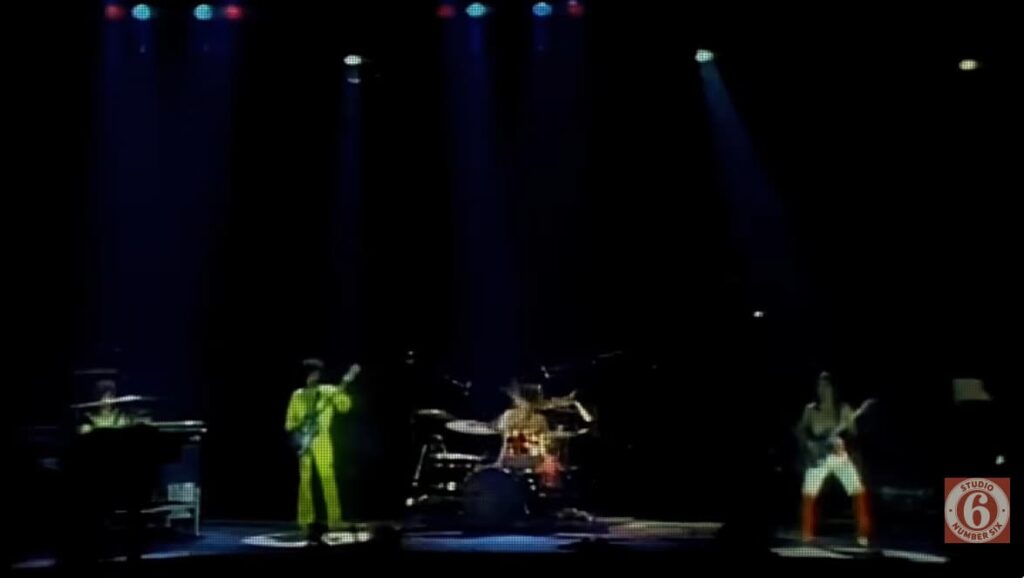
Visually, the documentary relies on a rich archive of concert footage, television appearances, and behind-the-scenes material. These images reinforce the central argument: Grand Funk Railroad was, above all, a live band whose impact was best understood through the physical intensity of their performances and the fervent response of their audience.
Ultimately, Grand Funk Railroad succeeds in reframing the band’s legacy. It challenges long-held assumptions shaped by critical disdain and replaces them with a more balanced narrative grounded in cultural impact, audience loyalty, and historical context. For longtime fans, the film is a validation. For newer listeners, it serves as an invitation to reconsider a band that critics once rejected, but millions of listeners made legendary.