
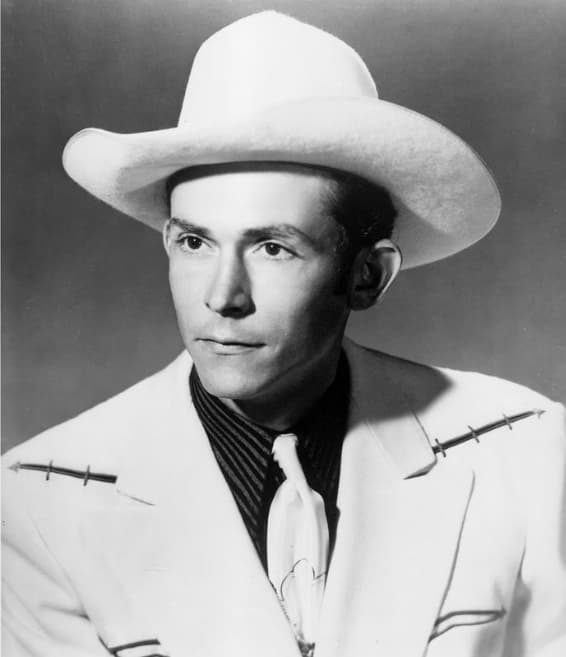
The Night Hank Williams Became a Legend at the Grand Ole Opry
In 1949, a young singer walked onto the stage of the Grand Ole Opry with little certainty about how he would be received. Hank Williams was not yet the towering figure country music would come to revere. That night, he was simply another performer with a song one that many already considered old-fashioned.
“Lovesick Blues” had been around for decades. Its yodeling style, once popular, had begun to fade from the mainstream. But as Williams began to sing, something shifted in the room. The audience, at first curious, quickly became captivated. His voice raw, high, and trembling carried more than melody. It carried something deeply human.
By the time he reached the first chorus, the atmosphere had changed completely. Listeners leaned forward. Some rose to their feet. When the song ended, applause filled the hall with a force that surprised even the seasoned performers backstage. It did not stop. Williams was called back to the stage. Then again. And again.
By the end of the night, he had performed the song six times.
There were no elaborate arrangements, no production effects to shape the moment. What held the audience was the unmistakable sense that Williams was not performing a role. He was living the song. “Lovesick Blues,” with its aching lines of heartbreak and longing, seemed less like a composition and more like a confession. Each note carried weight. Each pause felt unguarded.
Backstage, the reaction was just as immediate. The uncertainty surrounding Williams disappeared in a matter of minutes. What had been intended as a simple appearance became a turning point. Within days, his name would spread far beyond the Opry stage, and “Lovesick Blues” would climb to the top of the charts.
Those who were there would later speak not of technical brilliance, but of presence. There was a sense that something irreversible had taken place. A performer had crossed into something larger into recognition, into memory.
Looking back, the performance stands as more than a breakthrough. It marks a moment when country music revealed its power in its simplest form: a voice, a song, and an audience willing to listen.
 Oldies Songs