
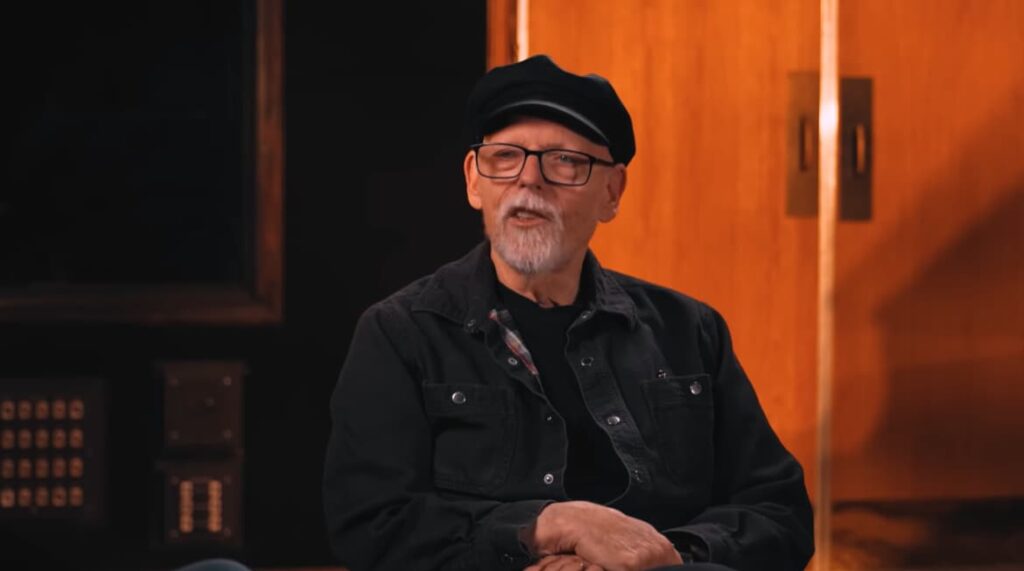
Denny Dias Breaks the Silence: A Rare, Revealing Conversation on the Birth of Steely Dan
In a musical landscape where legends are often reduced to myth, the recent conversation between producer and educator Rick Beato and guitarist Denny Dias stands out as a rare moment of clarity and historical substance. More than an interview, it is a firsthand account of how Steely Dan was formed, how its sound was shaped, and why its music continues to be studied, admired, and revered decades later.
For many listeners, Steely Dan is synonymous with studio perfection, sophisticated harmony, and guitar solos that feel more like composed statements than spontaneous gestures. Yet Denny Dias, one of the band’s founding members and original guitar voices, has remained largely absent from the spotlight for years. His appearance here fills a crucial gap in the band’s documented history.
Dias recounts the band’s earliest days not as a calculated studio project, but as a working group of musicians cutting their teeth in clubs, playing R and B and rock repertoire night after night. A simple classified ad led to a marathon jam session with Donald Fagen and Walter Becker, forging a musical bond rooted in shared influences and relentless curiosity. This context challenges the common perception of Steely Dan as purely cerebral or detached from live band energy.
One of the most valuable aspects of the discussion is Dias’s insight into the band’s guitar language. From the electric sitar texture on “Do It Again” to the jazz informed phrasing heard on tracks like “Bodhisattva,” “Green Earrings,” and “Aja,” Dias explains these parts not as virtuosic showcases, but as harmonic problem solving. His approach was deeply informed by jazz theory, voice leading, and a commitment to serving the song rather than dominating it.
The conversation also sheds light on Steely Dan’s early studio practices. Dias played a significant role beyond performance, contributing to mixing decisions and sound placement at a time when all balances were created manually. His recollections of Walter Becker’s obsession with sonic accuracy and stereo image help explain why Steely Dan records remain reference points for audio engineers to this day.
Perhaps most striking is Dias’s philosophy of musicianship. He speaks not as a technician chasing complexity, but as an artist guided by honesty, restraint, and emotional intention. That mindset, quietly embedded in Steely Dan’s recordings, is a key reason their music continues to feel alive rather than archival.
This interview is essential viewing for anyone seeking to understand Steely Dan beyond the mythology. It restores a vital voice to the narrative and reminds us that enduring music is often built by thoughtful, disciplined artists working patiently behind the scenes.