
A Soulful Cry for American Ideals and Environmental Conscience
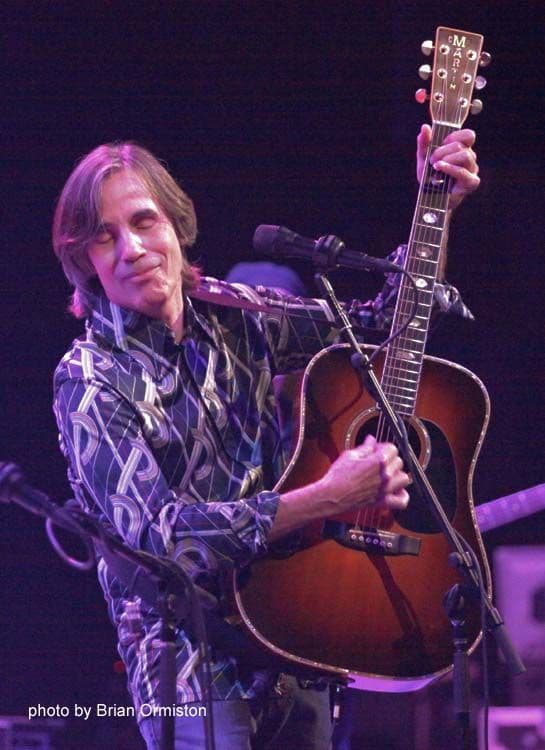
The year was 1989. The Berlin Wall was still standing, the Cold War’s icy grip was starting to thaw, yet a new kind of unrest was brewing in the American soul. It was into this landscape of geopolitical shift and emerging ecological awareness that Jackson Browne, the quintessential troubadour of introspective American life, released his ninth studio album, World in Motion. Within its tracks lay a song that, while not a chart-topping behemoth, carried the quiet, resonant weight of a deeply concerned citizen: “I Am a Patriot.”
The song itself is a masterful tapestry woven from threads of disillusionment and enduring hope. For many who came of age during the tumultuous 60s and 70s, Browne’s voice had always been the soundtrack to their self-examination—a chronicler of love lost, political awakening, and the relentless search for meaning. By the time World in Motion arrived, some of the urgency in the music had mellowed, replaced by a mature, world-weary resolve. “I Am a Patriot,” however, was the spark of activism, a reminder that the personal remains profoundly political.
The song’s commercial performance, in a landscape increasingly dominated by synthesized pop and arena rock, was modest but telling. Despite Jackson Browne’s established legacy, “I Am a Patriot” did not make a significant dent on the major U.S. singles charts like the Billboard Hot 100. The album World in Motion itself peaked at a respectable, though not career-defining, No. 45 on the U.S. Billboard 200 chart. This was not a song designed for fleeting radio success; its impact was measured not in weeks at number one, but in the slow burn of its message resonating within activist circles and on college campuses. It became an anthem adopted by environmentalists and progressive thinkers, a hidden gem cherished by those who felt the definition of ‘patriotism’ had been hijacked and needed reclaiming.
The most compelling drama behind “I Am a Patriot” lies in its origin. The song was not originally Browne’s. It was penned by Steven Van Zandt, better known as Little Steven, the guitarist in Bruce Springsteen’s E Street Band and a political activist in his own right. Van Zandt had released his version in 1984 on his album Voice of America. While Van Zandt’s rendition was a sharp, Springsteen-esque rock call-to-arms, imbued with his characteristic political fervor and directness, Browne’s take transformed it.
Browne slowed the tempo, infused it with his signature West Coast melancholy, and allowed the melody to breathe, giving the lyrics a contemplative depth that felt less like a protest chant and more like a whispered prayer. His arrangement, rich with subtle harmonies and a gentle, acoustic-leaning production, turned the song from a broad declaration into an intimate confession. This transition is central to the song’s lasting power—it’s the difference between hearing a loudspeaker at a rally and hearing a trusted friend share their deepest conviction over a quiet evening.
The meaning of “I Am a Patriot” is a powerful, dual-edged sword. On its surface, it is a desperate plea to redefine patriotism. It rejects the narrow, jingoistic interpretation of flag-waving and military might, asserting that true love for one’s country is manifest in caring for its people and its land. The lyrics are a striking meditation on identity: “I am a patriot / And I love my country / Because my country is all I know / I want to be a good neighbor.” This focus on neighborliness and stewardship elevates the concept of citizenship above mere political allegiance.
More profoundly, and perhaps more urgently for the aging cohort of listeners, the song speaks directly to environmental justice. Browne’s version emphasizes the need to protect the “natural world” and the “little bit of earth” we inhabit. For those who had witnessed the rise of mass consumerism and the subsequent ecological decay over decades, the song was a nostalgic echo of earlier, simpler ideals. It was a lament for a pristine past and a rallying cry for a sustainable future. It reminded listeners that their generational struggle wasn’t over; it had simply shifted its focus from global ideology to the very ground beneath their feet. It speaks to the bittersweet realization that the battles of youth never truly end, they merely evolve, and the truest love we can show our home is to heal and protect it. The song, therefore, serves as a poignant mirror for the older generation, reflecting their enduring responsibility and their unwavering, if weary, hope.