
A Quiet Affirmation of Survival, Renewal, and the Grace of Carrying On
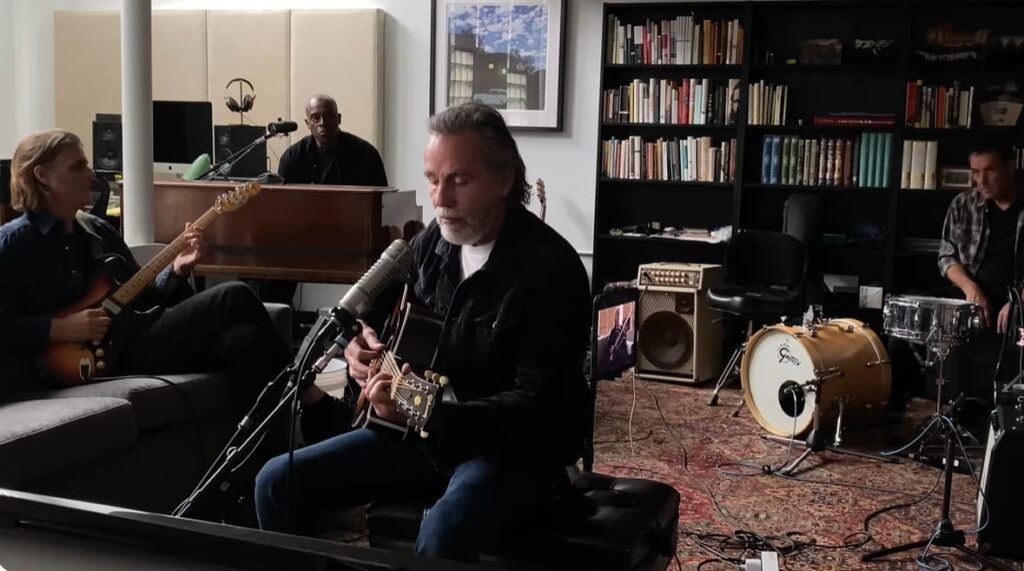
When Jackson Browne released “I’m Alive” in 1993 as the title track of his album I’m Alive, the song became a defining statement of renewal in his career. The album reached the Top 15 on the US Billboard 200, marking a creative resurgence and reconnecting Browne with a wide audience after a period of personal and artistic introspection. Decades later, “I’m Alive (Live From Home)”, performed with Val McCallum, Jeff Young, and Mauricio Lewak, strips the song down to its emotional core, offering a version shaped not by studio polish or arena energy, but by intimacy, reflection, and quiet resilience.
At its heart, “I’m Alive” is one of Browne’s most unguarded declarations. Written after a turbulent chapter in his life, the song does not celebrate triumph so much as survival. It speaks from the space that follows heartbreak, loss, and self reckoning, where simply standing upright feels like an achievement. In the Live From Home performance, that message feels even more pronounced. Removed from the formal stage, Browne delivers the song with a calm assurance that suggests not urgency, but hard-earned peace.
Musically, the song has always relied on restraint. The melody moves gently, almost conversationally, allowing the words to carry their full emotional weight. In this home setting, the arrangement becomes even more transparent. Acoustic textures breathe, the rhythm section supports rather than drives, and the guitars of McCallum and Young provide subtle shading rather than flash. Lewak’s percussion is measured and grounded, reinforcing the sense that this song is about balance rather than release. The band listens closely to one another, creating a space where silence is as meaningful as sound.
Lyrically, “I’m Alive” stands as a meditation on renewal without denial. Browne does not erase the pain that came before. Instead, he acknowledges it and steps forward anyway. The song’s power lies in its refusal to dramatize recovery. There are no grand gestures, no declarations of victory. There is only the quiet truth of continuing to live, to feel, and to remain open to love despite everything that has passed. This honesty has long been one of Browne’s greatest strengths, and it resonates deeply in a performance defined by closeness rather than spectacle.
The Live From Home context adds another layer of meaning. Performed in a time when distance and uncertainty reshaped the relationship between artists and audiences, this version of “I’m Alive” feels like a shared reassurance. Browne is not performing at his listeners, but with them, offering a reminder that endurance itself can be an act of grace. His voice carries the patina of years lived and lessons learned, transforming the song from a personal statement into a collective one.
In this setting, “I’m Alive” endures as one of Jackson Browne’s most quietly powerful works. It is not about reinvention or escape, but about presence. About waking up, staying open, and continuing to believe that life, in all its complexity, is still worth inhabiting fully.