
A Reflective Homecoming Where a Song Returns to Its First Voice
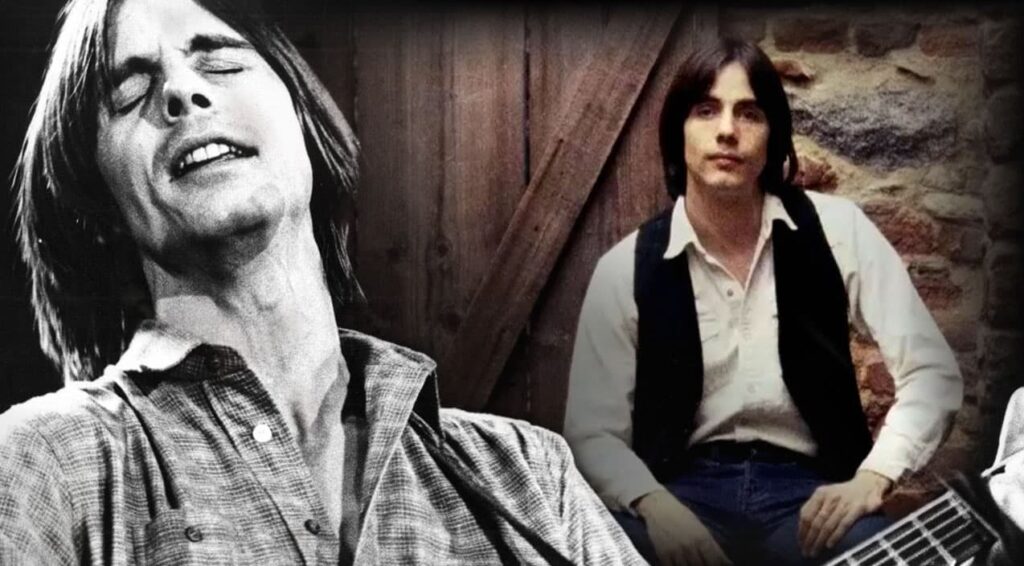
When Jackson Browne performed “Take It Easy” as part of a medley with “Our Lady of the Well” on Late Show with David Letterman in October 2014, it carried a weight far beyond a simple television appearance. “Take It Easy”, first made famous by Eagles in 1972 when it reached number 12 on the Billboard Hot 100, originally appeared on the band’s self-titled debut album Eagles, with Browne credited as a co-writer and quiet architect of its spirit. Decades later, this web exclusive performance reframed the song not as a radio staple, but as a personal reflection delivered by the man whose words helped shape its soul.
From its earliest incarnation, “Take It Easy” has always lived in a space between freedom and weariness. Written during a period when Browne was still finding his footing as a songwriter in Los Angeles, the song captured the restless optimism of a generation in motion. When Eagles released it, the track became a sunlit anthem of the open road, propelled by harmonies and an easygoing confidence that suggested escape without consequence. Yet beneath that breezy exterior lay Browne’s more introspective voice, one attuned to the emotional cost of constant movement.
The 2014 David Letterman performance subtly reclaims that introspection. Stripped of arena-scale bravado, Browne delivers “Take It Easy” with the calm authority of lived experience. His phrasing is unhurried, reflective, and grounded, as though he is speaking directly to the song rather than performing it. The familiar lines no longer feel like youthful reassurance, but like advice offered by someone who has tested its limits and survived the long road.
The transition into “Our Lady of the Well” deepens the emotional resonance. Originally released on Jackson Browne’s 1973 album For Everyman, the song reflects spiritual searching and a longing for renewal. Paired with “Take It Easy”, it creates a quiet narrative arc. The carefree motion of youth gives way to contemplation, and the open highway leads inward. What emerges is a meditation on time, responsibility, and the evolving meaning of freedom.
Within the context of Late Show with David Letterman, itself nearing the end of its historic run, the performance feels especially poignant. Browne stands as both participant and observer, revisiting a song that once launched careers and shaped the sound of American rock. The medley does not chase nostalgia for its own sake. Instead, it offers perspective, acknowledging the distance between who we were and who we have become.
For a mature listener, this performance reveals the true endurance of “Take It Easy”. It is not merely a hit frozen in amber, but a living piece of songwriting that grows alongside its creator. In Browne’s hands, the song becomes quieter, wiser, and more human. It reminds us that ease is not the absence of struggle, but the grace to carry it forward.