
A Song Across Time: Jackson Browne Revisits Youth in “The Birds of St. Marks” Live in Amsterdam
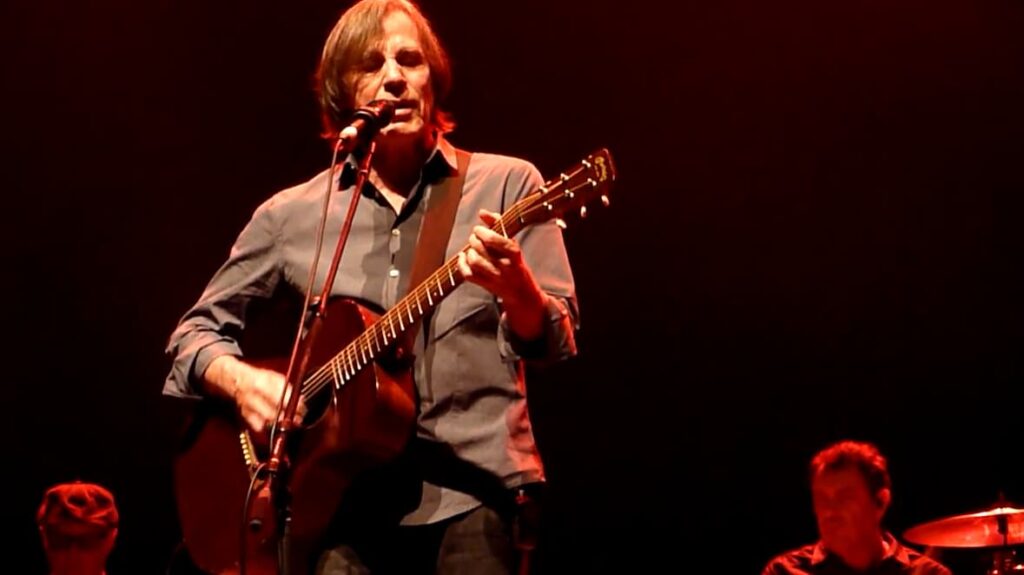
On June 22, 2015, Jackson Browne performed “The Birds of St. Marks” in Amsterdam, offering audiences a rare moment where past and present converged within a single song. The performance, part of his tour supporting Standing in the Breach, stood out not for spectacle but for the unique history embedded within the composition itself.
Originally written in 1967 when Browne was still a teenager, the song remained largely unheard in official form for decades. It existed as an early sketch of a songwriter still discovering his voice. Only in 2014 did Browne return to the piece, completing and recording it with the benefit of a lifetime of experience. This long gap between creation and release gives the song a distinct identity. It is neither purely a relic of youth nor entirely a modern work, but a fusion of both.
The Amsterdam performance reflects this duality from its opening moments. The arrangement is gentle and measured, allowing the narrative quality of the song to take precedence. There is no urgency to impress. Instead, Browne approaches the material with a sense of reflection, as though revisiting a memory rather than presenting a new composition. This approach draws the audience into a more intimate listening experience.
Musically, the song carries traces of its original inspiration, particularly in its melodic structure and bright tonal textures. These elements evoke the influence of earlier folk rock traditions, while the performance itself benefits from the maturity of Browne’s later style. His voice, no longer marked by youthful clarity, now conveys depth and nuance, adding layers of meaning that were not present at the time of writing.
What makes this performance particularly compelling is the relationship between the artist and his own work. Browne is effectively interpreting the thoughts of his younger self, creating a dialogue across time. This dynamic transforms the song into more than a musical piece. It becomes a reflection on growth, memory, and continuity.
The closing moments maintain the same restrained tone, avoiding dramatic resolution. The song does not seek to conclude a narrative but to preserve it. This sense of openness reinforces the idea that the past remains present, accessible through music.
For listeners, this performance offers a rare perspective on the creative process. It demonstrates how a song can evolve alongside the person who wrote it, gaining meaning through the passage of time. In presenting “The Birds of St. Marks,” Jackson Browne provides not only a performance, but a living connection between different stages of his artistic life.