
A Profound and Quiet Meditation on Time, a Desperate Plea to Slow the Unrelenting Pace of Life and Cherish the Fleeting Present.
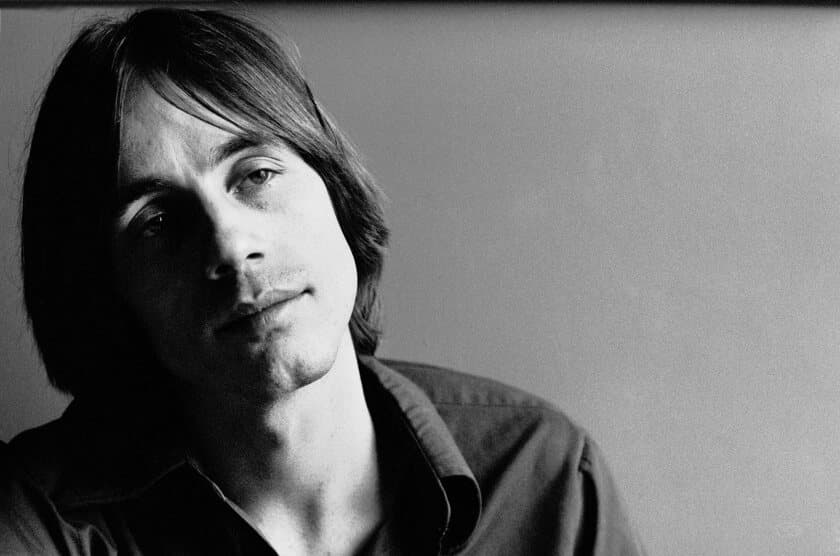
The year 1974 was a crucial moment in the career of Jackson Browne. Having established himself as the poet laureate of the sensitive soul, he released his third and arguably most emotionally cohesive masterwork, Late for the Sky. This album was a sweeping, devastating meditation on the human condition, confronting themes of mortality, disillusionment, and the painful transience of love. It was a commercial triumph, peaking at number 14 on the Billboard 200, but its true legacy lies in its profound emotional honesty. Within its elegant framework is a quiet, powerful song that was never a single and never charted, yet holds the key to the album’s existential heart. That song is “Walking Slow.” Its drama is not theatrical or external; it is the deep, universal struggle of the soul attempting to apply the brakes to the relentless, accelerating speed of life itself.
The story behind “Walking Slow” is the quiet, internal drama of maturity. The album was conceived during a period when Browne was grappling with the profound realization that youth was over, that life and love were not guaranteed, and that the beautiful moments were slipping away too quickly. The song is a dramatic monologue delivered in a moment of deep domestic quiet, likely written after watching a loved one sleep or during a solitary, reflective walk. The lyrics are a raw confession of existential panic—a sudden, chilling awareness that the path ahead is finite and that the years are passing like telegraph poles on an unyielding highway. The drama is the narrator’s attempt to mentally and physically resist this terrifying momentum, to find stability in the midst of constant change. He is trying to consciously be present, to savor the fragile seconds that make up a lifetime.
The meaning of “Walking Slow” is a profound call for deliberate, conscious presence. The lyrics celebrate the simple, intimate moments—the act of waking up next to a loved one, the quiet joy of a shared, unhurried morning—that are often crushed by the demands of the outside world. The phrase “walking slow” is a philosophical statement; it’s a commitment to defying the rush, an acknowledgment that if you don’t fight to preserve the present, it will be gone. The music is the perfect vehicle for this internal struggle. It is a gentle, folk-rock groove that moves with a deliberate, almost unhurried grace. The arrangement is sparse and elegant: the gentle acoustic strumming, the subtle piano, and the mournful, atmospheric fiddle work by David Lindley all serve as the somber underscore to the emotional vulnerability. The song’s measured tempo is a musical paradox, a physical embodiment of the act of trying to stop time, making the performance itself a dramatic reflection of the song’s core theme.
For those of us who have lived long enough to feel the relentless acceleration of the decades, “Walking Slow” is a powerful and necessary dose of nostalgia. It is a testament to Jackson Browne’s genius in turning universal anxieties into intimate, deeply human poetry. It stands as a timeless, profoundly emotional, and dramatically subdued piece of musical truth, a beautiful reminder that our greatest struggle is often the quiet battle to simply hold onto the now.