
A Quiet Confession of Survival, Gratitude, and the Long Road Back to Grace
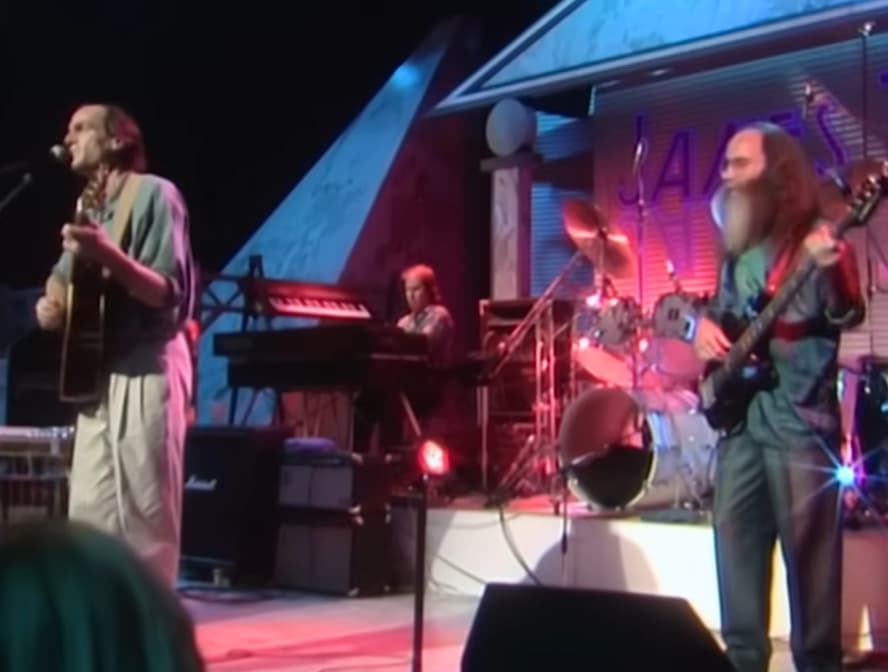
When James Taylor performed “That’s Why I’m Here” on the German television program Ohne Filter on March 27, 1986, the song was already known as the title track of his 1985 album That’s Why I’m Here, which reached the Top 40 on the US Billboard 200. Though never a major hit single, the song occupied a deeply personal space in Taylor’s catalog, one that resonated strongly with longtime listeners who understood his history of loss, addiction, and recovery. Presented in the intimate setting of Ohne Filter, a program celebrated for stripping performances down to their emotional core, the song found a fitting home.
“That’s Why I’m Here” is not a song of triumph in the conventional sense. It is a reflective statement, delivered with restraint and honesty, that speaks to survival rather than victory. By the mid-1980s, Taylor had already lived several lives in public view. He was a central figure of the singer-songwriter movement, a voice of comfort during uncertain times, and a man who had openly struggled with heroin addiction and depression. This song does not recount those experiences directly, yet they permeate every line. It is the sound of someone standing still long enough to acknowledge how close he came to disappearing.
Musically, the song is built on simplicity. Gentle acoustic guitar, understated accompaniment, and a melody that unfolds patiently all serve the lyric rather than competing with it. Taylor’s voice, by this stage of his career, carried a lived-in warmth. It no longer sought perfection. Instead, it conveyed reassurance, humility, and a quiet strength earned through endurance. In the Ohne Filter performance, this approach becomes even more pronounced. The studio audience, seated close and attentive, reinforces the feeling of confession rather than spectacle.
Lyrically, “That’s Why I’m Here” is a meditation on purpose after survival. Taylor sings from a place of acceptance, acknowledging pain without dramatizing it. The song suggests that simply being present, still standing, still able to sing, is reason enough. There is no bitterness in the delivery, only a calm recognition that life continues even after it has nearly undone you. This perspective resonated deeply with audiences who had followed Taylor since the early 1970s and understood the weight behind his restraint.
The significance of the Ohne Filter appearance lies in its format. The program was known for allowing artists to present extended sets without interruption, creating an atmosphere closer to a small theater than a television studio. For Taylor, this meant space to let the song breathe. His performance feels unguarded, almost conversational, as if he is sharing a private realization rather than delivering a rehearsed statement.
Today, this performance stands as a document of James Taylor in quiet equilibrium. Not chasing trends, not revisiting old glories, but acknowledging survival with grace. “That’s Why I’m Here” remains one of his most honest compositions, and in this setting, it becomes a reminder that sometimes the most powerful music is simply a voice, a guitar, and the courage to admit you are still here.