
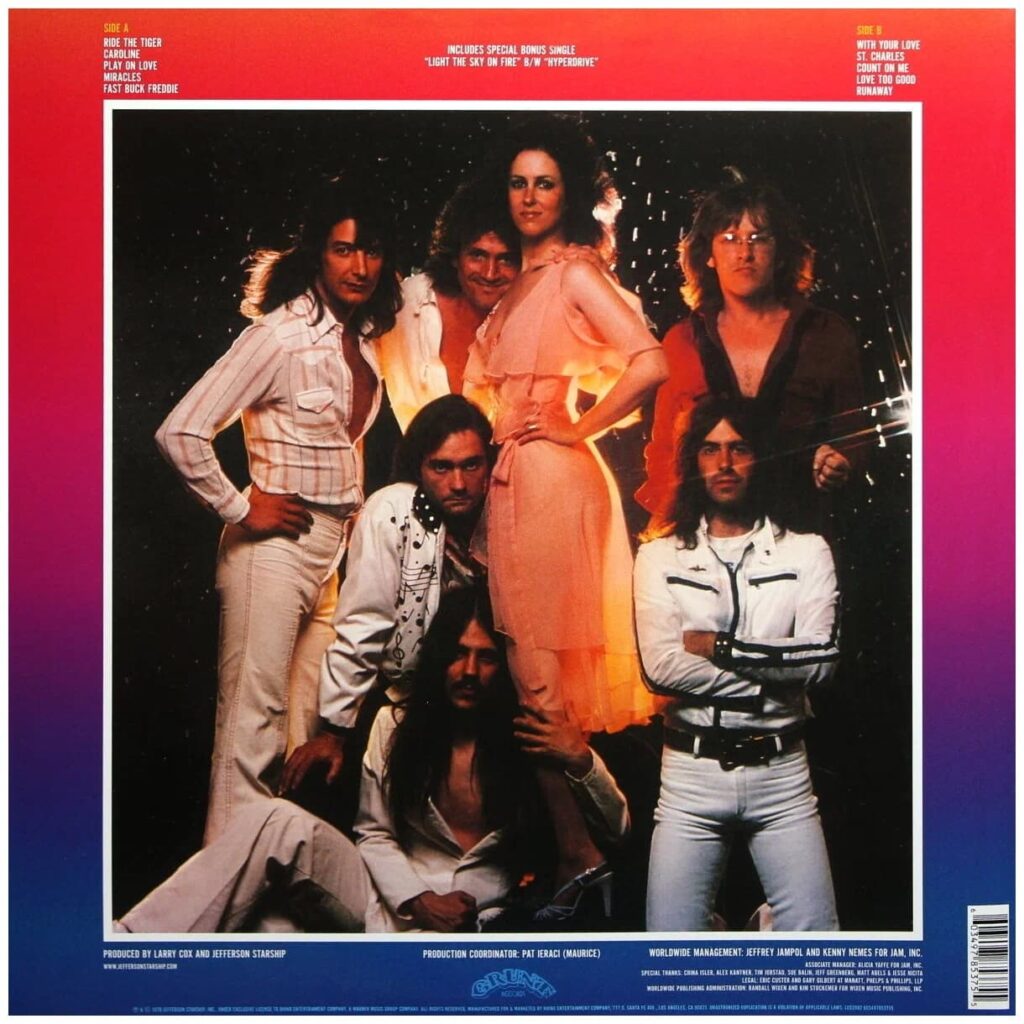
A potent opener embodying Eastern philosophy and rock energy, “Ride The Tiger” announced the powerful arrival of Jefferson Starship.
When the legendary Jefferson Airplane underwent its metamorphosis into Jefferson Starship in the mid-1970s, their debut album, Dragon Fly, released in 1974, roared to life with the commanding track “Ride The Tiger.” This dynamic song, which also served as their inaugural single (reaching number 84 on the Billboard Hot 100), immediately established the new band’s direction – a potent blend of rock intensity with lingering psychedelic undertones and a willingness to explore diverse lyrical themes. “Ride The Tiger” became a staple in their live performances, often igniting their concerts with its driving rhythm and distinctive harmonies.
The story behind “Ride The Tiger” is as intriguing as its sound. Co-written by founding members Paul Kantner and Grace Slick, along with their Tae Kwon Do teacher, Byong Yu, the lyrics delve into a fascinating exploration of Eastern philosophy and its contrast with Western thought. Kantner himself noted that Yu provided a “reflection on the differences between Asian and Western cultures,” and this influence is palpable throughout the song. The powerful imagery of “riding the tiger” itself can be interpreted as a metaphor for navigating life’s challenges with wisdom, balance, and a different perspective, perhaps one that values introspection and harmony over Western notions of constant striving and conquest.
The meaning of “Ride The Tiger” transcends a simple rock anthem. It invites listeners to consider alternative ways of perceiving the world. The lyrics touch upon themes of inner peace, understanding different cultural viewpoints (“Something to learn from the other side”), and a sense of shared humanity (“Something to give, we got nothing to hide”). The contrasting imagery of “black wants out of the streets, yellow wants the country, red wants the country back, and white wants out of this world” hints at societal tensions and desires, perhaps suggesting that a more Eastern-influenced perspective could offer a path towards resolution. The recurring line, “I want to ride the tiger,” becomes a declaration of embracing this different way of being, of seeking a more profound understanding of oneself and the world.
For those who followed the evolution from Jefferson Airplane to Jefferson Starship, “Ride The Tiger” offered a thrilling glimpse into the band’s new sonic territory. It retained the vocal interplay between Kantner and Slick that was a hallmark of their earlier work but injected a harder rock edge, fueled by Craig Chaquico’s energetic guitar work. The song’s unique lyrical content, venturing beyond typical rock themes, added an intellectual layer that set Jefferson Starship apart. “Ride The Tiger” wasn’t just a catchy tune; it was a statement of intent, a bold declaration that this new iteration of the band was ready to explore new sonic landscapes and philosophical depths, all while delivering a powerful rock and roll experience. It remains a vibrant and thought-provoking track that embodies the dynamic spirit of Jefferson Starship’s early years.