
A Weathered Smile in the Face of Time, Gratitude, and Hard-Earned Survival
When Joe Walsh performed “Lucky That Way” in 2012, the song already carried the weight of a lifetime lived loudly, recklessly, and ultimately reflectively. Originally released on his 2012 album Analog Man, the track did not chase chart dominance, nor did it need to. Instead, it stood as one of Walsh’s most revealing late-career statements, arriving quietly yet resonating deeply with listeners who had followed his journey from raw rock bravado to sober self-awareness. Analog Man itself marked a meaningful return for Walsh, debuting strongly and reaffirming his relevance not as a relic, but as a survivor with something left to say.
Musically, “Lucky That Way” is deceptively simple. The arrangement leans into restraint, allowing space for reflection rather than flash. Walsh’s guitar work is economical, expressive, and seasoned, favoring tone and feel over virtuosity. His voice, unmistakably aged and unpolished, becomes the emotional centerpiece. It carries a lived-in warmth, the sound of a man who no longer hides behind irony or excess, but speaks plainly, even tenderly, about the road behind him.
Lyrically, the song is an acknowledgment of improbable endurance. Walsh reflects on mistakes survived, second chances received, and the quiet miracle of still being here. There is no self-pity, no grand confession. Instead, the song unfolds as a gentle inventory of gratitude. The phrase “lucky that way” is not triumphant, but humble, suggesting an awareness that survival was never guaranteed. For an artist whose life once teetered dangerously close to self-destruction, the song reads as a quiet reckoning with fate and forgiveness.
What gives “Lucky That Way” its emotional depth is Walsh’s refusal to dramatize his past. He does not glorify excess, nor does he linger in regret. The song exists in the present tense, grounded in acceptanceM acceptance and perspective. It speaks to the wisdom earned not through success alone, but through consequence. In this sense, it resonates far beyond Walsh’s own story, touching anyone who has lived long enough to recognize how fragile continuity truly is.
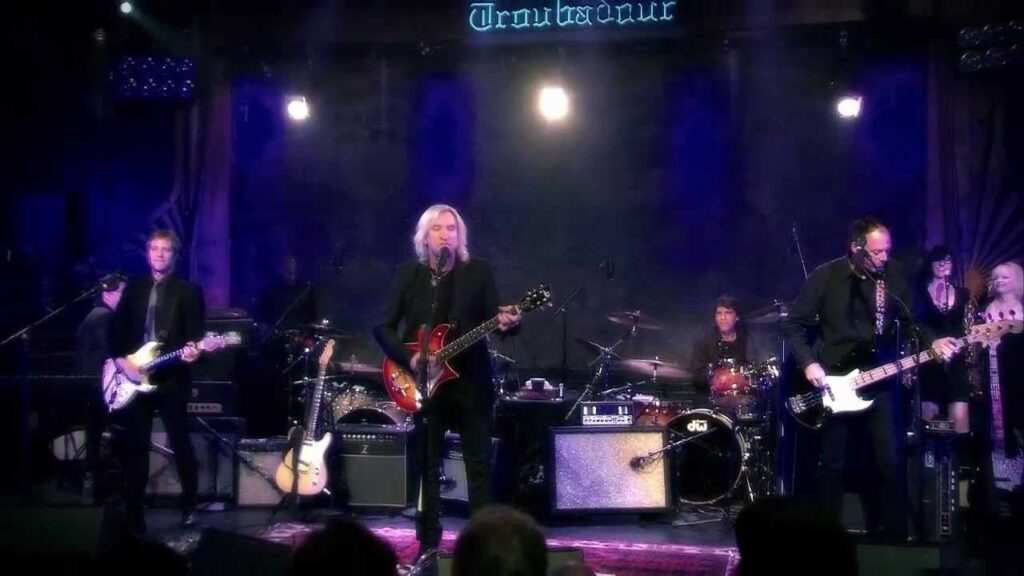
The 2012 performance captures this essence with clarity. Walsh delivers the song without pretense, allowing its message to emerge organically. There is a softness in his delivery that contrasts sharply with the firebrand image that once defined him. This is not the Joe Walsh of arena chaos or sharp-edged satire. This is an older voice, steady and reflective, comfortable with vulnerability and unafraid of stillness.
Within the broader arc of Joe Walsh’s career, “Lucky That Way” stands as a late chapter written with honesty and grace. It reminds us that rock and roll does not always need volume to be powerful. Sometimes its greatest strength lies in quiet acknowledgment, in the courage to look back without flinching, and in the simple, profound realization that survival itself can be the greatest fortune of all.