
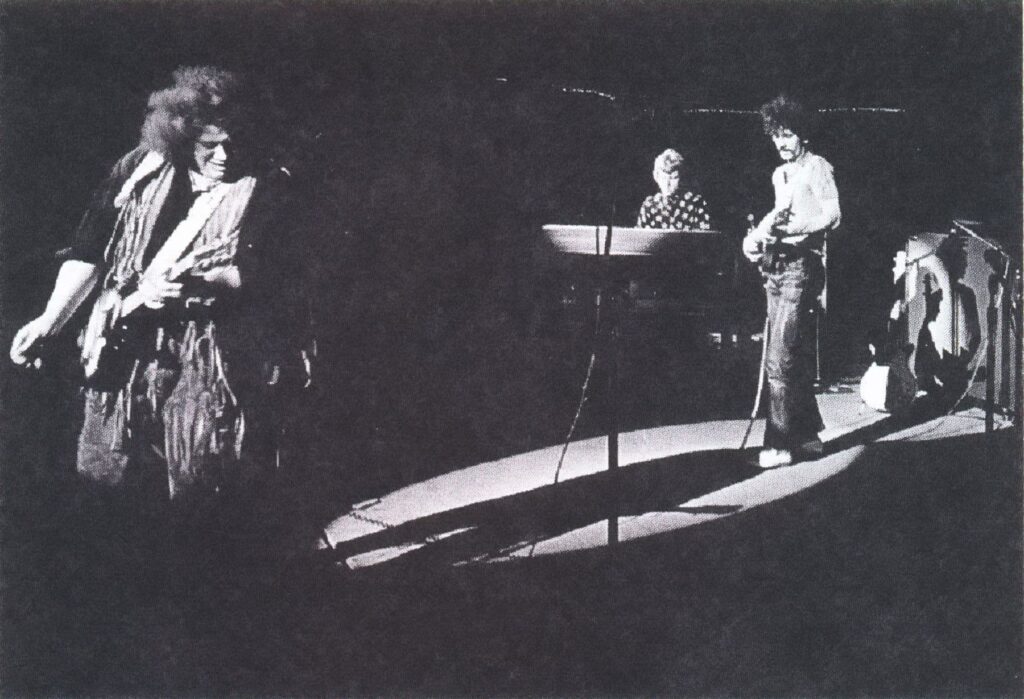
Leslie West on Fillmore Amps and Woodstock: Defining a Sound and Facing a Generation
Continuing the vivid recollections shared in earlier chapters, this interview segment titled “Leslie West – Fillmore Amps & Woodstock” adds another crucial layer to the story of how Leslie West forged his legendary sound and experienced one of rock history’s most defining moments from the stage.
West begins by revisiting Mountain’s very first gig at the Fillmore West, a night that forced him into creative problem-solving under pressure. Just hours before showtime, he was sent a set of Sunn amplifiers, formerly used by Jimi Hendrix. Expecting conventional guitar gear, West instead opened the box to find a PA head, something never intended for guitar use. With no alternative and a debut performance looming, he plugged directly into the microphone input and pushed the preamp to its limits. The result was accidental brilliance. By overdriving the preamp and controlling the master volume, West discovered the core of the thick, powerful tone that would soon become synonymous with early Mountain recordings.
He explains that this unorthodox setup was the secret behind songs like “Mississippi Queen” and “Theme from an Imaginary Western.” While the sound was ideal for lead guitar, it was imperfect for rhythm, eventually leading him to experiment with Marshalls, German-built amps, and later his own custom designs. Yet the principle remained the same: volume without pain, power without harshness. West emphasizes that he never wanted his guitar to hurt the listener, only to feel big, full, and alive.
The interview then shifts to Woodstock, where Mountain’s appearance came through a shared agent with Hendrix. Unable to reach the site by road, the band famously rented a helicopter from New York, landing to witness a sea of humanity unlike anything West had ever seen. Nervous but focused, Mountain took the stage on Saturday evening, just before nightfall, under ideal weather conditions. Once onstage, the crowd seemed to disappear, replaced by sound, instinct, and momentum.
West recalls staying overnight after the performance, unable to leave until morning, which allowed him to witness iconic sets by The Who, Sly and the Family Stone, and others. Though Mountain’s Woodstock footage was long believed lost, recent contact from engineer Eddie Kramer has renewed hope that recovered material may finally see release, adding historical weight to West’s memories.
One final moment stands out: during his guitar solo, West was unknowingly patched into all available amplifier stacks. The sudden expansion of sound startled him, but it also clarified his lifelong goal. He wanted scale and depth, not piercing volume. That revelation, born from chance, technology, and instinct, neatly encapsulates Leslie West’s approach to music throughout his career.
As a continuation of the interview series, this chapter connects innovation to experience, showing how tone, timing, and intuition intersected at pivotal moments. From the Fillmore West to Woodstock, Leslie West’s reflections offer not just anecdotes, but insight into how rock history was shaped one decision, one sound, and one stage at a time.