
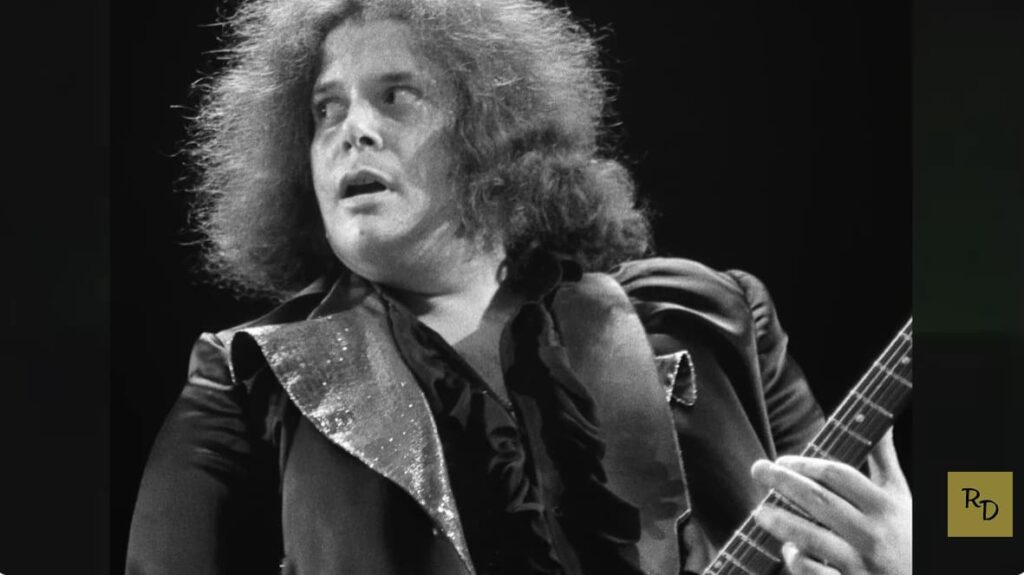
From Woodstock to Mississippi Queen: The Enduring Power of Leslie West and Mountain
A newly circulated mini documentary revisits the life and legacy of Leslie West, the guitarist and vocalist best known as the driving force behind Mountain. The short film offers a concise but substantive portrait of a musician whose influence on hard rock guitar tone remains disproportionate to his commercial profile.
Born Leslie Abel Weinstein on October 22, 1945 in New York, West’s early inspiration arrived unexpectedly. As a child, he attended a stage show originally billed for Jackie Gleason but instead witnessed a performance featuring Elvis Presley. That moment, by his own recollection, planted the seed that would define his life in music.
West first gained regional traction in the 1960s with The Vagrants, a band he formed with his brother Larry. The group built a local reputation covering British Invasion material, including songs by The Beatles and The Rolling Stones. Yet it was exposure to Cream at the Village Theater in New York that sharpened his artistic ambition. West later admitted that the experience forced him to reassess his musicianship and commit more seriously to refining both his guitar technique and vocal delivery.
Mountain emerged in 1969 with producer and bassist Felix Pappalardi. Their debut album was released in July of that year, and within weeks the band appeared at Woodstock, reportedly facilitated by shared management connections with Jimi Hendrix. Although Mountain’s performance was not included in the original Woodstock film, the appearance significantly elevated their profile.
In 1970, Mountain released Climbing, the album that featured their signature song, Mississippi Queen. Driven by Corky Laing’s now famous cowbell count in and anchored by West’s thick, overdriven Les Paul Junior tone, the track became a radio staple and remains a defining statement of early 1970s American hard rock. Climbing achieved gold certification, as did the follow up Nantucket Sleighride in 1971.
West was candid about his technical limitations, once remarking that he was not a great technical guitarist. Instead, he emphasized vibrato, sustain, and harmonic squeals, developing a sonic identity rooted in blues phrasing and high volume amplification. His equipment choices, including modified amplifiers and a single pickup Gibson Les Paul Junior, contributed to a dense and vocal like guitar sound that many players continue to study.
Despite Mountain’s relatively short initial run and internal struggles, including substance abuse and lineup instability, West remained respected among peers. He later collaborated with former Cream bassist Jack Bruce and continued recording and touring in various configurations.
The documentary ultimately raises a familiar question. Why did a musician so admired by fellow guitarists never achieve the broader household recognition of contemporaries such as Hendrix or Clapton. The answer may lie in shifting radio trends, management decisions, or simply timing. What remains indisputable is that Leslie West forged a guitar sound of uncommon authority. For many players and serious rock listeners, that achievement alone secures his place in the canon.