
The Great Fatsby on Stage: Leslie West’s Towering 1975 Lament
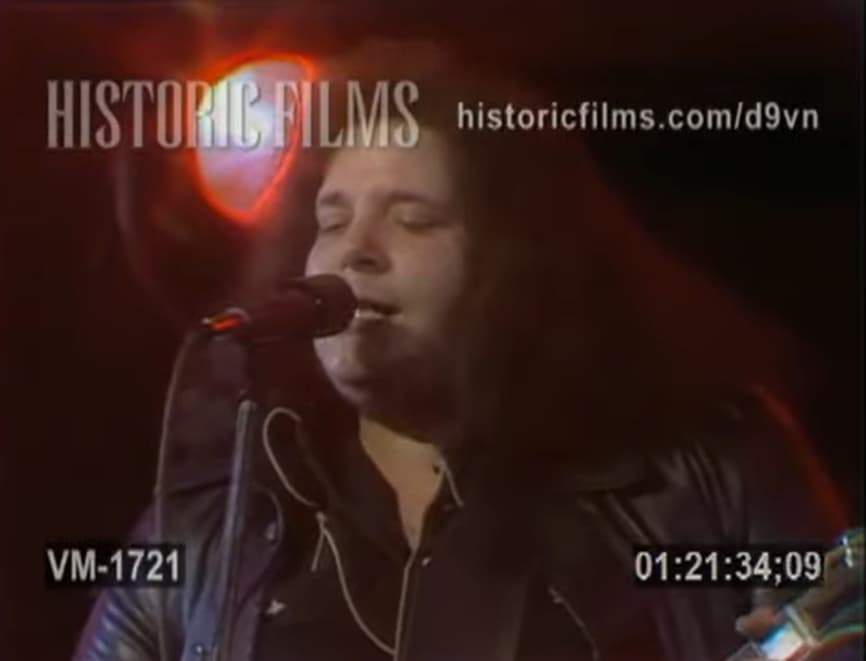
By 1975, the heavy rock landscape was shifting, but Leslie West remained its undisputed master of tone. Following the April release of his solo effort The Great Fatsby, West took his monumental interpretation of “House of the Rising Sun” to the stage, transforming the studio track into a sprawling, electric blues confession. These 1975 performances, captured during his tours of North America, represent a pinnacle of post-Mountain artistry—a moment where West’s “Mississippi Queen” thunder met a new, seasoned maturity.
On stage in 1975, West stripped the song of its folk-revival politeness, replacing it with sheer, unadulterated volume and soul. His live delivery of the track was a masterclass in tension and release. Unlike earlier rock versions that relied on a driving tempo, West slowed the “Rising Sun” to a crawl, allowing his signature Sunn amplifier tone to saturate every corner of the venue. Each note was sustained until it felt like a physical presence, a testament to his ability to make a single guitar sound like an entire orchestra of grief.
Vocally, the 1975 live renditions found West at his most vulnerable yet authoritative. Standing center stage, his rough-hewn voice resonated with a lived-in grit that made the song’s lyrics about ruin and regret feel intensely personal. He wasn’t just singing a standard; he was reclaiming it. The power of the performance lay in its restraint—the way he would let a chord ring out into silence before crashing back in with a heavy, blues-drenched solo that felt both improvisational and inevitable.
These performances also served as a showcase for West’s refined stagecraft. Freed from the expectations of the traditional power-trio format, he leaned into the funk and soul influences that peppered The Great Fatsby era. While the album itself saw a modest chart run, peaking at number 158 on the Billboard 200, the 1975 live shows proved that West remained a titan of the stage. He treated “House of the Rising Sun” not as a nostalgia trip, but as a living, breathing meditation on the blues.
Today, looking back at the 1975 era, this rendition stands as one of Leslie West’s most enduring live statements. It captures an artist who had mastered the balance between brute force and delicate nuance. In the hands of a lesser guitarist, the song could have felt overplayed, but in West’s hands, it became a towering electric lament—a haunting reminder that true hipness in rock-and-roll isn’t about following trends, but about the honesty of the soul and the weight of the tone.