
“Mighty Quinn”: A Whimsical Journey with an Enigmatic Figure Bearing Hope and Understanding.
There are certain songs that arrive like a breath of fresh air, imbued with a sense of playful mystery and an irresistible charm that transcends their immediate context. For those of us who navigated the vibrant, often experimental, soundscape of the late 1960s, Manfred Mann’s rendition of “Mighty Quinn” (often referred to as “Quinn the Eskimo”) stands out as a joyous and quirky masterpiece. Released in January 1968, this track wasn’t just a hit; it was a delightful puzzle, a whimsical narrative wrapped in a catchy, folk-rock melody that hinted at deeper meanings while remaining utterly captivating. For older readers, it immediately conjures memories of an era brimming with counter-cultural curiosity and the delightful emergence of folk-inspired rock that felt both fresh and profoundly insightful.
Upon its release as a single in January 1968, “Mighty Quinn” proved to be a colossal international success for Manfred Mann. It soared to the coveted number 1 position on the UK Singles Chart, holding the top spot for two consecutive weeks. Its popularity wasn’t confined to the UK; it also performed exceptionally well in the United States, reaching number 10 on the Billboard Hot 100 chart in March 1968. Beyond these major markets, it topped the charts in countries like Canada, Germany, Ireland, and New Zealand, among others, demonstrating its widespread appeal and cementing its place as one of the definitive songs of 1968. The track was included on their album Mighty Garvey (released in 1968 in some territories and later as a re-titled version of the UK-only album The Mighty Quinn), an album that also garnered critical acclaim. For many of us, hearing its distinctive opening organ riff on the radio was an instant invitation to listen closely, to decipher its playful lyrics, and to simply be carried away by its infectious optimism.
The story behind “Mighty Quinn” is as intriguing as the song’s elusive protagonist. The track was written by none other than Bob Dylan during his prolific “Basement Tapes” sessions in 1967. Dylan recorded his own version with The Band, but it remained officially unreleased until The Basement Tapes album in 1975. Manfred Mann, a British band celebrated for their intelligent pop-rock sound and their knack for interpreting existing material, got hold of a demo version of the song through a mutual contact. Recognizing its inherent brilliance and quirky charm, they decided to record their own version.
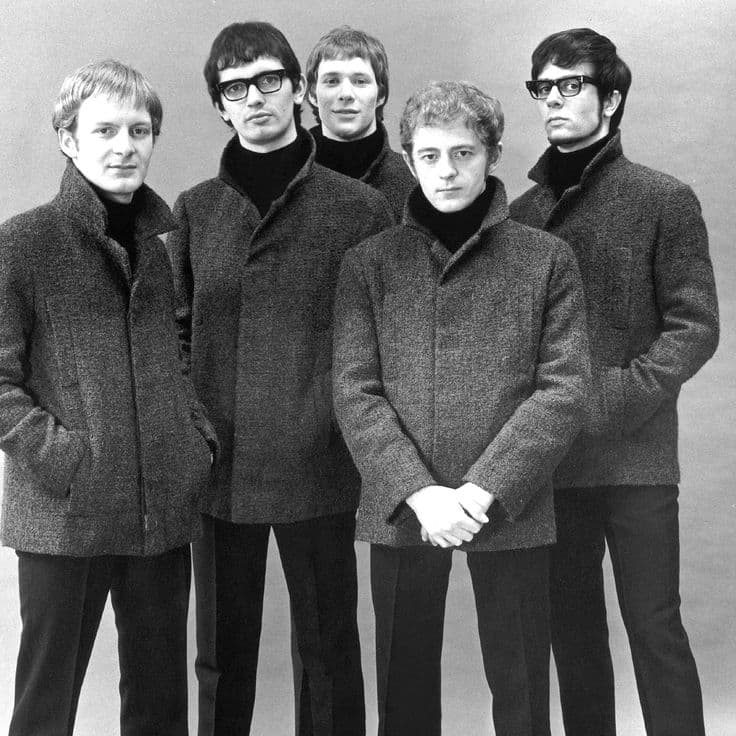
Manfred Mann (the keyboardist), along with Mike D’Abo (vocals), Tom McGuinness (bass, guitar), Klaus Voormann (bass), and Mike Hugg (drums), took Dylan’s rustic folk-rock composition and infused it with their signature blend of pop sensibility, jazz-influenced instrumental work, and a driving rock beat. Mike D’Abo’s clear, engaging vocals perfectly captured the song’s narrative, while Manfred Mann’s distinctive organ playing provided the unique sonic texture that became instantly recognizable. Their faithful yet inventive arrangement transformed Dylan’s more obscure demo into a vibrant, radio-ready hit, showcasing their unparalleled ability to reimagine and elevate a song.
The meaning of “Mighty Quinn” has been a source of much delightful speculation and interpretation. On the surface, it tells the tale of a mysterious, almost mythical figure known as Quinn the Eskimo, who arrives in a town, bringing with him a strange power to make everything better. He makes “fools of all the sages,” causes the “birds to sing and trees to talk,” and brings joy and understanding wherever he goes. He’s a whimsical, benevolent force of nature, a harbinger of good times and clear insight.
However, beneath this playful facade, many interpretations suggest deeper allegorical meanings. Quinn could be seen as a symbol of wisdom, innocence, or enlightenment – someone who possesses a childlike simplicity that allows him to see truths that others, burdened by complexity, miss. He brings a sense of wonder and healing to a weary world. For older listeners, particularly those who remember the yearning for peace and understanding during the tumultuous late 1960s, Quinn represents a hope for a simpler way of living, a return to fundamental truths, and the quiet power of an enigmatic presence to inspire change. It evokes a feeling of yearning for a leader or a guide who can cut through the noise and offer clarity and joy. “Mighty Quinn” remains a testament to Manfred Mann’s interpretive genius and Dylan’s imaginative songwriting, a song that continues to charm and provoke thought, reminding us that sometimes, the most profound messages arrive wrapped in the most whimsical of packages.