
The Sound of Anarchy Unleashed: A Primal, White-Hot Eulogy to the Rock and Roll Spirit That Burned Down the Gates of Polite Society.
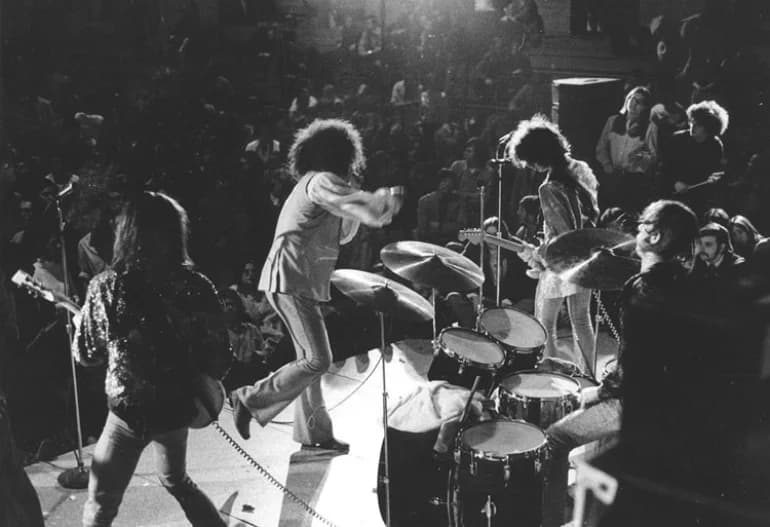
In the history of rock and roll, few moments are as dramatically seismic as the one captured on the opening track of MC5’s legendary 1969 debut, Kick Out the Jams. The album wasn’t just recorded; it was ignited live on October 30th and 31st, 1968, at Detroit’s Grande Ballroom. And before the band launched into their furious, epoch-defining manifesto, they offered a ferocious, almost violent bow to their roots with “Ramblin’ Rose,” a track that serves as the perfect, defiant overture to the sonic revolution they were about to unleash.
Key Information: “Ramblin’ Rose” is the opening song on MC5’s landmark 1969 live album, Kick Out the Jams. The album, recorded for Elektra Records, was a watershed moment for high-energy rock and achieved commercial success despite its raw sound and controversial content, peaking at a respectable No. 30 on the US Billboard 200 chart. “Ramblin’ Rose” was not released as a single; instead, the live album’s controversial title track, “Kick Out the Jams,” served as the single. However, “Ramblin’ Rose,” with its furious, almost frenetic energy, immediately established the revolutionary, take-no-prisoners sound of the MC5—the self-proclaimed “Motor City 5″—who bridged the gap between garage rock, jazz, and the oncoming storm of punk.
The story of the album—and thus, the drama of this opening track—is inseparable from the political and social unrest of Detroit in the late 1960s. The MC5 were more than just a band; they were the musical arm of the White Panther Party, a revolutionary group led by their manager, John Sinclair. Their music was a direct, explosive response to the decay and tensions surrounding them. “Ramblin’ Rose” bursts forth not as a composed song, but as a spontaneous, controlled detonation. It opens with the famous, anarchic rally cry from singer Rob Tyner, who doesn’t so much sing as scream the song’s opening refrain. This introduction is not merely for the audience; it is a declaration of war on the established order, a testament to the raw, unpolished power that the band championed.
The meaning of the song is beautifully complex. While “Ramblin’ Rose” is structurally rooted in the raw, primal energy of classic rock and roll, Rob Tyner’s spoken-word introduction delivers its philosophical core: “And right now… right now… right now it’s time to… kick out the jams!” He then goes on to dedicate the performance to the MC5’s musical roots—Chuck Berry, Little Richard, James Brown—but the whole arrangement, driven by the dual guitar assault of Wayne Kramer and Fred “Sonic” Smith, is a blistering, high-octane celebration of pure, unbridled rock and roll freedom.
For older readers who remember the sheer fear and excitement this album generated upon release, “Ramblin’ Rose” is a deeply nostalgic trigger. It instantly transports you back to the tumultuous late sixties, reminding you what true, dangerous, revolutionary music sounded like before the polish set in. It’s the sound of the ultimate weekend warrior, fueled by idealism and sheer volume, ready to smash the polite facade of pop music forever. The song is a three-minute explosion of kinetic energy, a magnificent, dramatic blueprint for every band that ever believed rock and roll could change the world.