
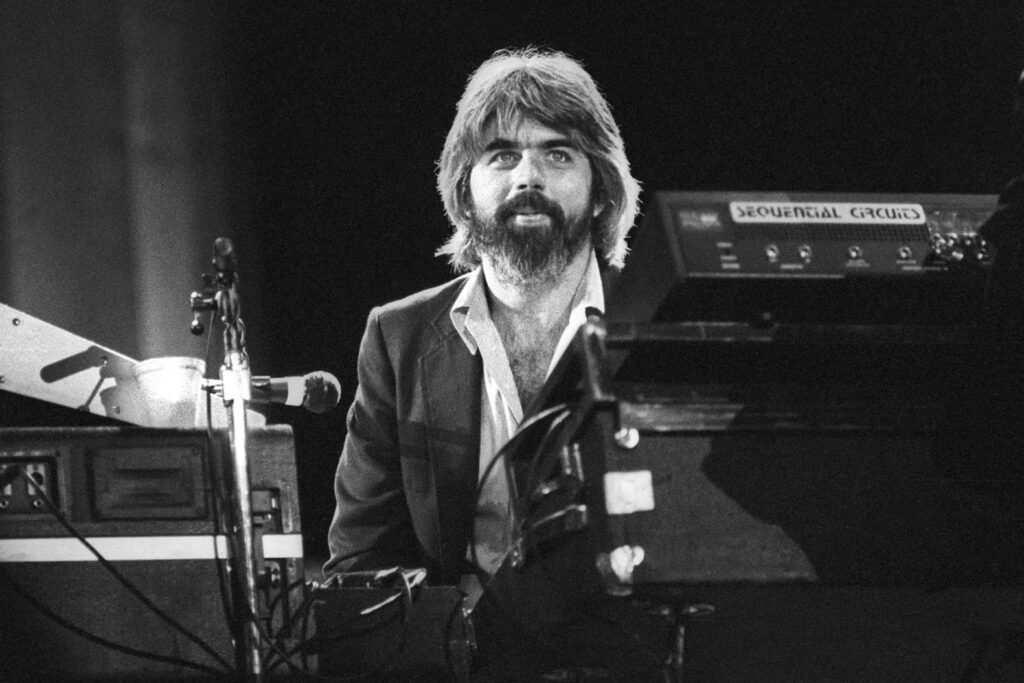
A song born from reinvention, Higher Ground captures Michael McDonald at a moment of artistic transition, spiritual searching, and creative realignment.
When Michael McDonald originally recorded Higher Ground for the early configuration of his 1989 album project, the record was still slated to be titled Lonely Talk, planned for release in August 1989. That early version of the album contained a different sequence, including the elusive track Plain of Jars and McDonald’s powerful interpretation of Stevie Wonder’s Higher Ground, a performance that would remain unreleased for more than a decade until it surfaced on his 2000 compilation The Voice of Michael McDonald. Although it never became part of the final Take It to Heart album, this recording stands as a striking document of where McDonald’s artistry was headed at the close of the 1980s.
What makes his version of Higher Ground especially compelling is the way he reshapes its spiritual architecture. Stevie Wonder built the original as a kinetic cry of persistence and inner evolution, a rhythmic pulse of survival. McDonald approaches the same message from a different emotional angle. His voice adds weight, gravity, an almost reflective solemnity that turns the song inward rather than outward. Where Wonder’s momentum pushes toward transcendence, McDonald leans into the ache that precedes renewal. His phrasing stretches the melody with a weathered warmth, giving the lyric a sense of lived-in urgency.
The production aesthetic of the Lonely Talk sessions also colors this interpretation. McDonald in 1989 was experimenting with a more intimate, adult pop framework, balancing soft-focus keyboards with touches of R&B and the smoother, more atmospheric palette that would define Take It to Heart in its final form. Higher Ground, in this setting, feels less like a straight cover and more like a thematic cornerstone for the album he was building. Its message of perseverance aligns naturally with the emotional through-lines McDonald was exploring during this period: the difficulty of communication, the fragility of relationships, and the slow, patient climb toward clarity.
Even outside the album context, the recording has its own quiet legacy. When it was finally released in 2000, listeners heard not a discarded fragment but a fully realized interpretation, the kind of performance that reminds audiences why McDonald has remained such a singular vocalist. It is both homage and reinvention, a rare look at an alternate chapter of an album that might have been, and a testament to McDonald’s ability to inhabit a song so completely that it becomes part of his own emotional vocabulary.