
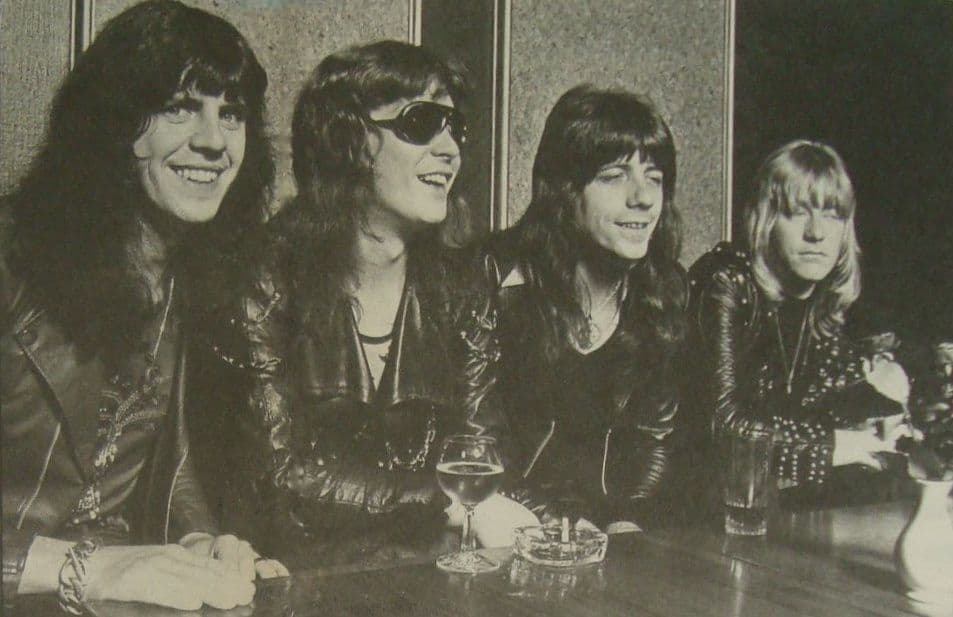
A Candid Moment of Reflection Before the Lights Came Back On
In 1985, Mick Tucker and Andy Scott of Sweet appeared on Australian television for an interview that now feels quietly historic, captured just before the band would record the celebrated Live at the Marquee performance. While this broadcast itself was not tied to charts or a commercial release, it exists within a crucial chapter of Sweet’s post-glam era, a period when the band was reassessing its past, reaffirming its present, and cautiously shaping its future. By the mid 1980s, Sweet’s classic singles had long since secured their place in rock history, but this interview reveals something more personal and enduring: two surviving core members confronting legacy with honesty and resolve.
What makes this conversation compelling is its timing. The glam explosion of the early 1970s was already part of cultural memory, and Sweet’s chart dominance belonged to an earlier era. Yet Andy Scott and Mick Tucker speak not as relics, but as working musicians. There is no nostalgia for its own sake here. Instead, the interview carries the tone of craftsmen who understand what they built, what was lost along the way, and what still mattered enough to carry forward. Their body language and cadence suggest familiarity with hardship, with reinvention, and with the weight of expectations that followed them across continents.
Scott comes across as thoughtful and grounded, clearly conscious of Sweet’s musical credibility beyond the glitter image that once defined them. He discusses the band’s live power with quiet confidence, emphasizing that Sweet were always a band built for the stage. Tucker, meanwhile, radiates the steady presence of a drummer who understood the physical and emotional demands of keeping rock music alive. His remarks often return to energy, feel, and connection with the audience, themes that would soon be put to the test at the Marquee.
The shadow of loss also lingers beneath the surface. By 1985, Sweet had already endured profound changes, including the absence of key original members. This interview does not dwell on tragedy, yet it acknowledges endurance. Tucker and Scott speak as custodians of something larger than themselves, mindful that Sweet’s name carried expectations forged in sweat-soaked halls and chart-topping singles alike. There is a sense that the upcoming Marquee performance was not simply another gig, but a statement of continuity.
Viewed today, this Australian interview feels like a deep breath before the plunge. It captures Sweet in a rare in-between moment, no longer riding the commercial highs of the past, not yet reaffirmed by the raw power of Live at the Marquee. It is the sound of two musicians aligning purpose with memory, preparing to let the music speak again where it always had the most authority, on stage.
For longtime listeners, this interview offers more than context. It provides emotional texture. It reminds us that behind every legendary live album lies uncertainty, discipline, and belief. In 1985, Mick Tucker and Andy Scott were not chasing glory. They were protecting it, one performance at a time.