
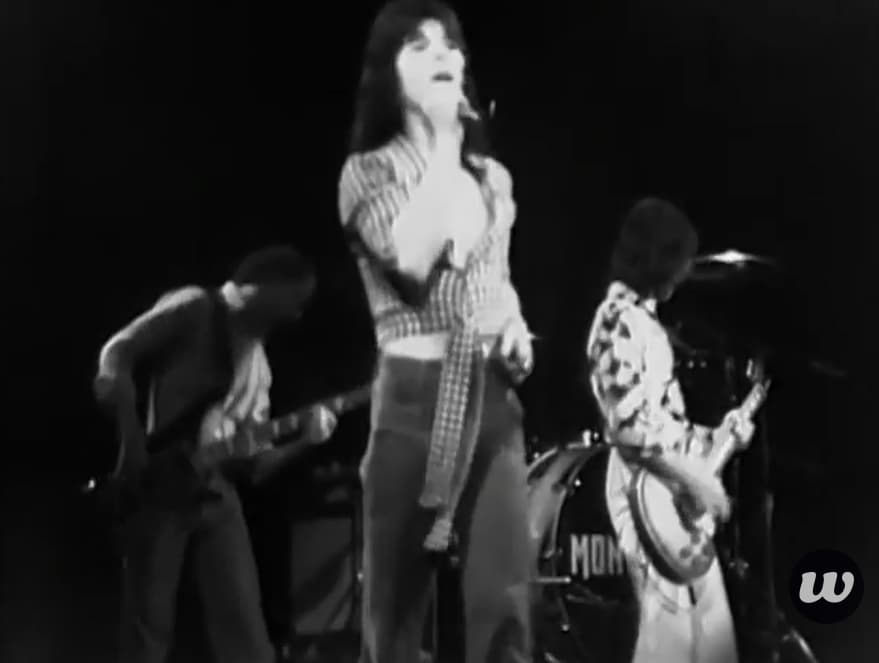
From Rhythm and Blues to Raw Power: Montrose Reignite a Classic at Winterland
On September 27, 1975, the stage at Winterland Ballroom became the setting for a performance that bridged decades of musical evolution. Montrose delivered a striking rendition of “Good Rockin’ Tonight,” transforming a mid twentieth century rhythm and blues staple into a forceful expression of hard rock energy.
Originally written by Roy Brown in the late 1940s, the song had already passed through several influential interpretations before reaching Montrose. Earlier versions carried a sense of swing and early rock and roll vitality. In contrast, Montrose approached the material with a markedly different intent. Their performance replaced lightness with weight, emphasizing volume, drive, and a more aggressive rhythmic structure. The result was not a simple cover but a reimagining that reflected how far the genre had traveled in less than three decades.
The timing of the performance is significant. By 1975, Montrose was navigating a period of transition following changes in its lineup. The absence of earlier members had prompted a reassessment of direction, yet the band retained a clear commitment to intensity and musical identity. This sense of determination is evident throughout the set. Rather than retreating into familiar territory, the group leaned into its strengths, presenting a sound that was direct and unapologetic.
Central to the performance is the work of Ronnie Montrose. His playing anchors the arrangement, combining precision with a tone that is both gritty and controlled. The guitar does more than lead. It shapes the entire character of the song, guiding its transition from its rhythm and blues origins into a harder, more contemporary form. Around him, the band maintains a tight and focused approach, ensuring that the energy remains cohesive.
The Winterland setting contributes an additional layer of authenticity. Known for hosting a wide range of influential artists, the venue provided an environment where experimentation and reinvention were not only accepted but expected. The acoustics and proximity of the audience allowed the performance to retain a sense of immediacy, capturing the raw interaction between musicians and listeners.
What emerges from this recording is a clear illustration of how rock music evolves. “Good Rockin’ Tonight” becomes a vehicle for transformation, carrying traces of its past while embracing the direction of its present. Montrose does not preserve the song in its original form. Instead, the band reshapes it, demonstrating that reinterpretation can be as meaningful as creation.
In revisiting this performance, listeners encounter more than a moment of nostalgia. They hear a conversation between eras, a reminder that each generation of musicians leaves its mark by redefining what came before.